
📌 Table of Contents ⬆

Best Collagen Supplements 2026: Types, Benefits & Top Picks
The wellness industry is booming, and collagen supplements are leading the charge — but with hundreds of products flooding shelves in 2026, knowing which ones actually work is more critical than ever. The global collagen market was valued at $9.8 billion in 2023 and is projected to surpass $16.7 billion by 2030, according to Grand View Research. Whether you're chasing youthful skin, stronger joints, or faster muscle recovery, this guide to the best collagen supplements 2026 will cut through the noise and give you science-backed answers.
For more information, see: Cleveland Clinic: Collagen, Harvard Health: Collagen
📌 Quick Summary
- Type I collagen dominates skin and hair benefits, making up over 90% of skin's structural protein — look for marine or bovine sources for maximum bioavailability.
- Hydrolyzed collagen peptides are absorbed up to 2x faster than whole collagen proteins, according to a 2019 review published in the journal Nutrients.
- Third-party tested products from brands like Vital Proteins, Ancient Nutrition, and Sports Research consistently rank highest for purity, potency, and value in 2026 consumer analyses.
📊 Understanding Collagen Types & Why They Matter in 2026
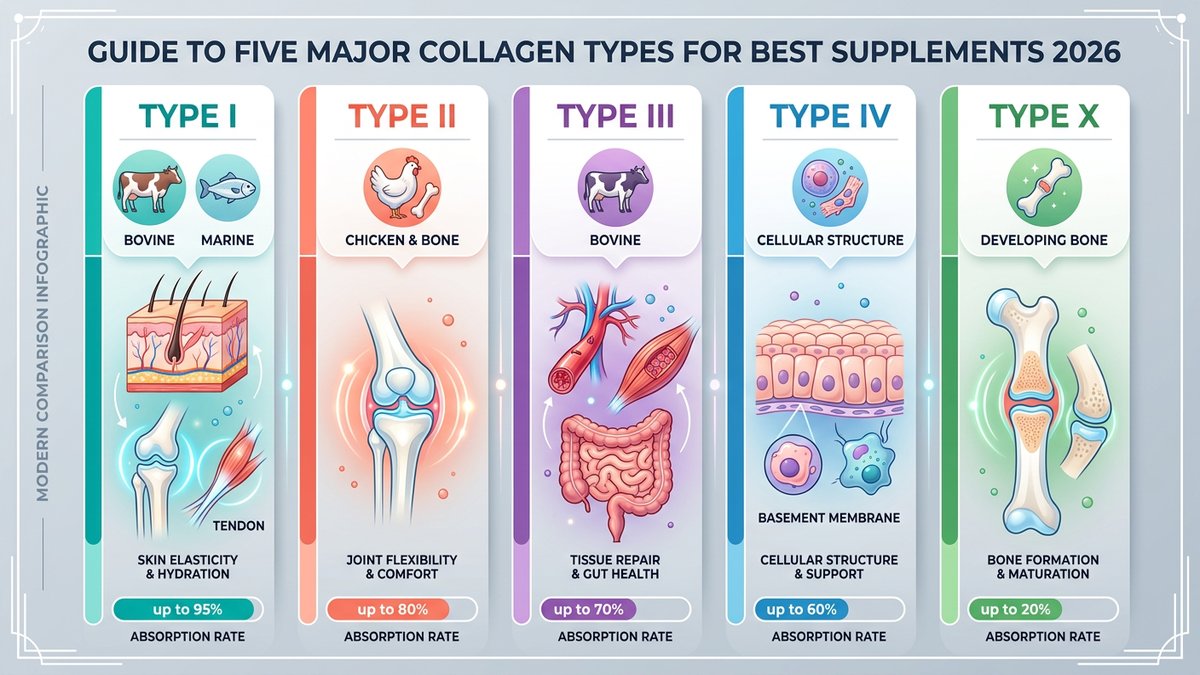
Not all collagen is created equal, and understanding the types of collagen is the single most important step before buying any supplement. There are at least 28 known types of collagen in the human body, but Types I, II, III, V, and X are the most relevant for supplementation. Type I is the most abundant, making up roughly 90% of the body's collagen and playing a critical role in skin firmness, hair strength, nail growth, and bone density. Type II is predominantly found in cartilage, making it the go-to choice for joint support and arthritis management. Type III typically works alongside Type I and is key for skin elasticity and gut lining health. In 2026, the trend is shifting toward multi-collagen complex formulas that bundle several types into one product, giving consumers broader benefits without juggling multiple supplements. Clinical studies increasingly support that combining collagen types produces synergistic effects — particularly for active adults managing both aesthetic and mobility concerns simultaneously.
The source of collagen matters just as much as the type. Marine collagen, derived from fish skin and scales, is predominantly Type I and boasts the smallest peptide size — making it absorb faster and more efficiently than other sources. A 2021 study in the Journal of Cosmetic Dermatology found that marine collagen supplementation improved skin hydration by up to 28% after just 12 weeks. Bovine collagen, sourced from cowhide, provides both Type I and Type III — making it a more economical and versatile option for everyday use. Chicken sternum collagen is the richest natural source of Type II collagen, ideal for those dealing with joint pain or osteoarthritis. Eggshell membrane collagen uniquely offers Types I, V, and X. As consumers in 2026 become more ingredient-savvy, demand for grass-fed, wild-caught, and pasture-raised collagen sources has surged, with premium sourcing now considered a baseline quality marker rather than a luxury feature.
Marine Collagen
Highest bioavailability for skin elasticity & glow
Multi-Collagen Blends
Covers Types I, II, III, V & X for full-body support
Grass-Fed Bovine
Affordable, versatile & gut-friendly collagen source
| Collagen Type | Best Source | Primary Benefit | Who It's For |
|---|---|---|---|
| Type I | Marine / Bovine | Skin, hair, nails, bones | Anti-aging, beauty focus |
| Type II | Chicken sternum | Joint cartilage support | Athletes, arthritis sufferers |
| Type III | Bovine / Plant-blends | Skin elasticity, gut health | General wellness seekers |
| Type V | Eggshell membrane | Cell formation, placenta | Pregnant women, active adults |
| Type X | Eggshell membrane | Bone & cartilage growth | Post-surgery, bone health |
💡 Key takeaway: For most adults, a Type I + III hydrolyzed collagen peptide from marine or grass-fed bovine sources offers the broadest daily benefits — especially for skin, gut, and overall connective tissue health.
🎯 How to Choose the Best Collagen Supplement in 2026
Picking the right collagen supplement in 2026 can feel overwhelming — the market now features powders, capsules, liquids, gummies, and even collagen-infused coffees. But once you know what to look for, the decision becomes much clearer. The most important factors are collagen type, source quality, hydrolysis level, additional co-factors like vitamin C, and third-party certifications. Research consistently shows that vitamin C is essential for the body's natural collagen synthesis — without it, even high-quality collagen peptides may not be fully utilized. A landmark study in the American Journal of Clinical Nutrition confirmed that vitamin C intake was directly correlated with collagen network formation in connective tissue. Products that include hyaluronic acid, biotin, or zinc alongside collagen are increasingly popular because these ingredients work synergistically to amplify skin hydration, elasticity, and nail strength. Don't be fooled by attractive packaging alone — the supplement industry is still largely self-regulated, which means independent lab testing is your strongest quality assurance.
Budget is also a real factor. Premium marine collagen supplements can cost anywhere from $40 to $80 per month, while high-quality bovine collagen options often land between $20 and $45. That price gap is real, but so are the differences in bioavailability and peptide size. For those on a budget, grass-fed bovine collagen peptides from brands with NSF or Informed Sport certifications offer exceptional value without compromising on safety or efficacy. In 2026, subscription models have become the new norm, with brands like Vital Proteins, Momentous, and Garden of Life offering up to 20% savings on monthly auto-ship plans. Always check that the product has been tested for heavy metals — especially marine collagen products, where contamination from ocean pollutants is a legitimate concern. The FDA does not pre-approve dietary supplements, so choosing brands that voluntarily submit to third-party testing is not just smart — it's essential for your safety.
Identify Your Primary Goal
Before adding any supplement to your routine, get clear on why you're taking collagen. If your main concern is skin aging and hydration, prioritize a high-quality marine collagen peptide product rich in Type I collagen, ideally combined with hyaluronic acid and vitamin C. If joint pain or athletic recovery is your focus, seek out Type II collagen or a multi-collagen blend featuring chicken sternum extract. For gut health and general longevity, Types I and III bovine collagen with added probiotics or L-glutamine can offer compound benefits. Matching the collagen type to your specific health goal isn't just smart shopping — it's the difference between real results and wasted money. Studies show targeted collagen supplementation can show measurable improvements within 4 to 12 weeks, depending on your baseline health, age, and dosage consistency.
Verify Source & Processing Quality
Always check the origin and processing method of the collagen you're buying. Look for terms like 'hydrolyzed collagen peptides' or 'collagen hydrolysate' on the label — these indicate the protein has been broken into smaller chains that your digestive system can absorb far more efficiently than intact collagen. Wild-caught marine collagen and grass-fed, pasture-raised bovine collagen are widely considered the gold standard for clean sourcing in 2026. Avoid products with vague labels like 'collagen protein blend' without specifying the animal source or type. Also pay attention to the manufacturing facility — look for GMP (Good Manufacturing Practice) certified facilities, which indicates the brand follows strict production standards. Third-party seals from organizations like NSF International, USP, or Informed Choice are the clearest signals of a trustworthy product.
Check the Dosage & Serving Size
Clinical research generally supports a daily dose of 8 to 10 grams of hydrolyzed collagen peptides for noticeable skin and joint benefits, though some studies have used doses as low as 2.5 grams for targeted outcomes. A 2019 systematic review in the journal Nutrients found that collagen supplementation in doses ranging from 2.5g to 15g per day was both safe and effective for improving skin elasticity and reducing joint pain over an 8–12 week period. Be cautious of products that provide only 1–2 grams per serving and claim dramatic results — the math simply doesn't support it. If you're taking capsules, be especially vigilant: many capsule-based collagen products require you to take 6 to 10 capsules just to hit an effective dose. Powders are generally more practical for achieving therapeutic amounts without swallowing a handful of pills every morning.
Look for Transparent, Tested Brands
In 2026, brand transparency has become a non-negotiable standard for informed consumers. The best collagen brands openly share their sourcing information, manufacturing location, and independent lab test results — either on their website or via scannable QR codes on product packaging. Vital Proteins, Ancient Nutrition, Sports Research, Momentous, and Garden of Life are among the most consistently praised brands for transparency, quality, and efficacy based on third-party reviews and consumer lab analyses. Avoid brands that rely heavily on celebrity endorsements without substantive lab data or customer evidence to back up their claims. Reading verified Amazon reviews and consulting databases like Labdoor.com or ConsumerLab.com gives you unbiased quality scoring based on actual lab testing. Your supplement budget is an investment in your health — make sure the company earning your money is genuinely earning your trust too.
⚖️ Collagen Supplements: Honest Pros & Cons for 2026 Buyers
Collagen supplements have earned enormous mainstream popularity, and for good reason — the scientific evidence supporting their benefits has grown substantially over the last decade. A comprehensive 2021 meta-analysis in the International Journal of Dermatology reviewed 19 randomized controlled trials involving over 1,000 participants and found statistically significant improvements in skin elasticity, hydration, and wrinkle reduction with regular collagen peptide supplementation. Similarly, a study published in Current Medical Research and Opinion found that athletes taking 10 grams of collagen peptides daily experienced significantly less joint pain during activity compared to a placebo group after 24 weeks. These are not fringe findings — they represent a growing body of peer-reviewed science. The mechanisms make biological sense too: as we age, our bodies naturally produce less collagen, with production beginning to decline noticeably around age 25 and accelerating after 40. Supplementing helps replenish the amino acid pool your body needs to maintain connective tissue, skin structure, and bone density.
That said, collagen supplements are not miracle cures, and being honest about their limitations is just as important as celebrating their benefits. One of the most common misconceptions is that consuming collagen directly translates into collagen deposited into your skin or joints — that's an oversimplification. Your body digests collagen peptides into amino acids (primarily glycine, proline, and hydroxyproline) and then uses those amino acids as building blocks wherever it decides is most needed. You can't specifically direct those amino acids to your face wrinkles. Additionally, the supplement market remains poorly regulated, meaning product quality varies wildly between brands. Some products test below their labeled dose for active peptides, while others have been found to contain trace heavy metals or contaminants — a particular risk with cheap, unverified marine collagen. Vegans and vegetarians will also find the options limited, as plant-based collagen doesn't actually contain collagen — it only contains precursor nutrients that may support the body's own production.
Pros
- ✅ Skin hydration & elasticity: Multiple RCTs confirm 20–28% improvements in skin moisture and firmness within 8–12 weeks of consistent use.
- ✅ Joint pain reduction: Studies show 10g/day significantly reduces activity-related joint discomfort in athletes and older adults with osteoarthritis.
- ✅ Gut health support: Type I and III collagen provides glycine and proline, key amino acids that help strengthen and repair intestinal lining integrity.
- ✅ Convenient & versatile: Hydrolyzed collagen powders are tasteless, dissolve easily in hot or cold liquids, and integrate seamlessly into any daily routine.
Cons
- ❌ Cannot be targeted: Your body decides where to use the amino acids — you can't direct collagen peptides specifically to your skin or joints.
- ❌ Quality inconsistency: Without third-party testing, you risk underdosed, contaminated, or mislabeled products — especially from unverified discount brands.
- ❌ Limited vegan options: True plant-based collagen doesn't exist; vegan 'collagen boosters' only supply precursor nutrients with less direct evidence.
⚠️ Important tip: Always pair your collagen supplement with vitamin C-rich foods or a vitamin C supplement — research shows ascorbic acid is a required co-factor for collagen synthesis. Without adequate vitamin C, your body cannot properly utilize the amino acids from collagen peptides, significantly reducing the return on your investment.
✅ Top Collagen Supplement Picks for 2026: Our Expert Recommendations
After analyzing dozens of products against criteria including collagen type, source quality, third-party testing, customer reviews, and value, here are the standout collagen supplements for 2026. Vital Proteins Collagen Peptides remains one of the most trusted names in the category — sourced from grass-fed, pasture-raised bovine hides, NSF certified, and delivering 20 grams of Type I and III collagen per serving. It dissolves effortlessly in coffee or smoothies with virtually no taste or texture. For those prioritizing joint health, Ancient Nutrition Multi Collagen Protein stands out for including all five major collagen types (I, II, III, V, X) in a single product, sourced from four different food-based origins. Sports Research Collagen Peptides earns top marks for budget-conscious buyers — it's Informed Sport certified, grass-fed bovine sourced, and frequently praised by third-party testers like Labdoor for accurate labeling and purity. For marine collagen specifically, Momentous Collagen Peptides and Vital Proteins Marine Collagen both offer wild-caught sourcing and clean ingredient lists that align with clean-label wellness standards dominant in 2026.
For those who prefer capsules over powders, NeoCell Super Collagen offers a well-studied formulation with Type I and III bovine collagen and has been referenced in dermatological research for measurable improvements in skin appearance. If you're looking for a complete beauty collagen formula, Reserveage Beauty Collagen Booster combines hydrolyzed collagen peptides with resveratrol, vitamin C, and hyaluronic acid — addressing collagen supplementation from multiple biological angles simultaneously. Gummy formats have improved significantly in 2026 — Olly Collagen Gummy Rings and HUM Nutrition Collagen Pop now provide respectable doses (around 2.5 to 5 grams per serving) with added biotin and vitamin C, though power users will want to stack these with a powder for a clinically meaningful total dose. The market in 2026 also features exciting innovations like collagen coffee blends, collagen bone broth powders, and collagen water drinks — making it easier than ever to integrate this protein into a busy lifestyle without disrupting your routine. Always prioritize brands that disclose their full supply chain and carry recognized third-party certifications above all else.
❓ Frequently Asked Questions
✍️ Final Thoughts: Your Next Step Toward Better Health with Collagen
Navigating the collagen supplement market in 2026 doesn't have to be overwhelming — armed with the right knowledge, you can make a confident, evidence-based choice. The key takeaways are clear: collagen type and source matter enormously, and matching the right product to your specific health goal is the foundation of a successful supplementation strategy. For skin and anti-aging benefits, prioritize high-quality marine collagen peptides or grass-fed bovine Type I and III. For joint support and athletic recovery, look to Type II chicken sternum collagen or a comprehensive multi-collagen blend. For gut health and overall connective tissue maintenance, bovine-sourced Type I and III remains the most practical and affordable daily option. Always verify that your chosen brand carries third-party certifications from organizations like NSF, USP, or Informed Sport — these seals are your assurance that what's on the label is what's actually in the bottle. And remember: vitamin C is your collagen supplement's best friend — without adequate ascorbic acid, your body simply cannot complete the collagen synthesis pathway effectively.
So what should you do right now? Start by identifying your top health priority — skin, joints, gut, or overall longevity — and use that to filter your product search. If you're brand new to collagen, Vital Proteins Collagen Peptides or Sports Research Collagen Peptides are excellent starting points that combine quality, transparency, and value without breaking the bank. Commit to at least 8 to 12 weeks of consistent daily use before evaluating results — patience is essential with any nutraceutical protocol. Track your progress with simple benchmarks: take weekly photos for skin changes, note your joint pain levels on a 1–10 scale before and after, and pay attention to energy and recovery times if you're an active person. Share this guide with friends or family members who've been curious about collagen but unsure where to start. And bookmark InfoWellHub.com for ongoing updates — as new clinical research and innovative products emerge throughout 2026, we'll keep you ahead of the curve with the most current, honest, science-backed wellness guidance available.
Post a Comment