
📌 Table of Contents ⬆
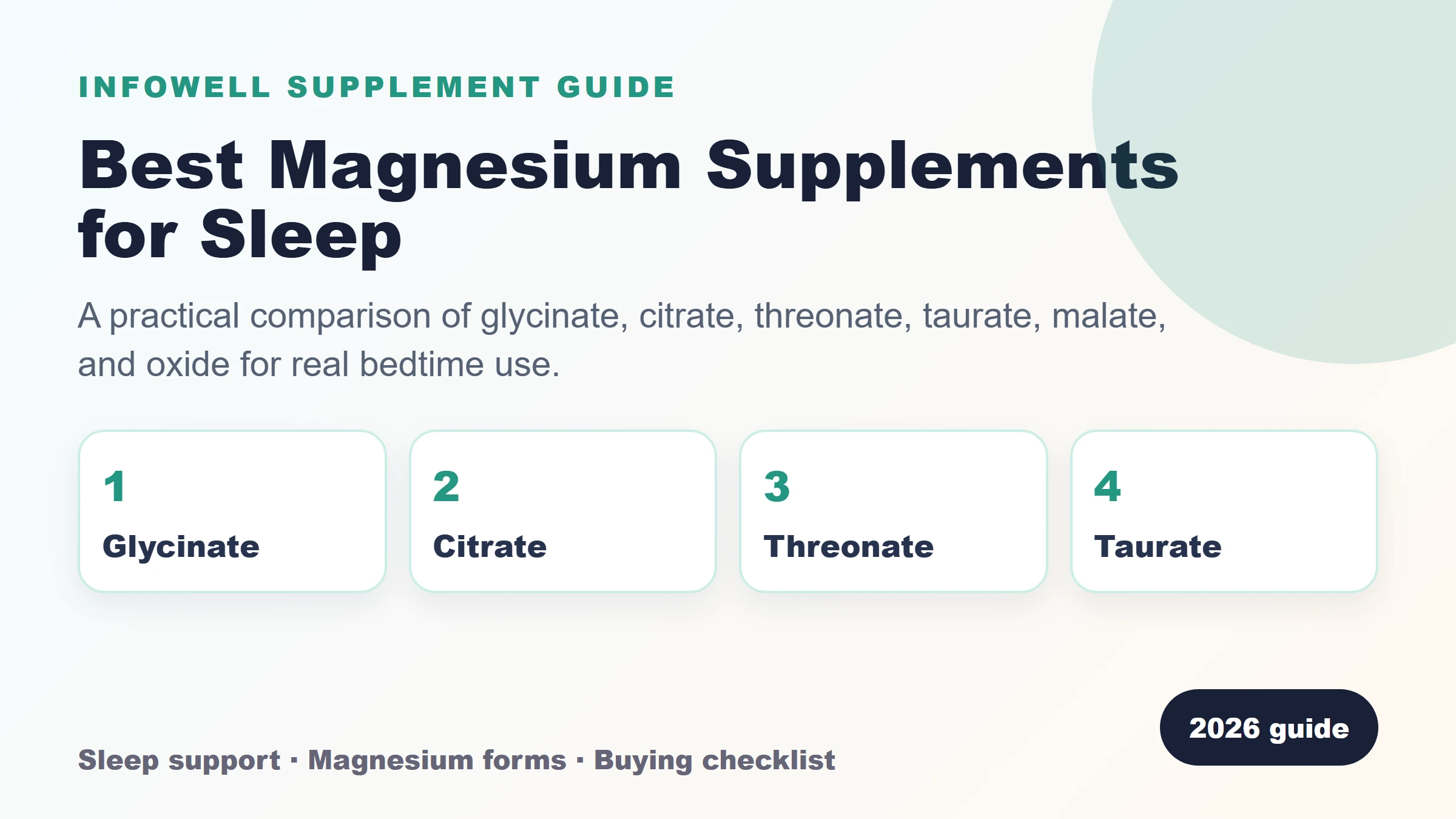
The best magnesium supplements for sleep are not all trying to solve the same problem. Magnesium glycinate is usually the best first choice for bedtime calm, but citrate, threonate, taurate, malate, and oxide each have a different use case. The right decision depends on your sleep bottleneck, stomach tolerance, dose, and the rest of your evening routine.
Start here if you are comparing magnesium bottles
This guide is the broader comparison hub. If you want the short sleep-focused answer, use the companion guide first, then return here for form-by-form buying logic.
- Quick sleep answer: best magnesium supplement for sleep.
- Daily recovery: morning stretches that boost energy.
- Movement rhythm: walking 10,000 steps daily.
Quick answer: which magnesium supplement is best?
For most sleep-focused readers, magnesium glycinate is the best first supplement to test. It is usually gentle, bedtime-friendly, and easier to evaluate than large proprietary sleep blends.
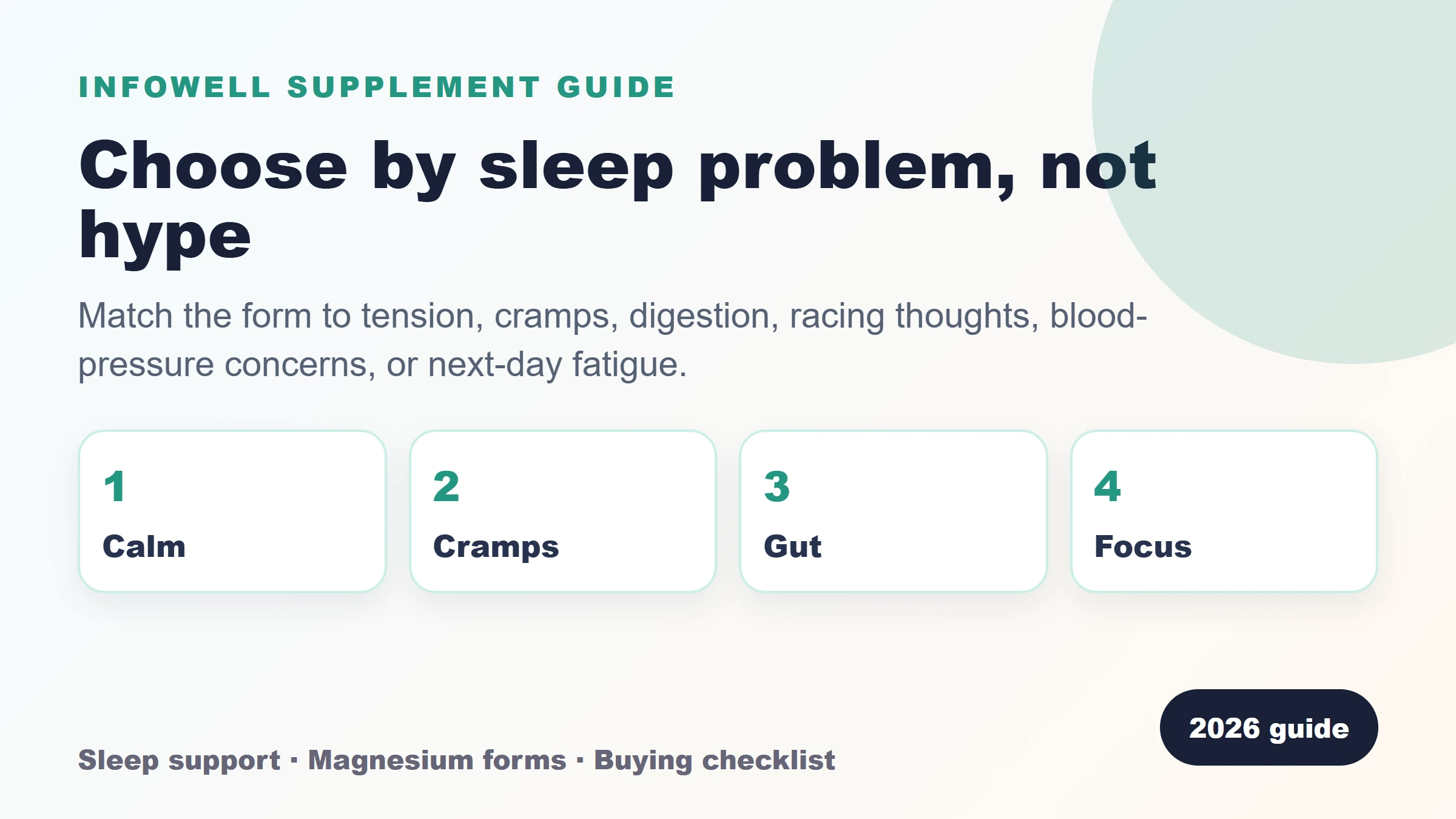
If constipation is part of the issue, citrate may fit better. If mental overactivity is the main complaint and budget allows, threonate may be worth a second-line experiment. If blood-pressure support is part of your overall wellness plan, taurate is sometimes considered. If you want daytime energy support, malate may be better earlier in the day than right before bed.
Why magnesium form matters
Magnesium is an essential mineral, but supplement labels do not all deliver the same experience. The mineral is bound to different compounds, and those pairings influence comfort, timing, price, and practical use. That is why one person can love glycinate while another person prefers citrate or avoids both.
The goal is not to chase the most exotic form. The goal is to choose a supplement that matches your problem, can be taken consistently, and does not create digestive or next-morning side effects.
Fast form map
- Glycinate: best first test for bedtime calm and muscle relaxation.
- Citrate: useful when digestion and constipation are part of the picture.
- Threonate: premium option often marketed for cognitive support.
- Taurate: sometimes chosen when cardiovascular wellness is part of the routine.
- Malate: often better for daytime fatigue than bedtime sedation.
- Oxide: cheap and common, but not the strongest sleep-first choice.
Magnesium glycinate: best first choice for sleep
Magnesium glycinate is the form most people should try first for sleep. It is generally gentle on the stomach and has a cleaner bedtime use case than oxide-heavy formulas.
Choose it if your main issue is physical tension, restless legs, stress-related tightness, or difficulty relaxing after a long day. Take it at a consistent time and judge the pattern over two weeks instead of one unusually good or bad night.
Magnesium citrate: best when digestion matters
Citrate can be helpful if poor sleep and constipation appear together. The tradeoff is that citrate may be too active for some stomachs, especially at higher doses or too close to bedtime.
If you test citrate, start lower than the front label suggests and keep the rest of your routine stable. Otherwise you may confuse a supplement effect with changes from diet, caffeine, stress, or sleep schedule.
Magnesium threonate: premium second-line option
Magnesium threonate is often promoted for brain support and mental clarity. It may interest people who describe their sleep problem as “my body is tired but my mind will not stop.”
The downside is price. If budget is limited, test glycinate first. Threonate is more reasonable after you know that magnesium helps but you want to explore a more targeted formula.
Magnesium taurate: when heart wellness is part of the plan
Magnesium taurate combines magnesium with taurine. Some readers consider it when blood-pressure or heart-health goals overlap with sleep and stress management.
It should not replace medical treatment, and it is not a sleep medication. Think of it as a possible fit when your plan already includes food, movement, stress reduction, and clinician-approved monitoring.
Magnesium malate: usually better earlier in the day
Malate is often discussed for energy metabolism and muscle comfort. For some people, that makes it less ideal as a bedtime supplement. If you are sensitive to supplements, try malate earlier in the day instead of right before bed.
It may fit readers whose sleep problems are connected to daytime fatigue, low movement, or poor recovery rather than pure bedtime anxiety.
Magnesium oxide: cheap but not the sleep winner
Magnesium oxide is common because it is inexpensive and easy to find. It can still be useful in some products, but it is not the best default if your goal is comfortable sleep support.
If a sleep blend highlights magnesium but hides the actual form or relies mostly on oxide, compare it carefully against a simple glycinate product before buying.
Do not let the supplement do all the work
Magnesium works better when it is part of a routine: daylight movement, enough protein, gentle mobility, and consistent bedtime timing.
Read next: protein powder for weight loss and recoveryHow to read a magnesium supplement label
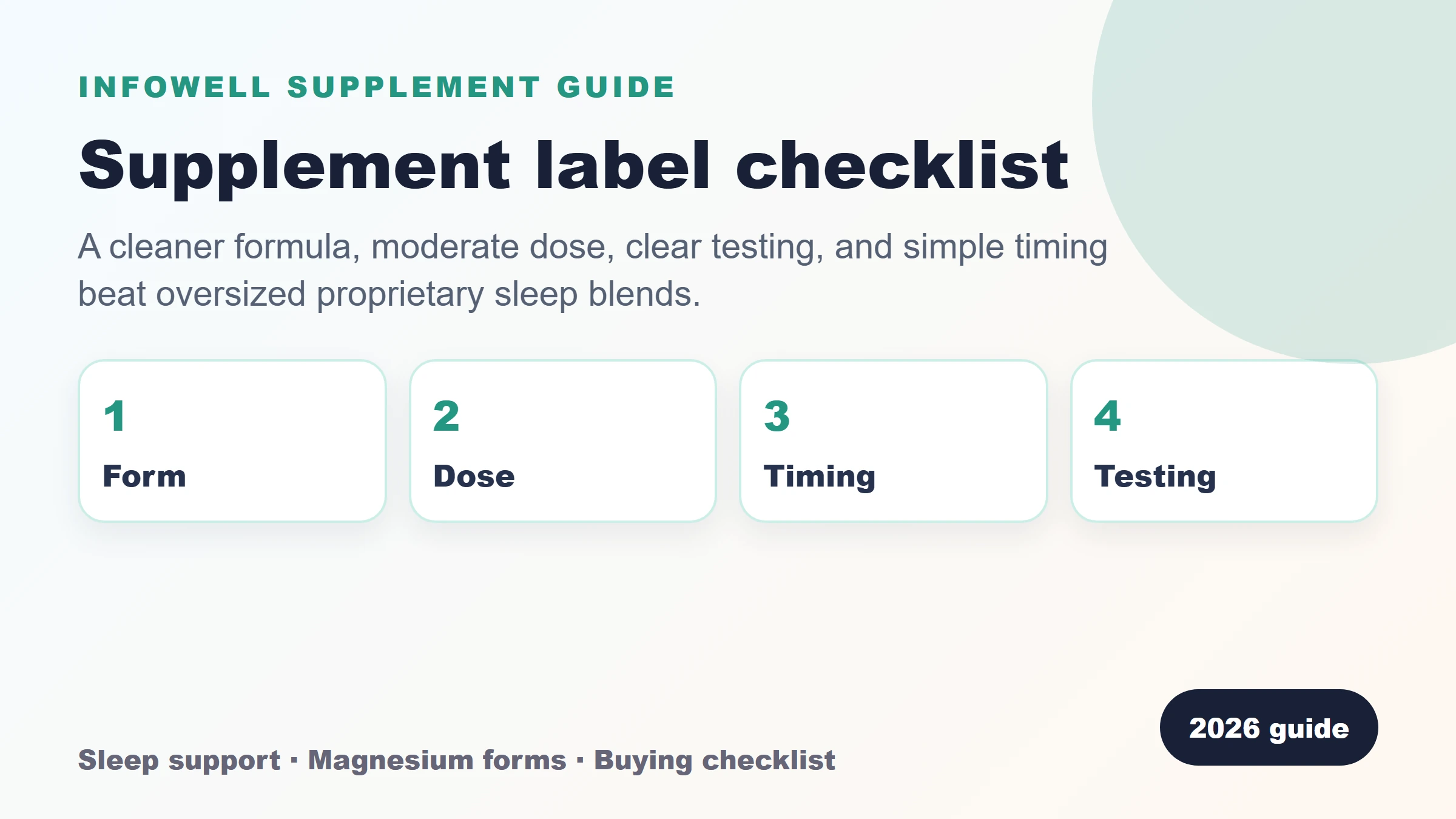
Look for the exact form, elemental magnesium amount, serving size, third-party testing, and added sedatives. More ingredients are not automatically better. A simple label often makes it easier to understand what is helping.
Magnesium supplement buying checklist
| Decision | Best default | Use when | Watch out for |
|---|---|---|---|
| Sleep calm | Glycinate | Tension, restless legs, evening stress | Huge doses or hidden blends |
| Digestion | Citrate | Constipation overlaps with poor sleep | Loose stools or urgency |
| Mental overactivity | Threonate | Budget allows a premium test | Overpaying before basic forms are tested |
| Heart wellness context | Taurate | Stress and cardiovascular goals overlap | Replacing medical care |
| Daytime recovery | Malate | Fatigue and muscle comfort are priorities | Taking it too late if stimulating |
| Budget option | Simple transparent formula | You need low cost | Oxide-only sleep hype |
A 14-day magnesium sleep test
Pick one form, one dose, and one timing window. Track sleep latency, night waking, stomach comfort, leg tension, and next-morning energy. Do not add melatonin, new herbs, caffeine changes, and a new bedtime routine at the same time unless you want unclear results.
Days 1 to 3 are for tolerance. Days 4 to 7 are for consistency. Days 8 to 14 are for deciding whether the improvement is strong enough to keep the supplement.
How magnesium connects to weight loss and recovery
Sleep affects hunger, cravings, training recovery, and energy. If your bigger goal is weight management, connect magnesium to the basics: adequate protein, walking, meal timing, and digestion. Helpful next reads include best protein powder for weight loss, how to improve gut health naturally, and intermittent fasting for beginners.
Safety: who should ask before taking magnesium?
People with kidney disease, pregnancy considerations, heart rhythm issues, or medication interactions should speak with a clinician before using magnesium regularly. Supplements can be helpful, but they are not automatically risk-free.
Also be cautious if a product stacks magnesium with melatonin, valerian, GABA, antihistamine-like ingredients, or very high doses. If you feel groggy or your digestion changes, the formula may not fit.
Evidence and reference context
For intake, safety, and upper-limit background, review the NIH Office of Dietary Supplements magnesium fact sheet. For broader sleep routine guidance, pair supplement decisions with the Sleep Foundation sleep hygiene guide.
FAQ
What is the best magnesium supplement for sleep?
Magnesium glycinate is the best first choice for most people because it is gentle and bedtime-focused.
Is magnesium citrate good for sleep?
It can be, especially if constipation affects comfort, but it may be too digestion-oriented for sensitive stomachs at bedtime.
Is magnesium threonate worth the money?
It may be worth testing after basic forms if mental overactivity is your main issue and budget is not a problem.
Should I avoid magnesium oxide?
Not always, but it is not the strongest sleep-first option. Be cautious with oxide-heavy sleep blends that look premium.
How much magnesium should I take for sleep?
Use the product label and clinician guidance. Start conservatively, especially if you are sensitive to digestive side effects.
When should I take magnesium?
Many people test it 1 to 2 hours before bed, but malate and some formulas may fit better earlier in the day.
Conclusion
The best magnesium supplements for sleep are simple, form-specific, and easy to test. Start with glycinate if you want bedtime calm. Consider citrate when digestion matters, threonate when mental overactivity is the target and budget allows, taurate when heart-wellness goals overlap, and malate when daytime recovery is the issue. Avoid guessing from front-label claims alone. Use a clean two-week test and keep the supplement only if your sleep pattern actually improves.
Quick 2026 magnesium shopping checklist
If you are comparing magnesium for sleep, start with the form, dose, and timing rather than the biggest label claim. A simple checklist helps you avoid buying a supplement that looks strong but does not fit your routine.
- Form: magnesium glycinate is often chosen for nighttime routines, while citrate may feel different for digestion.
- Dose: compare elemental magnesium per serving, not just the total compound weight.
- Routine fit: check capsule count, timing, and whether the formula adds melatonin or herbs.
- Safety: ask a clinician first if you use medication, have kidney disease, or are pregnant.
For a broader wellness routine, also read how to improve gut health naturally, morning stretches for energy, and protein powders for weight loss. These related guides help readers continue to another useful page instead of leaving after one article.
Post a Comment