
📌 Table of Contents ⬆

Best Probiotics for Women's Digestive Health: 2026 Expert Guide
Did you know that 70% of the immune system lives in the gut — and women face unique digestive challenges that men simply don't? From hormonal fluctuations that shift gut bacteria monthly to a higher prevalence of IBS (affecting 2 in 3 IBS sufferers who are women), the female digestive system deserves specialized, science-backed support. With the global probiotics market projected to surpass $94.48 billion by 2027, the shelves are overflowing with options — but not all probiotics are created equal for women's bodies, and choosing the wrong one could mean wasted money and missed health benefits.
For more information, see: NIH: Probiotics Fact Sheet, Mayo Clinic: Probiotics
📌 Quick Summary
- Strain specificity matters: Not all probiotics work the same — strains like *Lactobacillus rhamnosus* GG and *Bifidobacterium longum* are clinically validated for women's digestive and hormonal health specifically.
- CFU count isn't everything: A product boasting 100 billion CFUs is meaningless if the strains don't survive stomach acid — look for enteric-coated or spore-based formulas with survival guarantees.
- Hormonal cycles change your gut: Research published in *Cell Host & Microbe* shows estrogen levels directly influence gut microbiome diversity, making probiotic timing and strain selection cycle-aware choices for women.
📊 Why the Best Probiotics for Women's Digestive Health Are Different From Everyone Else's
When it comes to the best probiotics for women's digestive health, the conversation has to start with biology. The female gut microbiome is a genuinely distinct ecosystem — shaped by estrogen, progesterone, cortisol fluctuations, pregnancy history, birth control use, and even menstrual cycle phases. A landmark 2019 study published in *Gut* found that gut microbiome composition in women shifts measurably across the menstrual cycle, with Lactobacillus populations declining during the luteal phase. This means a probiotic strain that works brilliantly for a man or even a postmenopausal woman might not deliver the same results for a woman in her reproductive years. On top of that, women are significantly more likely to suffer from functional GI disorders — the American College of Gastroenterology reports that conditions like IBS, constipation-dominant bowel disorders, and SIBO disproportionately affect women at rates nearly double those of men. This isn't coincidence; it's physiology, and your probiotic strategy should reflect that reality rather than defaulting to a one-size-fits-all capsule.
Beyond the hormonal dimension, women's digestive health is also influenced by dietary patterns, stress responses, and the gut-brain axis — all of which interact with probiotic strains in measurable ways. Research from Stanford University's Human Food Project demonstrated that fermented food intake (a natural probiotic source) increased microbiome diversity by up to 19% in just 10 weeks — but the effect was more pronounced in participants with initially lower diversity, which is statistically more common in women under chronic stress. Additionally, women transitioning through perimenopause experience a documented decline in Bifidobacterium species, which correlates with increased bloating, constipation, and metabolic changes. Understanding these layered factors is why top registered dietitians and gastroenterologists now recommend strain-specific, life-stage-targeted probiotic formulations rather than generic blends, and why this 2026 guide focuses on the science rather than just the marketing claims printed on the bottle.
Lactobacillus rhamnosus GG
Top strain for IBS relief and gut lining repair
Bifidobacterium longum
Reduces bloating and supports estrogen balance
Saccharomyces boulardii
Yeast-based probiotic for antibiotic recovery
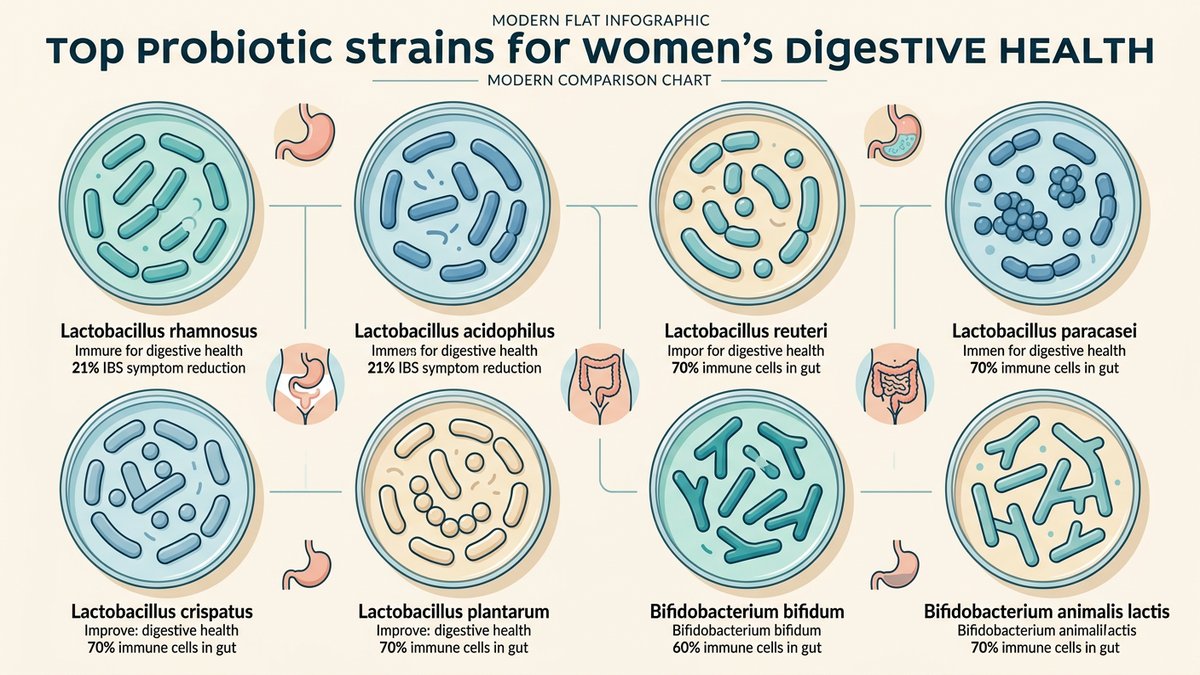
| Probiotic Strain | Primary Benefit for Women | Clinically Studied Dose | Best Life Stage |
|---|---|---|---|
| Lactobacillus rhamnosus GG | IBS relief, gut lining integrity | 10–20 billion CFU/day | All ages |
| Bifidobacterium longum BB536 | Bloating reduction, estrogen metabolism support | 5–10 billion CFU/day | Reproductive & Perimenopause |
| Lactobacillus acidophilus NCFM | Lactose digestion, vaginal microbiome balance | 10 billion CFU/day | Reproductive years |
| Saccharomyces boulardii CNCM I-745 | Antibiotic-associated diarrhea recovery | 500–1000 mg/day | All ages |
| Bifidobacterium infantis 35624 | IBS pain and bloating (gold-standard trial) | 1 billion CFU/day | IBS sufferers, all ages |
💡 Key takeaway: Choosing a probiotic by strain name and clinical evidence — not just CFU count or brand reputation — is the single most important factor in finding the best probiotics for women's digestive health in 2026.
🎯 How to Choose the Best Probiotics for Women's Digestive Health: A Step-by-Step Expert Framework
Navigating the probiotic aisle — whether online or in your local health food store — can feel overwhelming when every label promises to 'restore gut balance' and 'boost immunity.' The reality is that the $8.3 billion U.S. probiotics market is packed with products that vary wildly in quality, strain survival rates, and clinical backing. A 2023 independent analysis by ConsumerLab.com found that nearly 30% of tested probiotic supplements contained fewer live organisms than their labels claimed, and several failed basic purity standards. For women specifically, the stakes are higher because the wrong probiotic strain can not only fail to help but may actually feed unwanted bacterial populations, worsen SIBO symptoms, or create unnecessary digestive discomfort. That's why having a clear, expert-designed framework for evaluating products is not optional — it's essential before you spend another dollar on a supplement that may not serve your unique physiology.
The good news is that once you understand the four key pillars of probiotic quality for women — strain specificity, survivability, dosage accuracy, and third-party testing — the selection process becomes much more straightforward. Gastroenterologists at major institutions like the Cleveland Clinic and Johns Hopkins now emphasize that patients should treat probiotic selection with the same rigor they'd apply to any other health intervention: look for peer-reviewed evidence, demand transparency from manufacturers, and match the strain to the specific symptom or health goal you're targeting. This four-step framework below distills current best practices from registered dietitians, microbiome researchers, and clinical gastroenterologists into a practical checklist any woman can use in 2026 to cut through the noise and identify products that actually work.
Identify Your Specific Digestive Goal First
Before reading a single label, get clear on your primary digestive concern. Are you dealing with chronic bloating, IBS-C (constipation-dominant IBS), antibiotic recovery, or general gut maintenance? Each condition maps to different clinically validated strains. For example, *Bifidobacterium infantis 35624* (sold as Align) has the most robust clinical trial data specifically for IBS pain and bloating — a pivotal randomized controlled trial published in the *American Journal of Gastroenterology* showed it outperformed placebo in reducing abdominal discomfort in women with IBS by a statistically significant margin. Meanwhile, *Saccharomyces boulardii* is the go-to evidence-based choice for antibiotic-associated diarrhea. Matching strain to symptom is the foundation of an effective probiotic strategy and prevents the common mistake of buying a generic multi-strain blend that isn't clinically validated for anything specific.
Verify Survivability and Delivery Technology
A probiotic capsule is only valuable if the bacteria inside are still alive when they reach your colon. Stomach acid, bile salts, and digestive enzymes kill the majority of unprotected probiotic strains before they ever reach the intestines. Look for products that use enteric coating, BIO-tract technology, delayed-release capsules, or spore-forming strains (like *Bacillus coagulans* or *Bacillus subtilis*) which are naturally acid-resistant. Refrigerated probiotics are not automatically better — many modern shelf-stable formulations using nitrogen-flushed packaging and freeze-drying technology demonstrate superior survival rates over refrigerated competitors in independent testing. The label should explicitly state the CFU count at expiry (not just at manufacturing), which ensures you're getting the promised dose even after sitting on a shelf for several months. Companies that only list CFUs 'at time of manufacture' are often concealing significant die-off.
Demand Third-Party Testing and Transparency
Third-party verification is non-negotiable in 2026. Look for certifications from NSF International, USP (United States Pharmacopeia), Informed Sport, or ConsumerLab on the packaging or the brand's website. These organizations independently test products for label accuracy, contamination, and potency — and their standards are rigorous. According to a 2022 review in *Nutrients*, a significant proportion of commercially available probiotics in the U.S. do not meet their own label claims for CFU count or species identification when independently tested. Women with autoimmune conditions or immune-compromising health situations should pay extra attention to third-party testing for contaminants and allergens, as some probiotic capsules contain undisclosed dairy, gluten, or soy — common inflammatory triggers. Brands like Garden of Life, Jarrow Formulas, and Culturelle consistently receive strong marks in independent analyses for label accuracy and purity.
Consider Prebiotic Synergy and Additional Women's Health Ingredients
The most effective probiotic formulations in 2026 are synbiotics — products that combine probiotics with prebiotics (the fiber-based food that beneficial bacteria need to thrive). Clinical research published in *Frontiers in Nutrition* confirms that prebiotic-probiotic combinations produce significantly greater improvements in gut microbiome diversity and digestive symptom relief compared to probiotics alone. Look for prebiotics like inulin, FOS (fructooligosaccharides), or chicory root extract alongside your probiotic strains. For women specifically, some formulations now include additional evidence-backed ingredients like cranberry extract (for urinary tract support, since UTIs often follow gut dysbiosis), dong quai (for hormonal balance), or digestive enzymes to address the root causes of bloating and gas. However, be cautious of overly complex blends — more ingredients aren't always better, and some combinations haven't been tested together for safety or efficacy.
⚖️ Probiotics for Women's Digestive Health: Honest Pros, Cons, and What the Research Really Says
It would be dishonest to tell you that probiotics are a guaranteed solution for every digestive complaint. The science is genuinely exciting — and growing rapidly — but it's also nuanced. A comprehensive 2019 meta-analysis published in *Gastroenterology* reviewed 53 randomized controlled trials involving probiotic supplementation for IBS and concluded that probiotics produced statistically significant improvements in overall IBS symptoms compared to placebo, with a relative risk reduction of approximately 21%. That's meaningful, but it also means a substantial portion of participants did not respond, which highlights the deeply individual nature of the gut microbiome. Factors like baseline microbiome diversity, diet quality, stress levels, medication use, and even genetics all influence how a woman responds to a specific probiotic product — which is why personalization (guided by a healthcare provider or registered dietitian) produces dramatically better outcomes than random supplementation.
It's also worth addressing the growing conversation around probiotic safety in specific populations. For the vast majority of healthy women, commercially available probiotics are considered extremely safe with minimal side effects — most commonly mild bloating or gas during the first one to two weeks of use, which typically resolves as the microbiome adjusts. However, women who are pregnant, immunocompromised, or managing SIBO (Small Intestinal Bacterial Overgrowth) need to exercise particular caution. Counterintuitively, adding more live bacteria to a gut already overrun with bacterial overgrowth can worsen symptoms dramatically. A 2019 study published in *Cell* found that standard probiotic use actually delayed microbiome recovery after antibiotics in some individuals compared to letting the gut restore itself naturally. These nuances are exactly why we provide an honest, balanced assessment here — so you can make a genuinely informed decision rather than being sold a supplement.
Pros
- ✅ Clinically validated IBS relief: A 2019 meta-analysis in *Gastroenterology* showed probiotics reduced IBS symptoms with a statistically significant relative risk reduction of ~21% versus placebo across 53 RCTs.
- ✅ Supports estrogen metabolism: Certain Lactobacillus and Bifidobacterium strains produce beta-glucuronidase enzymes that help regulate estrogen recirculation — directly relevant to hormonal balance and mood in women.
- ✅ Reduces antibiotic-associated diarrhea: *Saccharomyces boulardii* has Level 1 clinical evidence for preventing antibiotic-associated diarrhea, reducing risk by up to 51% in multiple controlled trials.
- ✅ Immune system support: With 70% of immune cells residing in gut-associated lymphoid tissue, a balanced microbiome supported by the right probiotics translates directly to stronger immune resilience, especially relevant during cold and flu season.
Cons
- ❌ Not universally effective: Response to probiotics is highly individual — microbiome composition, diet, and genetics mean some women see minimal benefit from even gold-standard strains, requiring trial and error.
- ❌ Can worsen SIBO symptoms: Women with undiagnosed small intestinal bacterial overgrowth may experience increased bloating, brain fog, and discomfort when taking standard probiotic supplements that add live bacteria to an already overpopulated small intestine.
- ❌ Industry quality control gaps: A ConsumerLab.com 2023 analysis found that nearly 30% of tested probiotics did not meet label claims for live organism count, making brand and third-party certification research essential before purchasing.
⚠️ Important warning: If you are pregnant, immunocompromised, or have been diagnosed with SIBO or a serious GI condition, consult your gastroenterologist or OB-GYN before starting any probiotic supplement. While generally safe, specific strains can interact with certain health conditions in ways that require medical supervision.
✅ Top Probiotic Picks for Women's Digestive Health in 2026: What Experts Actually Recommend
Based on current clinical evidence, third-party testing records, strain specificity, and real-world user outcomes, several probiotic products consistently rise to the top when evaluated through an expert lens for women's digestive health in 2026. Culturelle Women's Healthy Balance (containing *Lactobacillus rhamnosus* GG + *Lactobacillus crispatus*) earns consistent praise from gastroenterologists for its dual-action approach to both digestive and vaginal microbiome support — and it's one of the most tested strains in the world with over 800 published scientific studies behind LGG alone. Align Probiotic (featuring the proprietary *Bifidobacterium 35624* strain) remains a gastroenterologist-recommended first-line option for IBS-related bloating and discomfort, backed by a landmark 8-week RCT demonstrating superiority over placebo in women with IBS. Garden of Life Dr. Formulated Women's Probiotics stands out for being NSF Certified, USDA Organic, and Non-GMO Project Verified, offering 50 billion CFUs across 16 clinically studied strains — a strong choice for women seeking comprehensive, clean-label digestive support with transparent manufacturing standards and documented third-party testing.
For women navigating perimenopause or postmenopause, Jarrow Formulas Fem-Dophilus deserves special mention — it contains Lactobacillus rhamnosus GR-1 and Lactobacillus reuteri RC-14, two strains with the most extensive clinical research record for women's urogenital and digestive health specifically, including studies showing significant reductions in bacterial vaginosis recurrence and improvements in gut transit time. Women recovering from antibiotic courses should prioritize Florastor Daily Probiotic (containing *Saccharomyces boulardii* CNCM I-745), the gold standard for antibiotic-associated diarrhea prevention with Level 1 evidence from multiple international RCTs. Budget-conscious shoppers who don't want to compromise on quality can also look at NOW Foods Probiotic-10, which is USP Verified and provides 25 billion CFUs across 10 strains at roughly half the price point of premium brands — ConsumerLab has confirmed it meets label claims for potency and purity. Regardless of which product you choose, experts universally recommend pairing your probiotic with a diverse, fiber-rich diet — because even the best supplement cannot outperform poor dietary habits when it comes to long-term gut microbiome health.
❓ Frequently Asked Questions
✍️ Final Thoughts: Your Next Step Toward Better Digestive Health
Navigating the world of probiotics as a woman in 2026 doesn't have to feel overwhelming — not when you have the right framework. The single most important lesson from this guide is that the best probiotics for women's digestive health are strain-specific, third-party tested, and chosen based on your unique life stage and health goals — not based on flashy packaging, celebrity endorsements, or the biggest CFU number you can find on a shelf. Women's digestive health is shaped by estrogen, progesterone, stress hormones, dietary patterns, and the hormonal shifts of each life phase — from reproductive years through perimenopause and beyond. A probiotic that ignores this biology is leaving real health benefits on the table. Whether you're managing IBS bloating, recovering from antibiotics, navigating perimenopause gut changes, or simply wanting to maintain a resilient gut microbiome, there is a clinically validated strain for your situation — and this guide has given you the tools to find it. The research is clear: when the right strain meets the right person at the right dose, probiotics deliver measurable, meaningful improvements in digestive health, immune function, and even hormonal balance.
So what should you do right now? Start by identifying your primary digestive concern — bloating, IBS, antibiotic recovery, hormonal gut shifts — and match it to the corresponding clinically validated strain using the table and framework in this guide. Then check that any product you're considering carries a third-party testing certification (NSF, USP, or ConsumerLab verified) and lists its CFU count at expiry rather than at manufacture. Consider pairing your probiotic with 25 grams of daily dietary fiber from whole food sources like legumes, oats, leafy greens, and berries to dramatically amplify the colonization success of your chosen strains. Give any new probiotic a genuine 8 to 12-week trial before evaluating results — the gut microbiome reshapes slowly, and patience is essential. Most importantly, loop in your primary care physician, OB-GYN, or registered dietitian — especially if you're pregnant, managing a chronic condition, or taking prescription medications. Bookmark this guide at InfoWellHub.com and revisit it as your health needs evolve, because your gut — and the science behind it — will keep changing, and so should your strategy for supporting it.
Post a Comment