
📌 Table of Contents ⬆
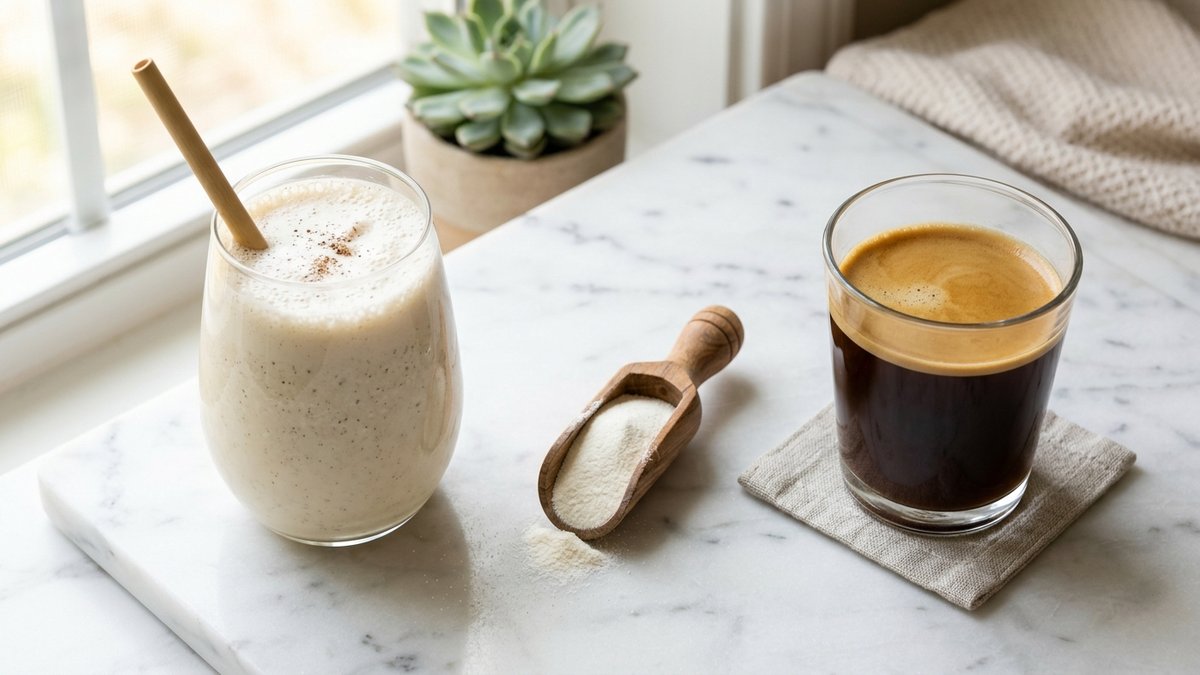
Collagen vs Whey Protein: Which One Should You Actually Take?
Picture this: You're standing in the supplement aisle, holding a tub of collagen powder in one hand and whey protein in the other — both promising to transform your body, both backed by a wall of glowing reviews — and you have absolutely no idea which one is actually right for you. The collagen vs whey protein debate is one of the most Googled supplement questions of 2024, and honestly? Most answers online are either written by brands trying to sell you something or so buried in science jargon you'd need a PhD to decode them. Here's a surprising stat to kick things off: the global collagen supplement market hit $9.3 billion in 2023, while whey protein sits at a whopping $13.6 billion — meaning billions of people are taking one or the other (or both) without always knowing why. By the end of this guide, you'll know exactly which one belongs in your routine — and why the answer might actually surprise you.
For more information, see: NIH Office of Dietary Supplements – Exercise & Athletic Performance, PubMed – Collagen Peptides and Skin Elasticity RCT
📌 Quick Summary
- Whey protein wins for muscle building: With a complete amino acid profile and high leucine content, whey stimulates muscle protein synthesis significantly better than collagen in post-workout scenarios.
- Collagen leads for skin, joints, and connective tissue: Studies show 10g/day of hydrolyzed collagen can reduce joint pain by up to 40% and visibly improve skin elasticity within 8–12 weeks.
- The real answer? Many people benefit from BOTH: Collagen and whey target completely different tissues — combining them covers muscle recovery AND structural health without overlap or conflict.
📊 Collagen vs Whey Protein: What Are You Actually Taking?
Before you can decide which protein wins, you need to understand what each one actually *is* — because they are fundamentally different things doing fundamentally different jobs in your body. Whey protein is a byproduct of cheese production, derived from cow's milk. It's a complete protein, meaning it contains all nine essential amino acids your body can't produce on its own. It's especially rich in leucine — the amino acid most responsible for triggering muscle protein synthesis. When you drink a whey shake after a workout, your bloodstream absorbs those amino acids within 30–60 minutes, flooding your muscles with the raw materials they need to rebuild. That's why whey has been the gold standard of sports nutrition for decades, and why virtually every clinical muscle-building study uses it as the benchmark. It's fast, efficient, and remarkably well-studied — with over 1,000 peer-reviewed papers backing its muscle benefits.
Collagen protein, on the other hand, is the most abundant protein in the human body — making up roughly 28% of your total body protein — and it's the primary structural material in your skin, bones, tendons, ligaments, and cartilage. When you take a collagen supplement (usually in hydrolyzed form, meaning it's been broken into smaller peptides for better absorption), you're essentially giving your body the specific amino acids — glycine, proline, and hydroxyproline — it needs to repair and regenerate connective tissue. Here's what most guides won't tell you: collagen is *not* a complete protein. It's missing tryptophan, making it an incomplete amino acid source. That doesn't make it less valuable — it just means it's solving a *different* problem than whey. Understanding this core distinction is the entire game when it comes to the collagen vs whey protein debate.
Muscle Recovery
Whey delivers all 9 essential amino acids fast
Skin & Joint Health
Collagen rebuilds connective tissue from within
Stack Both Smartly
Morning collagen + post-workout whey = full coverage
| Feature | Collagen Protein | Whey Protein | Winner |
|---|---|---|---|
| Protein per serving | ~10g | ~20–25g | ⭐⭐⭐⭐⭐ Whey |
| Complete protein? | ❌ No (missing tryptophan) | ✅ Yes (all 9 EAAs) | ⭐⭐⭐⭐⭐ Whey |
| Muscle building | Moderate (poor leucine) | Excellent (high leucine) | ⭐⭐⭐⭐⭐ Whey |
| Skin & joint support | Excellent (clinical evidence) | Minimal | ⭐⭐⭐⭐⭐ Collagen |
| Absorption speed | Moderate (30–90 min) | Fast (30–60 min) | ⭐⭐⭐⭐ Whey |
| Dairy-free option? | ✅ Marine/plant collagen | ❌ Typically dairy-based | ⭐⭐⭐⭐⭐ Collagen |
| Taste / mixability | Mostly flavorless | Wide flavor range | ⭐⭐⭐⭐ Tie |
💡 Key takeaway: Whey and collagen aren't competitors — they're specialists. Whey is your muscle architect; collagen is your structural repair crew.
🎯 Collagen vs Whey Protein for Skin, Joints, and Muscle: Who Actually Wins Each Battle?
Here's where it gets really interesting — and where most supplement guides completely drop the ball. Instead of asking 'which protein is better overall,' the smarter question is: better for what? Because the research tells a very clear, goal-specific story. For muscle hypertrophy and athletic performance, whey protein is the undisputed champion. A landmark meta-analysis published in the *British Journal of Sports Medicine* found that whey protein supplementation combined with resistance training increased lean muscle mass by an average of 0.69 kg more than training alone. That might sound modest, but over months of consistent training, it compounds into a seriously noticeable difference. Collagen, by comparison, has shown muscle benefits primarily in older adults and sedentary populations — not in athletes looking to maximize gains.
But flip the script to skin and joint health, and collagen absolutely dominates. A 2019 randomized controlled trial published in *Nutrients* found that women taking 10g of hydrolyzed collagen daily for 8 weeks saw statistically significant improvements in skin elasticity, hydration, and dermal density compared to placebo. For joints, a study out of Penn State found that athletes taking 10g of collagen hydrolysate daily for 24 weeks reported significantly reduced joint pain during activity compared to the control group. This is precisely why the collagen vs whey protein conversation has become so popular among women over 40 — a demographic where joint health, skin aging, and overall structural integrity become just as important as muscle tone. The surprising part? Your body's natural collagen production drops by roughly 1% per year after age 20, meaning most adults are already in deficit by the time they start noticing the effects.
Choose Whey for Post-Workout Recovery
If your primary goal is building or maintaining lean muscle mass, whey protein should be your non-negotiable post-workout supplement. The high leucine content (typically 10–11% of whey's amino acid profile) directly activates the mTOR pathway — your body's primary muscle-building switch. Aim for 20–40g within 30–60 minutes after strength training for optimal muscle protein synthesis. Look for whey isolate if you're lactose-sensitive, as it contains less than 1% lactose compared to whey concentrate. Brands that third-party test (NSF Certified or Informed Sport) are your safest bet for purity and accurate dosing.
Use Collagen for Morning Skin and Joint Support
For skin elasticity, joint pain reduction, and connective tissue health, hydrolyzed collagen peptides are your go-to — and timing matters more than most people think. Taking 10g of collagen with vitamin C (which is essential for collagen synthesis) in the morning on an empty stomach or with breakfast maximizes absorption and utilization. Type I and III collagen (found in bovine or marine sources) is most effective for skin. Type II collagen targets cartilage specifically, making it the better choice if joint pain is your primary concern. Give it a minimum of 8–12 weeks before judging results — collagen remodeling is a slow, structural process.
Consider Stacking Both Strategically
Here's the move most people never consider: taking both collagen and whey, at different times of day, for completely different goals. This isn't redundant — it's actually brilliant from a physiological standpoint. Your collagen peptides in the morning support your structural tissues (skin, joints, ligaments), while your whey shake after the gym supports your skeletal muscle. They don't compete for the same receptors or serve the same tissue types. Research from the *American Journal of Clinical Nutrition* supports the idea that combining different protein sources throughout the day improves overall amino acid availability and body composition outcomes. Think of it like a construction crew: collagen builds the framework, whey furnishes the rooms.
Match Your Protein to Your Life Stage
Your optimal protein strategy genuinely shifts with age, and this is one of the most underappreciated factors in the collagen protein versus whey supplement conversation. In your 20s and 30s, whey protein is typically the priority — you're in peak muscle-building years, your collagen production is declining but manageable, and your training performance is front of mind. In your 40s and beyond — particularly for women navigating perimenopause, when collagen loss accelerates dramatically — adding collagen peptides becomes significantly more important. Estrogen plays a key role in collagen synthesis, so as levels drop, so does your structural protein. A smart approach at this life stage: 10g collagen in the morning + 20–25g whey post-workout covers both bases without overspending or overcomplicating your routine.
⚖️ Honest Pros and Cons: Collagen vs Whey Protein Side by Side
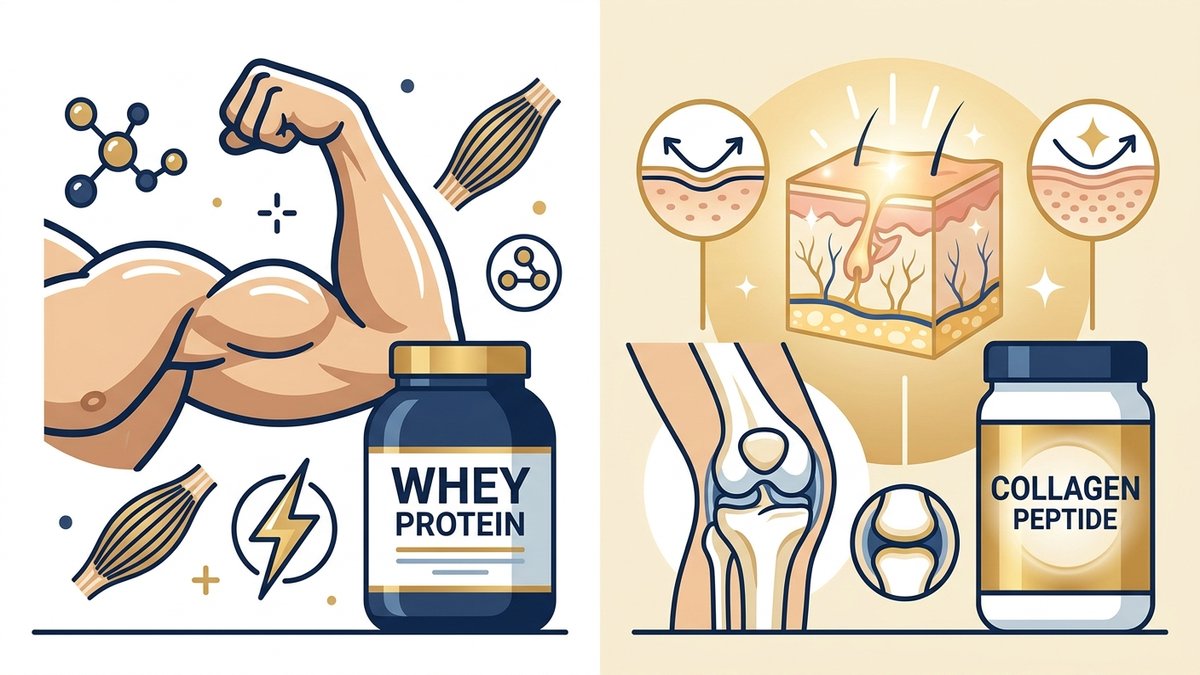
Let's cut through the marketing noise and get brutally honest about what each supplement does well — and where it falls short. Because neither collagen nor whey protein is perfect, and the supplement industry has a vested interest in making you think each one is a miracle in a tub. Whey protein's advantages are well-documented and hard to argue with: it's complete, it's fast-absorbing, it's cheap per gram of protein, and it has decades of clinical backing for muscle building and weight management. The downsides? It's dairy-derived (a deal-breaker for vegans and many lactose-intolerant users), some lower-quality products are loaded with artificial sweeteners and fillers, and it does essentially nothing for your skin, hair, nails, or joint health. If those are concerns for you, whey alone won't cut it.
Collagen's pros are equally compelling but in a completely different lane. The clinical evidence for skin and joint benefits is genuinely robust — not just influencer hype — and hydrolyzed collagen is remarkably easy to use (it dissolves almost invisibly in coffee or smoothies). But here's the truth most guides won't tell you: collagen is a poor muscle-building protein. Its low leucine content and incomplete amino acid profile mean it simply cannot stimulate muscle protein synthesis the way whey can. Some collagen products are also surprisingly expensive per gram compared to whey, and quality varies *wildly* between brands. Always look for third-party tested, hydrolyzed collagen peptides with a clear source (grass-fed bovine or wild-caught marine) for the cleanest results.
Pros
- ✅ Whey Pro 1: Complete amino acid profile with high leucine — clinically proven to maximize muscle protein synthesis in resistance-trained individuals
- ✅ Whey Pro 2: Fast absorption (peaks in blood within 60 min) — ideal timing for post-workout recovery windows
- ✅ Collagen Pro 1: Clinically shown to improve skin elasticity and reduce joint pain with as little as 10g/day over 8–24 weeks
- ✅ Collagen Pro 2: Nearly tasteless and odorless — mixes invisibly into coffee, soups, and smoothies without changing flavor
Cons
- ❌ Whey Con 1: Dairy-derived — not suitable for vegans, and can cause bloating or digestive discomfort in people with lactose sensitivity (up to 65% of adults have some degree of lactose malabsorption)
- ❌ Collagen Con 1: Incomplete protein — missing tryptophan and low in leucine, making it ineffective as a standalone muscle-building supplement
- ❌ Collagen Con 2: Results require patience — skin and joint improvements typically take 8–12 weeks of consistent daily use before becoming noticeable, which leads many people to quit too early
⚠️ 💡 Pro Tip: If you're vegan, neither traditional whey nor bovine collagen works for you. Look into pea protein isolate as your whey alternative and vitamin C + amino acid blends (glycine, proline) to support your body's natural collagen synthesis, since true vegan collagen doesn't exist yet in supplement form.
✅ Best Protein Supplement for Women Over 40 (and Everyone Else): How to Actually Choose
If you've been searching for the best protein supplement for women over 40, here's your honest, no-fluff answer: you probably need *both* — just in different doses and at different times. Here's why this life stage changes everything. After 40, three things happen simultaneously that make nutrition strategy more complex: muscle loss accelerates (sarcopenia begins robbing you of 3–5% of muscle mass per decade after 30), collagen production nosedives (accelerated further by declining estrogen), and recovery time increases (meaning what you eat around workouts matters even more). Relying on whey alone leaves your joints, skin, and connective tissue unprotected. Relying on collagen alone means you're not adequately fueling the muscle mass that keeps your metabolism strong and your bones protected. The winning combo: 10g hydrolyzed collagen with breakfast (paired with vitamin C for synthesis) and 25g whey isolate post-workout. Simple, evidence-based, and surprisingly affordable when you break it down per serving.
For everyone else — let's make this even more actionable. If you're a 20–35 year old focused on muscle building and athletic performance, whey protein is your MVP and collagen is a nice-to-have add-on, especially if you have any joint discomfort from high training volume. If you're primarily focused on anti-aging, skin quality, or managing joint pain without intense gym goals, collagen peptides alone may be perfectly sufficient — no whey required. And if you're wondering can you take collagen and whey protein together — yes, absolutely, and there's no interference between the two. In fact, a small but growing body of research suggests that taking collagen before exercise (not whey — that's still post-workout) may improve connective tissue repair more effectively than post-workout collagen timing. The field is evolving fast, and the smarter you are about *when* you take each supplement, the more you'll get out of both. For deeper reading on optimizing your supplement timing and protein intake, check out the research hub at [NIH's Office of Dietary Supplements](https://ods.od.nih.gov/factsheets/ExerciseAndAthleticPerformance-HealthProfessional/) — it's the most trustworthy source on the internet for supplement science.
❓ Frequently Asked Questions
✍️ Final Thoughts: Your Next Step in the Collagen vs Whey Protein Decision
If you've read this far, you're already ahead of 90% of people standing confused in that supplement aisle. The collagen vs whey protein debate doesn't have to be a competition — and the biggest mistake most people make is treating it like one. Here's the clearest summary I can give you: whey protein builds and preserves muscle. It's fast, complete, leucine-rich, and backed by thousands of studies. If you lift weights, play sports, or simply want to maintain lean mass as you age, whey protein belongs in your routine. Collagen peptides repair and protect your structural body — your skin, your joints, your tendons, your ligaments. If you're dealing with joint discomfort, noticing changes in your skin, or you're over 40 and aware that collagen production has been declining since your 20s, collagen supplementation is one of the most evidence-backed investments you can make in long-term health. And if you want to be truly comprehensive? Take both — collagen in the morning, whey post-workout. Different jobs, different timings, zero conflict, and full-body coverage.
Here's what I'd do if I were starting today: Step 1 — Add 10g of hydrolyzed collagen peptides (look for grass-fed bovine or wild-caught marine, third-party tested) to your morning coffee or smoothie alongside a vitamin C source. Set a calendar reminder and commit to 12 weeks before evaluating. Step 2 — Choose a quality whey isolate (if you're dairy-tolerant) or a complete plant-based protein (pea + rice blend) as your post-workout shake — aim for 20–25g of protein within an hour of training. Step 3 — Track how you feel: joint comfort, skin quality, recovery speed, energy levels. These are your real-world biomarkers, and they're more valuable than any before-and-after photo. You don't need to spend a fortune — solid collagen peptides and a clean whey isolate together will run you $60–$90/month at most, which is less than most people spend on coffee. Your body is doing extraordinary work every single day. Give it the right tools — and be patient enough to let them work. You've got this.
Post a Comment