
📌 Table of Contents ⬆
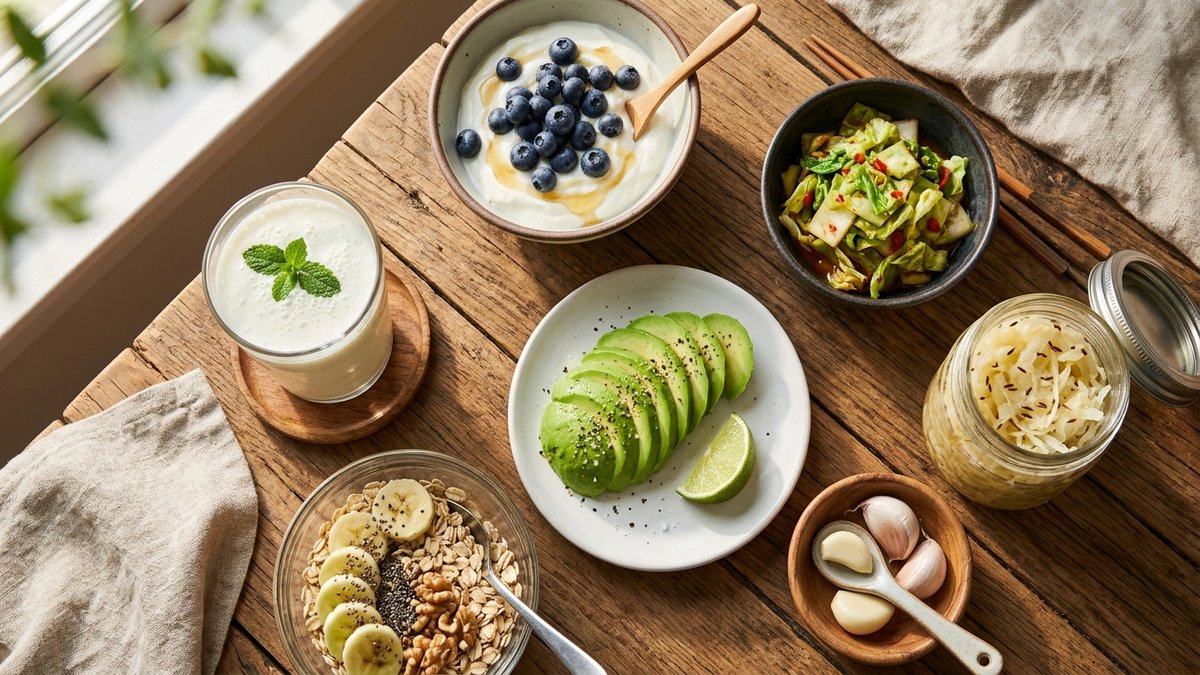
Gut Health for Beginners: Your First 30-Day Reset Plan
Picture this: it's 2 p.m., you're bloated like a balloon animal, exhausted despite eight hours of sleep, and you've Googled 'why do I feel terrible all the time' for the fourth time this week — and that's exactly when gut health for beginners stops being a wellness trend and starts feeling like a lifeline. Your gut isn't just a digestion machine; it's a command center. Scientists have nicknamed it 'the second brain' because your gut lining houses over 100 million nerve cells and produces roughly 95% of your body's serotonin. The wild part? A landmark study published in *Cell* found that more than 70% of your immune system lives in your gut — meaning what's happening down there shapes how you feel, think, sleep, and even how well you fight off a cold. If you've been living with brain fog, random breakouts, low energy, or that stubborn 3 p.m. crash, your gut is almost certainly sending you a message — and this 30-day reset plan is how you finally learn to listen.
For more information, see: National Institutes of Health — Human Microbiome Project, Harvard T.H. Chan School of Public Health — The Nutrition Source: Gut Microbiome
📌 Quick Summary
- Your gut microbiome is unique: Research shows that even identical twins share only about 35% of the same gut bacteria — meaning your gut reset must be personalized, not copied from someone else's Instagram.
- Diet changes show results fast: Studies suggest meaningful shifts in gut microbiome composition can appear in as little as 3–4 days of dietary change — so a 30-day reset is genuinely transformative, not a gimmick.
- Fiber is the #1 missing ingredient: The average American eats only 16 grams of fiber per day — barely half the recommended 25–38 grams — and this single gap is one of the biggest drivers of poor digestive health.
📊 What Is Gut Health for Beginners — And Why Should You Actually Care?
Let's skip the textbook definition and get real for a second. When people talk about gut health for beginners, they usually imagine it means eating yogurt and calling it a day. But your gut is an entire ecosystem — a thriving, chaotic, magnificent city of trillions of bacteria, fungi, viruses, and other microorganisms collectively called your gut microbiome. Think of it like a rainforest: the more diverse the species, the healthier and more resilient the whole system. When that diversity collapses — because of antibiotics, stress, processed food, or lack of sleep — everything downstream starts to break down. Your digestion gets sluggish, your mood tanks, your skin flares up, and your immune system starts punching at shadows. According to research from the National Institutes of Health, disruptions in the gut microbiome have been linked to conditions as varied as irritable bowel syndrome (IBS), obesity, type 2 diabetes, anxiety, and even Alzheimer's disease. That's not fear-mongering — that's the science telling you that this matters way more than you've been told.
Here's what most beginner guides won't tell you: your gut doesn't just process food — it talks back to your brain via the gut-brain axis, a bidirectional communication highway made up of nerves, hormones, and immune signals. This is why you get 'butterflies' before a big presentation, or why chronic stress causes stomach cramps. The conversation is constant, and it goes both ways. What you eat literally changes the chemical messages your gut sends to your brain. A 2019 study in Nature Microbiology found that people with higher gut bacterial diversity reported significantly lower levels of depression and anxiety. That's not a coincidence — it's biology. The surprising part? You have enormous control over this system, starting today, with the food on your fork. Understanding this is the entire foundation of digestive wellness for beginners, and once it clicks, you'll never look at a plate of food the same way again.
Feed Your Microbiome
Add prebiotic foods to fuel 38 trillion good bacteria
Cut the Gut Wreckers
Remove ultra-processed foods disrupting your gut lining
Track Your Progress
Simple daily habits that show results within 30 days
| Body System | Gut's Role | What Goes Wrong | Reset Impact ⭐ |
|---|---|---|---|
| 🧠 Mental Health | Produces 95% of serotonin | Anxiety, brain fog, low mood | ⭐⭐⭐⭐⭐ |
| 🛡️ Immune System | Houses 70% of immune cells | Frequent illness, inflammation | ⭐⭐⭐⭐⭐ |
| ⚡ Energy Levels | Absorbs nutrients for energy | Fatigue, 3 p.m. crashes | ⭐⭐⭐⭐ |
| 🌸 Skin Health | Regulates inflammatory signals | Acne, eczema, rosacea flares | ⭐⭐⭐⭐ |
| ⚖️ Weight Regulation | Controls hunger hormones (ghrelin, leptin) | Cravings, weight gain, bloating | ⭐⭐⭐⭐⭐ |
💡 Key takeaway: Your gut health directly influences at least 5 major body systems — treating it as just a 'digestion issue' is like only checking your car's gas tank and ignoring the engine.
🎯 Your 30-Day Gut Reset Plan for Beginners: Week-by-Week Breakdown
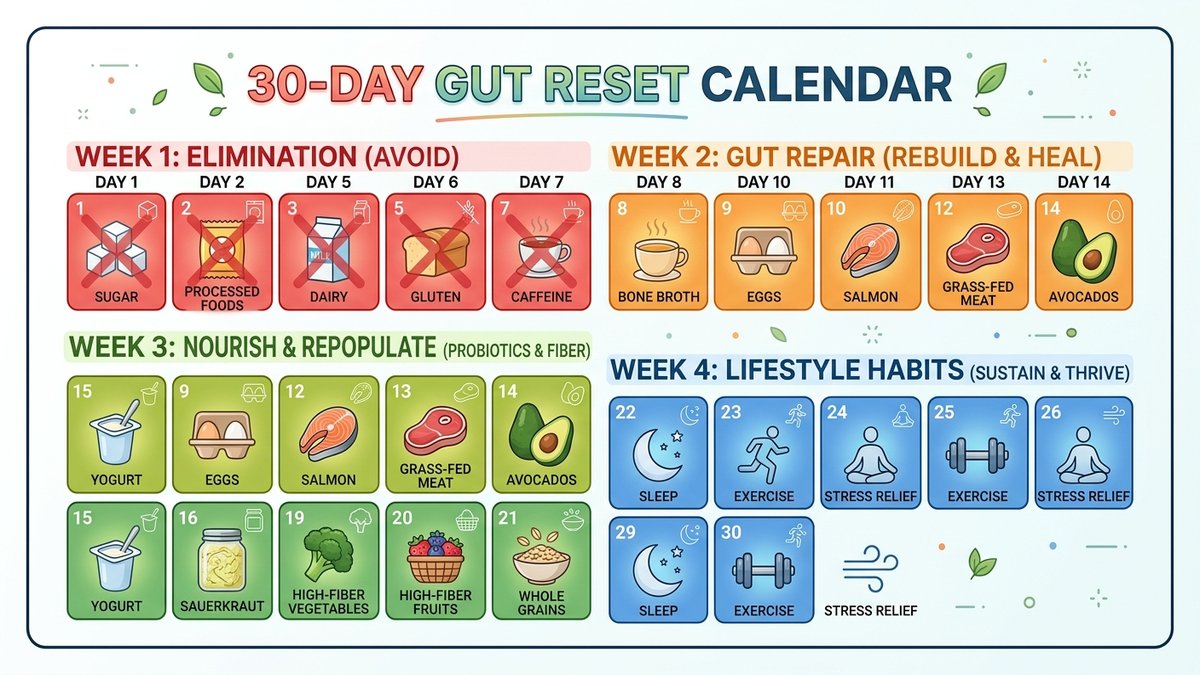
A 30 day gut reset plan for beginners doesn't have to be a juice cleanse that leaves you hangry and miserable by day three. This plan is built on actual science, real food, and changes you can sustain past the month. Here's the framework: the first week is about removing the things actively harming your microbiome. Week two is about rebuilding your gut lining with the right nutrients. Week three introduces fermented foods and targeted fiber to grow your microbial diversity. Week four is about locking in habits that make this your new normal. Think of it less like a diet and more like renovating a house — you clear out the clutter first, then you build something better. The research backs this structure up: a 2021 study from Stanford University found that a diet high in fermented foods increased microbiome diversity and decreased inflammatory markers in just 10 weeks, meaning even 30 days is enough to move the needle meaningfully.
The key principle threading through all four weeks is this: you're feeding your bacteria, not just yourself. Every meal is a decision about which microbial species you're nourishing. Feed the beneficial bacteria and they crowd out the harmful ones. Starve them with ultra-processed food and the opportunistic bad actors take over — producing gas, triggering inflammation, and leaking toxins into your bloodstream through a phenomenon researchers call 'leaky gut' (intestinal permeability). You don't need a medical degree to fix this. You need a plan, some patience, and the willingness to make a few key swaps. Here's exactly how to do it, week by week.
Week 1: Eliminate the Gut Wreckers
This week, your only job is to remove the five biggest gut disruptors from your daily routine: ultra-processed foods (anything with more than 5 ingredients you can't pronounce), refined sugar, alcohol, artificial sweeteners, and unnecessary antibiotic use. Studies show that artificial sweeteners like sucralose and saccharin can alter gut microbiome composition within just 2 weeks of regular use, according to a 2022 study in *Cell*. You don't have to be perfect — aiming for 80% compliance is enough to start shifting the balance. Drink at least 8 cups of filtered water daily to flush out inflammatory byproducts. Start a simple food journal: write down what you eat and how you feel 2 hours later. This data is gold for identifying your personal gut triggers. No supplements needed yet — this week is purely subtraction, and that alone will make some people feel dramatically better within days.
Week 2: Rebuild Your Gut Lining
Now that you've cleared some space, it's time to repair. Your gut lining is a single layer of cells — just one cell thick — and it takes a constant beating from inflammatory foods, stress, and alcohol. The hero of week two is L-glutamine, an amino acid found in bone broth, eggs, and grass-fed beef that directly fuels gut lining cells. Add zinc-rich foods (pumpkin seeds, chickpeas, cashews) since zinc is critical for tight junction integrity — the 'glue' that holds gut lining cells together and prevents leaky gut. Omega-3 fatty acids from wild-caught salmon, sardines, and walnuts reduce gut inflammation. Aim to eat at least one gut-repairing food at every meal. This is also the week to introduce collagen-rich foods or a clean collagen supplement if you want to accelerate repair. Sleep becomes non-negotiable: your gut lining repairs itself primarily during deep sleep, so getting 7–9 hours is a literal gut health strategy, not just a nice-to-have.
Week 3: Grow Your Microbial Diversity with Best Foods for Gut Health
This is where the magic happens, and it's also the week most beginners get wrong by overdoing it. Week three focuses on best foods for gut health and digestion — specifically fermented foods and prebiotic fiber. Start with small portions of fermented foods: 2 tablespoons of plain sauerkraut, a small cup of plain, unsweetened kefir, or 4 oz of plain Greek yogurt with live cultures. Going too big, too fast causes gas and bloating — not because the food is bad, but because your bacteria are adjusting. Simultaneously, ramp up prebiotic fiber from garlic, onions, leeks, asparagus, green bananas, and oats. Prebiotics are the food your beneficial bacteria eat — without them, probiotics are essentially homeless. Aim for 5+ different plant foods daily: research from the American Gut Project found that people eating 30+ different plant foods per week had dramatically more diverse microbiomes than those eating fewer than 10. You don't need exotic superfoods — just variety.
Week 4: Lock In the Lifestyle Habits That Sustain Gut Health
Here's the truth most 30-day plans skip: food is only about 60% of the gut health equation. The remaining 40% is lifestyle. Week four is where you cement the non-dietary pillars that determine whether this reset sticks. Stress management is non-negotiable: chronic stress releases cortisol, which directly disrupts gut motility, reduces microbial diversity, and increases intestinal permeability. Even 10 minutes of daily breathwork or meditation has been shown to reduce markers of gut inflammation. Movement matters too — a 2022 meta-analysis found that regular moderate exercise significantly increased beneficial *Bifidobacterium* and *Lactobacillus* species. Aim for 30 minutes of walking 5 days a week at minimum. Finally, time-restricted eating (eating within a 10–12 hour window) gives your gut the overnight fasting period it needs to activate the migrating motor complex — essentially your gut's natural self-cleaning cycle. By the end of week four, this shouldn't feel like a plan. It should feel like your life.
⚖️ Probiotics vs. Prebiotics for Beginners: What Actually Works?
Walk into any pharmacy and you'll see an entire wall of probiotic supplements promising to 'restore your gut health' for $40–$80 a month. Here's the real talk: probiotics are not magic pills, and for gut health for beginners, the research on supplements is way more nuanced than the marketing suggests. A landmark 2018 study from the Weizmann Institute of Science found that in many people, probiotic supplements actually failed to colonize the gut at all — the bacteria just passed through without taking up residence. That doesn't mean probiotics are useless; it means the real power is in creating an environment where good bacteria can thrive. That environment is built with prebiotic fiber, sleep, stress management, and fermented whole foods — not a capsule. The supplement industry is a $61.1 billion global market (Grand View Research, 2023), and a huge chunk of that is built on beginner confusion about how the gut actually works.
So what actually moves the needle when you're learning how to improve gut health naturally? Whole food sources of both probiotics and prebiotics consistently outperform supplements in clinical research. Fermented foods like kimchi, kefir, miso, and plain yogurt deliver billions of live bacteria alongside the nutrients, enzymes, and fiber those bacteria need to survive — something a capsule simply can't replicate. That said, there *are* situations where targeted probiotic supplements make sense: after a course of antibiotics, for specific diagnosed conditions like IBS-D, or during high-stress travel. The key is choosing evidence-backed strains — Lactobacillus rhamnosus GG and Bifidobacterium longum have the most robust clinical evidence for general digestive health. Before spending money on supplements, spend four weeks on the food-first approach in this 30-day plan. Most beginners are shocked by how much changes when they simply eat more fiber and fermented food consistently.
Pros
- ✅ Fermented whole foods: Deliver live cultures + fiber + enzymes in one package — proven to increase microbiome diversity in clinical studies
- ✅ Prebiotic fiber: Directly feeds beneficial bacteria; found in 30+ affordable everyday foods like garlic, oats, and bananas
- ✅ Probiotic supplements (specific strains): Useful post-antibiotic or for diagnosed conditions; convenient when traveling or when diet is limited
- ✅ Combined approach (synbiotics): Taking a probiotic *with* prebiotic fiber — emerging research shows this significantly improves bacterial colonization rates
Cons
- ❌ Generic probiotic supplements: Most don't specify strains, and many don't survive stomach acid — you may be paying for bacteria that never reach your colon
- ❌ High-dose fermented foods too fast: Introducing too much sauerkraut or kefir at once causes bloating, gas, and discomfort — a common reason beginners quit
- ❌ Ignoring lifestyle factors: No probiotic or prebiotic can overcome chronic stress, poor sleep, and a diet full of ultra-processed food — they work together, not in isolation
⚠️ 💡 Pro Tip: If you're going to try a probiotic supplement, look for one that lists specific strains (e.g., *Lactobacillus rhamnosus* GG, *Bifidobacterium longum* BB536), has at least 10 billion CFUs, and is third-party tested. The NIH's National Center for Complementary and Integrative Health is a great unbiased resource for evaluating supplement claims — always check it before buying.
✅ How to Improve Gut Health Naturally: Your Daily Habit Checklist
One of the most common questions in gut health for beginners is: 'How do I know if any of this is actually working?' Great question — and the answer is more obvious than you might think. Within the first 7–10 days of this reset, most people notice reduced bloating, more regular bowel movements (aiming for 1–3 formed stools per day is the clinical sweet spot), improved energy by mid-afternoon, and a subtle but real lift in mood. These aren't placebo effects — they're measurable physiological changes happening in real time. By day 30, many people report clearer skin, fewer sugar cravings, and better sleep quality. To make sure you're hitting the key levers every single day, here's your non-negotiable daily gut health checklist. You don't need to be perfect — hitting 6 out of 10 items consistently will transform your gut health over the course of a month.
Here's the truth most guides won't tell you: the biggest mistake beginners make is trying to do everything at once, burning out in week two, and going back to their old habits by week three. Consistency beats intensity every single time when it comes to microbiome health. Your bacteria need repeated, sustained inputs — not heroic one-day efforts followed by a pizza binge. Think about it this way: you wouldn't expect one great workout to make you fit, but showing up for a 20-minute walk every day for 30 days? That changes your body. The same math applies to your gut. Below is your complete daily action plan — print it, screenshot it, put it on your fridge. Each item is backed by research and designed to compound: the more consistently you do all of them together, the more dramatic your results will be by day 30. Learning how to improve gut health naturally is really just learning how to build these habits until they're invisible — until they're just *you*.
❓ Frequently Asked Questions
✍️ Final Thoughts: Your Gut Health Journey Starts Right Now
If you've read this far, here's something worth acknowledging: you're already ahead of most people. The vast majority of people who feel bloated, foggy, exhausted, and just *off* never connect those symptoms to their gut — they just keep Googling 'why am I so tired' and chalking it up to stress or getting older. You now know better. Gut health for beginners doesn't require a medical degree, an expensive supplement regimen, or a complete personality overhaul. It requires understanding one foundational truth: your gut is a living ecosystem, and every choice you make — every meal, every hour of sleep, every stress response — either nourishes that ecosystem or depletes it. The 30-day reset plan in this guide is deliberately designed to be doable. It meets you where you are, builds gradually, and creates changes that compound over time. The science is unambiguous: a diverse, fiber-rich, fermented-food-inclusive diet is the single most powerful lever you have over your microbiome — and your microbiome touches virtually every aspect of your health, from your immune system to your mental health to your weight. This isn't a fad. This is one of the most exciting and well-evidenced areas of modern medicine, and you're getting in early.
Here's what I'd do if I were starting today, from scratch: First, clean out the kitchen — not perfectly, but practically. Remove the ultra-processed snacks, the diet soda, the things you know aren't serving you. Replace them with a bag of oats, a jar of sauerkraut, some plain kefir, a variety of colorful vegetables, and some garlic and onions. Second, commit to the one-change-per-week structure in this plan rather than trying to do everything on day one. Your gut microbiome responds to consistency, not dramatic gestures. Third, track how you feel — not your weight, not your waistline — just your energy, your digestion, and your mood, on a scale of 1–10 each morning. By day 30, that tracking data will tell you a story that no before-and-after photo ever could. And when you're ready to go deeper — whether that's exploring the connection between gut health and mental health, understanding specific conditions like SIBO or IBS, or learning which probiotic strains are right for your specific symptoms — InfoWellHub has you covered. Your gut has been waiting for you to pay attention. Start today. Your 30-day reset begins with your very next meal.
Post a Comment