
📌 Table of Contents ⬆
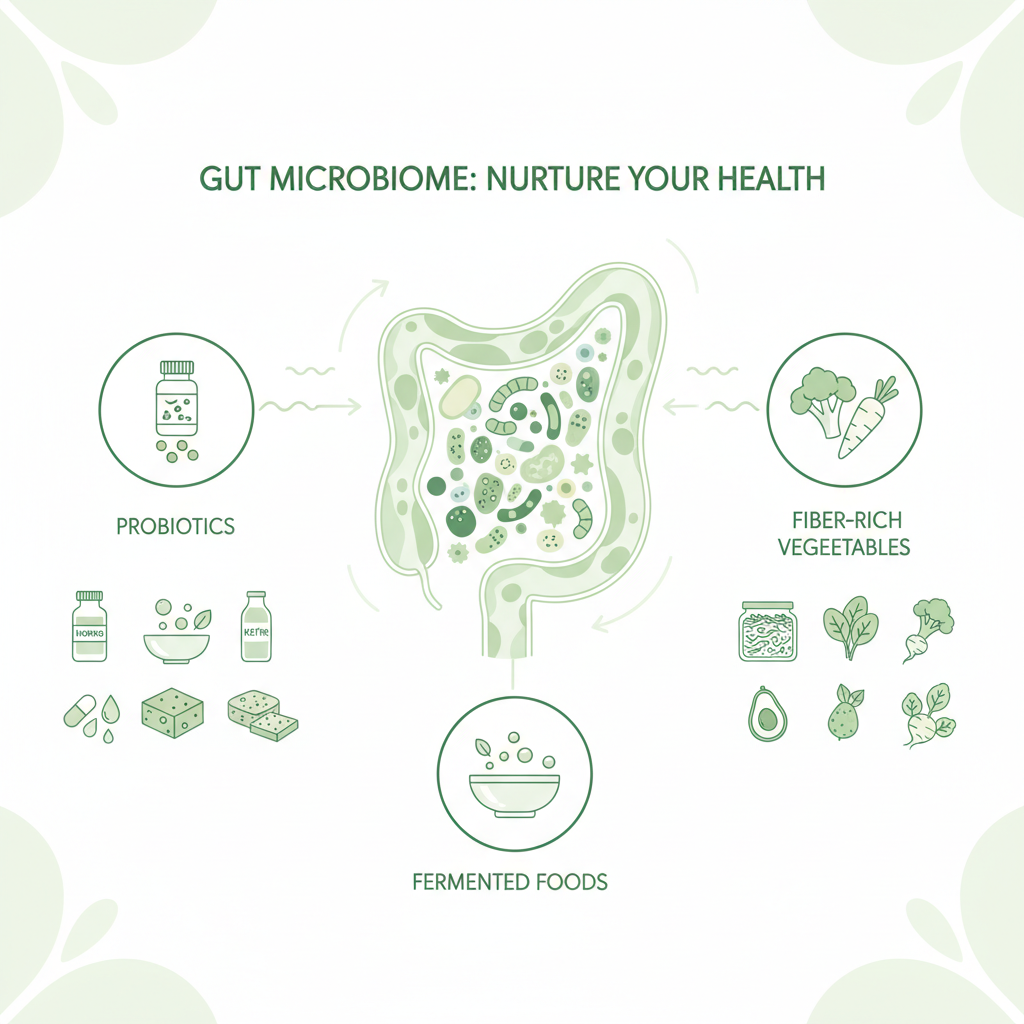
How to Improve Gut Health Naturally: 10 Science-Backed Methods (2026)
Your gut is home to roughly 38 trillion microorganisms — and new research confirms that this inner ecosystem controls far more than digestion. From your mood and immune response to your risk of chronic disease, the gut microbiome is now considered one of the most powerful levers of overall health. If you've been wondering how to improve gut health naturally, 2026 is the best time to act — science has never been clearer, or more actionable.
For more information, see: Harvard Health: Gut Microbiome, NIH: Gut Microbiota
📌 Quick Summary
- Dietary fiber is king: Adults eating 25–38g of fiber daily show significantly greater microbiome diversity, linked to lower inflammation markers.
- Fermented foods work fast: A 2021 Stanford study found that 10 weeks of fermented food consumption measurably increased microbiome diversity and reduced 19 inflammatory proteins.
- Stress is a silent gut killer: Chronic psychological stress alters gut motility and microbial composition within days, according to research published in *Gut* journal.
📊 Why Gut Health Is the #1 Health Priority in 2026
The science of the gut microbiome has exploded over the past decade, and by 2026, it's no longer a fringe wellness topic — it's mainstream medicine. Researchers at the Human Microbiome Project have identified over 10,000 microbial species living in the human gut, each playing a distinct role in metabolism, immunity, and even neurological function. The gut-brain axis — a bidirectional communication highway between your digestive system and your central nervous system — means that an imbalanced microbiome can directly contribute to anxiety, depression, and cognitive fog. A landmark study published in *Nature Medicine* found that specific gut bacterial profiles were strongly associated with lower risks of Type 2 diabetes, cardiovascular disease, and obesity. The global gut health supplements market, valued at approximately $15.9 billion in 2023, is projected to reach $71.4 billion by 2027, reflecting just how seriously consumers and clinicians alike are taking this science. Understanding the current landscape of gut health is the essential first step before diving into practical interventions.
What makes gut health so uniquely important right now is the convergence of worsening dietary patterns, rising antibiotic use, and unprecedented stress levels across the US population. According to the CDC, roughly 60% of American adults live with at least one chronic disease, many of which — including irritable bowel syndrome (IBS), inflammatory bowel disease (IBD), and metabolic syndrome — have documented links to gut microbiome disruption. The American Gut Project, one of the largest citizen science studies ever conducted, found that people who eat 30 or more different plant foods per week have significantly more diverse gut microbiomes than those eating fewer than 10. This diversity is critical because a diverse microbiome is a resilient one — it can recover faster from antibiotic courses, dietary indiscretions, and stress-induced disruptions. In short, your gut health is not just about avoiding bloating; it's the cornerstone of your long-term vitality, and the natural methods outlined below are grounded in peer-reviewed evidence.
Eat More Fiber
Diverse plant fiber feeds beneficial gut bacteria daily
Add Fermented Foods
Yogurt and kimchi boost microbial diversity fast
Manage Stress Daily
Lower cortisol protects your gut lining and flora
| Method | Primary Benefit | Time to See Results | Evidence Level |
|---|---|---|---|
| Eat 30+ plant foods/week | Increases microbial diversity | 4–8 weeks | Strong (RCT) |
| Consume fermented foods daily | Boosts beneficial bacteria count | 2–10 weeks | Strong (Stanford 2021) |
| Reduce ultra-processed food intake | Lowers gut inflammation markers | 2–4 weeks | Moderate–Strong |
| Practice stress management (meditation, yoga) | Restores gut motility and flora balance | 4–12 weeks | Moderate (multiple RCTs) |
| Prioritize 7–9 hours of sleep | Supports microbial circadian rhythm | 2–6 weeks | Emerging–Moderate |
💡 Key takeaway: Gut health improvements are measurable in weeks, not years — and the most powerful interventions are free or low-cost dietary and lifestyle shifts.
🎯 How to Improve Gut Health Naturally: 10 Science-Backed Methods
Learning how to improve gut health naturally doesn't require expensive supplements or radical detoxes. The most effective strategies are rooted in consistent, evidence-based daily habits that collectively shift your microbiome toward a healthier, more diverse state. Research from institutions like Stanford, Harvard, and the Sonnenburg Lab consistently shows that food, sleep, movement, and stress management are the four pillars that determine microbial health. Each of the ten methods below has been validated in at least one peer-reviewed clinical study, and most are supported by multiple randomized controlled trials (RCTs) — the gold standard of medical evidence. Whether you're dealing with chronic bloating, low energy, immune issues, or just want to optimize your long-term health, these natural approaches are your most reliable starting point.
It's important to approach gut health as a system, not a single fix. A 2022 meta-analysis published in *Cell Host & Microbe* found that synergistic lifestyle interventions — combining diet, exercise, and stress reduction simultaneously — produced gut microbiome improvements roughly 3x greater than any single intervention alone. This means adding kimchi to your diet is helpful, but adding kimchi *plus* a daily 20-minute walk *plus* a meditation practice creates compounding benefits that are far more significant. Think of your gut ecosystem like a garden: you need to feed it the right nutrients (fiber, polyphenols), water it consistently (hydration), protect it from toxins (processed food, excess alcohol), and let it rest (sleep). The ten steps below are organized to help you build that complete system, starting with the highest-impact changes first.
Eat 30+ Different Plant Foods Every Week
This single recommendation from the American Gut Project is arguably the most powerful gut health intervention available. Researchers analyzed the microbiomes of over 10,000 people and found that those eating 30 or more distinct plant foods per week had dramatically more diverse gut bacteria than those eating fewer than 10. Diversity matters because different bacterial strains feed on different types of dietary fiber — called prebiotics — found in various plants. Broccoli feeds different bacteria than lentils, which feed different bacteria than walnuts. You don't need to eat huge quantities; a teaspoon of a new spice, a handful of mixed nuts, or a side of roasted vegetables all count. Start by auditing your current week and adding 2–3 new plant foods every few days. Within 4–8 weeks, most people notice improvements in digestion, regularity, and energy levels as their microbiome diversity expands.
Add Fermented Foods to Your Daily Diet
A landmark 2021 Stanford University study published in *Cell* directly compared high-fiber diets versus high-fermented-food diets over 10 weeks. The fermented food group — eating foods like yogurt, kefir, kimchi, sauerkraut, kombucha, and miso — showed a significant increase in microbiome diversity and a measurable reduction in 19 different inflammatory proteins, including those linked to rheumatoid arthritis, Type 2 diabetes, and chronic stress. The fiber group showed benefits too, but the fermented food group's results were striking in their speed and breadth. Aim for 1–2 servings of fermented foods per day. If you're new to these foods, start slowly — a tablespoon of sauerkraut or a small cup of plain Greek yogurt — to allow your gut to adjust without discomfort. Look for products that clearly state 'live and active cultures' on the label, as pasteurized versions often lack beneficial bacteria.
Reduce Ultra-Processed Food Intake Dramatically
Ultra-processed foods (UPFs) — defined by the NOVA classification system as industrially manufactured products containing ingredients not found in home kitchens — make up approximately 57% of the average American adult's caloric intake, according to a 2021 study in *JAMA Internal Medicine*. These foods are particularly damaging to gut health because they're low in fiber, high in emulsifiers (like carboxymethylcellulose and polysorbate-80), and loaded with artificial sweeteners that have been shown in multiple studies to disrupt the microbiome, reduce beneficial bacteria populations, and increase intestinal permeability — commonly called 'leaky gut.' A 2022 *Nature* study found that even two weeks of reduced UPF consumption led to measurable improvements in gut lining integrity and bacterial diversity. The practical goal is not perfection: aim to replace one processed snack per day with a whole food alternative — an apple instead of chips, plain nuts instead of a granola bar — and build from there.
Prioritize Consistent, High-Quality Sleep
The relationship between sleep and gut health is bidirectional and deeply underappreciated. Your gut microbiome operates on its own circadian rhythm, and disrupting your sleep-wake cycle — through late nights, shift work, or chronic sleep deprivation — measurably alters microbial composition. A 2019 study in the journal *Sleep* found that just two nights of sleep restriction (less than 6 hours) were enough to reduce populations of Lactobacillus and Bifidobacterium — two of the most studied beneficial bacterial genera — while simultaneously increasing pro-inflammatory species. The National Sleep Foundation recommends 7–9 hours per night for adults, and this range is also supported by gut microbiome research. Practical steps to improve sleep quality for gut health include maintaining a consistent bedtime within a 30-minute window, avoiding screens 60 minutes before bed, keeping your bedroom temperature between 65–68°F, and avoiding large meals within 3 hours of sleep to support natural gut motility during overnight rest cycles.
⚖️ Natural Gut Health Methods vs. Probiotic Supplements: What Actually Works?
The probiotic supplement market in the United States alone was valued at over $6.3 billion in 2023, and Americans are spending billions more on gut health pills, powders, and potions. But here's what the science actually says: for most healthy adults, whole-food dietary strategies consistently outperform isolated probiotic supplements in long-term microbiome impact. A comprehensive 2022 review in *Nature Reviews Gastroenterology & Hepatology* concluded that while probiotics can be valuable in specific clinical contexts — such as preventing antibiotic-associated diarrhea or managing certain IBS subtypes — they often fail to colonize the gut long-term in healthy individuals. The bacterial strains in most commercial supplements are frequently detected in the gut for only days to weeks after supplementation stops, whereas dietary fiber and fermented foods create lasting structural changes in the microbial ecosystem. This doesn't mean supplements are useless — context matters enormously — but the evidence consistently favors food-first approaches for the general population.
That said, there are legitimate pros and cons to both approaches, and the best strategy for most people is a hybrid model: prioritize natural dietary and lifestyle changes as the foundation, and use targeted, clinically validated probiotic supplements as a complementary tool when appropriate. For example, individuals recovering from a course of broad-spectrum antibiotics — which can wipe out up to 30% of gut microbial diversity — may benefit significantly from temporary probiotic supplementation alongside dietary restoration. Similarly, people with clinically diagnosed IBS may find evidence-based strains like *Lactobacillus rhamnosus GG* or *Bifidobacterium infantis* helpful adjuncts to dietary therapy. The key is to avoid falling into the trap of spending heavily on unregulated supplements while neglecting the free, proven fundamentals: fiber diversity, fermented foods, sleep, exercise, and stress management. Always discuss supplementation with a gastroenterologist or registered dietitian before investing significantly.
Pros
- ✅ Natural dietary methods: Create lasting, structural changes in the microbiome that persist over months and years without ongoing cost
- ✅ Fermented foods: Deliver diverse live cultures alongside fiber, polyphenols, and nutrients that no supplement can fully replicate
- ✅ Probiotic supplements (clinical use): Strongly evidence-backed for antibiotic-associated diarrhea prevention, reducing *C. diff* recurrence risk by up to 51%
- ✅ Lifestyle interventions (sleep + exercise): Shown in multiple RCTs to increase microbiome diversity without any financial cost
Cons
- ❌ Probiotic supplements (general use): Most commercial strains do not colonize the gut long-term and lack rigorous regulatory oversight in the US
- ❌ Dietary changes: Require sustained behavior change, meal planning effort, and may cause initial digestive discomfort (gas, bloating) during transition
- ❌ High-fiber diets: Can be difficult for people with certain conditions like SIBO (Small Intestinal Bacterial Overgrowth) or IBD flares, requiring professional guidance
⚠️ Important warning: Not all gut health advice is created equal. If you have a diagnosed gut condition such as Crohn's disease, ulcerative colitis, or SIBO, always consult a gastroenterologist before making significant dietary changes or starting probiotic supplements — what helps a healthy gut can sometimes worsen certain conditions.
✅ The 5 Additional Natural Methods to Complete Your Gut Health Protocol
Beyond the foundational four steps, five additional science-backed methods round out a truly comprehensive natural gut health protocol. Regular moderate exercise is one of the most underutilized gut health tools: a 2018 study in *Gut* found that professional athletes had significantly greater microbiome diversity than sedentary controls, and even 150 minutes of moderate exercise per week (the CDC's standard recommendation) measurably increases beneficial short-chain fatty acid–producing bacteria like *Faecalibacterium prausnitzii*. Stress management deserves equal emphasis — chronic cortisol elevation directly increases intestinal permeability and alters the gut's enteric nervous system, creating a vicious cycle of gut dysfunction and worsening anxiety. Practices like mindfulness meditation, yoga, and diaphragmatic breathing have been shown in clinical trials to reduce gut inflammation and improve IBS symptoms within 8–12 weeks. Adequate hydration — aiming for roughly 3.7 liters daily for men and 2.7 liters for women (including water from food), per the National Academy of Medicine — supports the mucus lining of the gut wall and helps fiber do its prebiotic work effectively. Minimizing unnecessary antibiotic use is critical: the CDC estimates that approximately 30% of antibiotic prescriptions in outpatient settings are unnecessary, and each course can take the microbiome up to 12 months to fully recover from.
The tenth and perhaps most underrated natural method is eating more slowly and mindfully. The cephalic phase digestive response — the gut's preparation for food triggered by the sight, smell, and anticipation of eating — is significantly blunted when we eat distracted, rushed, or stressed. Research from the University of Exeter and multiple European gastroenterology centers shows that chewing each bite 20–30 times and spending at least 20 minutes per meal improves digestive enzyme secretion, nutrient absorption, and gut motility. The vagus nerve, which serves as the primary communication cable of the gut-brain axis, is activated by slow, relaxed eating — and stimulating it has been shown to reduce gut inflammation and improve microbiome composition over time. Together, these ten methods form a synergistic, fully natural protocol that addresses every major lever of gut health: the microbial ecosystem, the gut lining, motility, the immune interface, and the gut-brain connection. Starting with just two or three of these changes consistently is more effective than attempting all ten imperfectly.
❓ Frequently Asked Questions
✍️ Final Thoughts: Your Next Step Toward a Healthier Gut
The science of gut health has reached a tipping point where the evidence is no longer preliminary — it's definitive and actionable. Knowing how to improve gut health naturally means recognizing that your microbiome is a living ecosystem that responds rapidly and measurably to the choices you make every single day. The ten methods covered in this guide — from eating 30+ plant foods per week and incorporating fermented foods daily, to prioritizing 7–9 hours of sleep, managing chronic stress, staying hydrated, and minimizing unnecessary antibiotic use — are all grounded in peer-reviewed clinical research. No single method is a magic bullet. The compounding power of these interventions, applied consistently over 60–90 days, is where the real transformation happens. A 2022 meta-analysis confirmed that multi-modal gut health interventions produce results up to three times greater than any isolated approach, which is why the most successful gut health outcomes in research settings always combine dietary, lifestyle, and behavioral strategies simultaneously. The best news? The most powerful gut health interventions cost almost nothing — a diverse weekly shopping list, a consistent sleep schedule, a daily walk, and mindful eating require only intention and consistency, not expensive supplements or restrictive protocols.
So where do you start? Don't try to implement all ten methods at once. Research on behavior change consistently shows that focusing on one to two new habits at a time produces significantly better long-term adherence than overhauling everything simultaneously. This week, pick the two methods that feel most accessible to you — perhaps adding a serving of plain yogurt each morning and committing to 30 minutes of walking three times per week — and anchor them into your existing routine. Once those feel natural (typically after 21–28 days), layer in the next two. Track your progress simply: note your energy, digestion, and mood on a scale of 1–10 each morning. The data will motivate you far more than willpower alone. If you're dealing with a diagnosed gut condition, bring this evidence-based framework to your gastroenterologist or registered dietitian and ask them to help you personalize it. At InfoWellHub, our mission is to translate the best available science into practical, empowering guidance you can use today. Bookmark this guide, share it with someone whose health matters to you, and take that first step — your gut, and your whole body, will thank you for it.
Post a Comment