
📌 Table of Contents ⬆
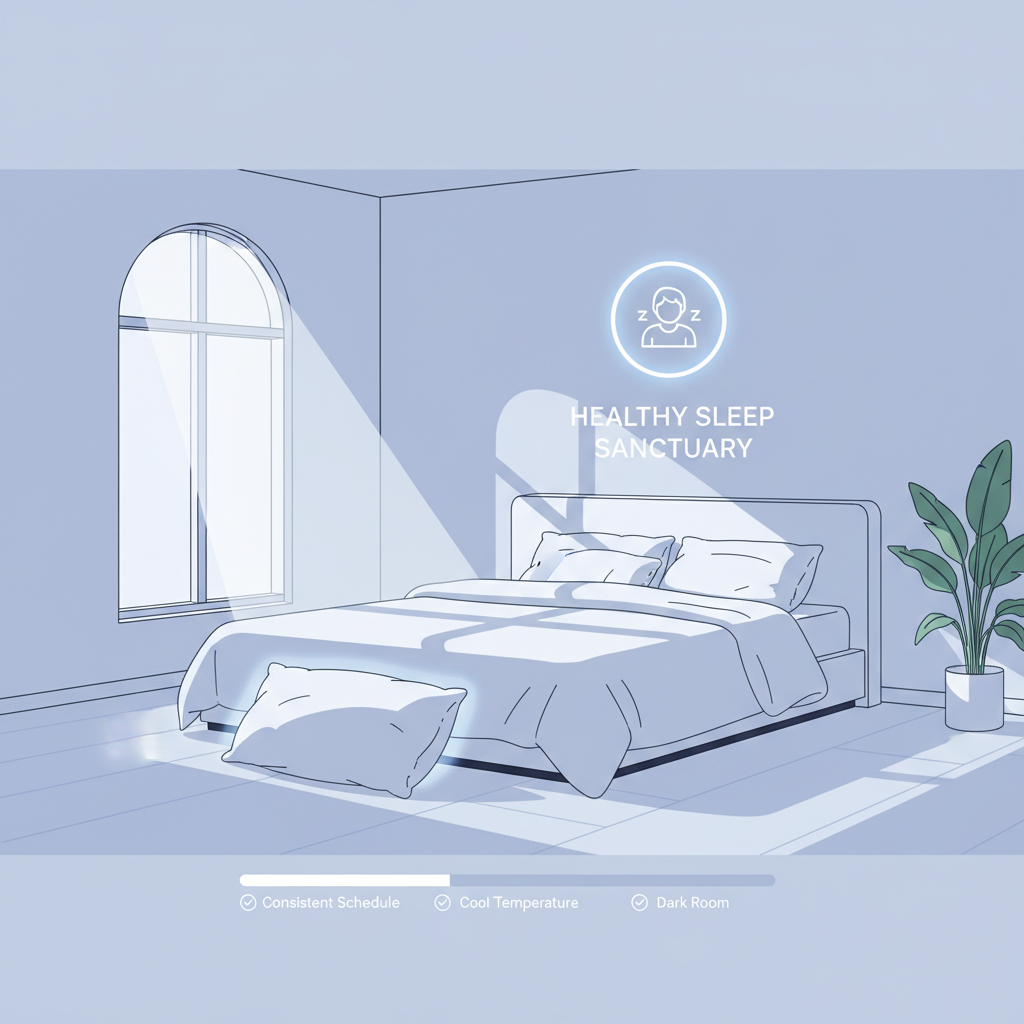
How to Improve Sleep Quality Naturally: 8 Evidence-Based Methods
Poor sleep affects nearly 1 in 3 adults worldwide, with consequences ranging from impaired cognition to increased disease risk. Here are 8 evidence-based methods to dramatically improve your sleep quality — no medication required.
😴 Understanding Sleep Quality vs. Quantity
Most people focus on hours of sleep, but quality matters as much as quantity. High-quality sleep means:
1 Falling asleep within 15-20 minutes
2 Staying asleep (minimal awakenings)
3 Sufficient deep sleep (slow-wave) and REM cycles
4 Waking feeling refreshed, not groggy
| Sleep Stage | Function | Affected By |
|---|---|---|
| Light Sleep (N1-N2) | Transition, memory processing | Noise, temperature |
| Deep Sleep (N3) | Physical repair, immune function | Alcohol, late exercise |
| REM Sleep | Emotional processing, creativity | Stress, alcohol, blue light |
🔬 8 Evidence-Based Sleep Improvement Methods
Method 1: Fix Your Sleep-Wake Schedule
Consistency is the #1 factor in sleep quality. Going to bed and waking at the same time (even weekends) anchors your circadian rhythm. Even a 2-hour weekend shift ("social jetlag") impairs weekday sleep for days.
Method 2: Optimize Your Sleep Environment
The ideal sleep environment: Temperature 65-68°F (18-20°C), complete darkness, and minimal noise. Every 1°C rise above optimal temperature reduces deep sleep by up to 10%.
Method 3: Eliminate Blue Light 2 Hours Before Bed
Blue light (from phones, tablets, TV) suppresses melatonin production by up to 50% for up to 3 hours. Use night mode, blue-light glasses, or simply avoid screens after 9 PM.
Method 4: Strategic Caffeine Cutoff
Caffeine has a half-life of 5-7 hours. A 3 PM coffee still has 50% of caffeine active at 8-10 PM, reducing sleep quality even if you fall asleep normally. Cut off caffeine by 1-2 PM.
Method 5: Create a Wind-Down Ritual
Your brain needs a 60-90 minute transition from alert to sleep-ready. A consistent wind-down routine signals your nervous system to shift into parasympathetic mode. Options: reading, gentle stretching, warm shower, light journaling.
Method 6: Exercise Timing Matters
Regular exercise improves sleep quality by 65% (Sleep Foundation, 2023). However, vigorous exercise within 2 hours of bedtime raises core body temperature and cortisol, delaying sleep onset. Morning or afternoon exercise is optimal.
📊 Sleep Improvement Tracker
| Method | Implementation | Expected Improvement |
|---|---|---|
| Consistent Schedule | Same time ±30 min daily | Deep sleep +20-30% |
| Cool Room | 18-20°C at night | Sleep quality +10-15% |
| No Blue Light | Stop screens 2h before bed | Melatonin restored |
| Caffeine Cutoff | No caffeine after 1 PM | Sleep latency -15 min |
| Wind-Down Routine | 60-90 min ritual | Anxiety before sleep -40% |
| Exercise | 30 min, 5x/week | Overall sleep quality +65% |
❓ Frequently Asked Questions
✅ Final Thoughts
Improving sleep quality is a compounding investment. Each good night's sleep makes the next one easier, while poor sleep creates a vicious cycle of fatigue and poor choices. Start with methods 1-3 (consistent schedule, cool room, no blue light) for the highest return on effort.
Post a Comment