
📌 Table of Contents ⬆

Weight Loss After 40 for Women: Science-Based Strategies That Work
Weight loss after 40 female isn't just harder — it's a completely different biological game, and most advice out there was never designed for your body at this stage of life. If you've been eating clean, exercising consistently, and still watching the scale refuse to budge, you are not imagining things. Research shows that women can lose up to 3–8% of their muscle mass per decade after age 30, and when perimenopause enters the picture, hormonal shifts can quietly sabotage even the most disciplined routines — but the right science-backed strategies can absolutely turn that around.
For more information, see: National Institutes of Health — Women's Health & Menopause Research, Mayo Clinic — Healthy Weight Loss Rate
📌 Quick Summary
- Hormonal shifts are the hidden driver: Declining estrogen during perimenopause redirects fat storage to the abdomen, making traditional calorie-cut approaches less effective without addressing hormone balance.
- Muscle mass is your metabolic engine: Women who do strength training 2–3x per week retain significantly more lean muscle, which keeps resting metabolism elevated — a critical edge after 40.
- Protein and sleep are underrated levers: Studies show that women consuming 1.2–1.6g of protein per kg of body weight preserve more muscle during weight loss, and poor sleep raises ghrelin (hunger hormone) by up to 28%.
📊 Why Weight Loss After 40 Female Is Biologically Different
Weight loss after 40 female is uniquely challenging because of a convergence of hormonal, metabolic, and lifestyle changes that simply don't exist in the same way at younger ages. The most significant factor is estrogen decline, which typically begins in the late 30s to early 40s during perimenopause. Estrogen plays a key role in regulating where your body stores fat — when levels drop, fat preferentially shifts to the visceral (belly) region, which is both more visible and metabolically more dangerous. According to the National Institutes of Health (NIH), visceral fat is strongly linked to increased risk of cardiovascular disease, type 2 diabetes, and metabolic syndrome. This isn't a willpower issue — it's a hormonal reality that requires a targeted approach. Understanding this science is the very first step to working with your body rather than against it.
Beyond estrogen, resting metabolic rate (RMR) declines with age, in large part because women lose lean muscle mass — a process called sarcopenia — at roughly 3–8% per decade starting in their 30s. Since muscle tissue burns approximately 6 calories per pound per day at rest (compared to just 2 calories per pound for fat), losing even 5 pounds of muscle over a decade can reduce your daily calorie burn by 30+ calories — a seemingly small number that translates to roughly 3 extra pounds of fat per year if intake stays constant. Additionally, cortisol levels (the stress hormone) tend to be chronically elevated in busy women in their 40s managing careers, families, and other life pressures. Elevated cortisol further promotes fat storage, particularly around the midsection, and disrupts the quality of sleep — which then loops back to make hunger harder to manage. This interconnected hormonal web is precisely why is it so hard to lose weight after 40 female — and why solving it requires more than just 'eat less, move more.'
Strength Train First
Build muscle to burn more calories at rest after 40
Prioritize Protein
1.2–1.6g/kg daily preserves muscle during fat loss
Fix Your Sleep
Poor sleep raises hunger hormones by up to 28%
| Factor | What Changes After 40 | Impact on Weight | What to Do |
|---|---|---|---|
| Estrogen | Declines during perimenopause | Fat shifts to abdomen | Strength train, reduce refined carbs |
| Muscle Mass | Drops 3–8% per decade | Slower resting metabolism | Resistance training 2–3x/week |
| Cortisol | Often chronically elevated | Promotes belly fat storage | Stress management, 7–9 hrs sleep |
| Thyroid Function | Can slow with age | Reduced calorie burn | Get TSH tested annually |
| Insulin Sensitivity | Decreases after 40 | Easier fat storage from carbs | Prioritize fiber, protein, healthy fats |
💡 Key takeaway: Weight gain after 40 is driven by overlapping hormonal changes — addressing each factor strategically, rather than just cutting calories, is what produces lasting results for women.
🎯 Science-Based Strategies for Weight Loss After 40 Female
The good news about weight loss after 40 female is that the research is clear: targeted, consistent strategies that account for hormonal and metabolic changes absolutely work — they just look a little different from generic diet advice. The four pillars below are each backed by clinical evidence and specifically designed to address the root causes of weight gain in women over 40. This isn't about extreme restriction or spending hours in the gym. It's about being smarter and more strategic with the effort you put in. Women who apply even two or three of these pillars consistently report meaningful changes in body composition, energy levels, and how their clothes fit — often within 8–12 weeks.
One of the most empowering insights from recent research is that losing weight in your 40s as a woman is less about the total number of calories you consume and more about the quality, timing, and macronutrient composition of those calories — combined with the right kind of movement. A 2022 study published in Obesity Reviews found that women who combined resistance training with a high-protein diet lost significantly more fat mass and retained more muscle than those who only reduced calories. This is the combination that separates women who see real results from those stuck in the frustrating cycle of yo-yo dieting. Work through each step below and identify which one you'll act on first.
Prioritize Resistance Training Over Cardio
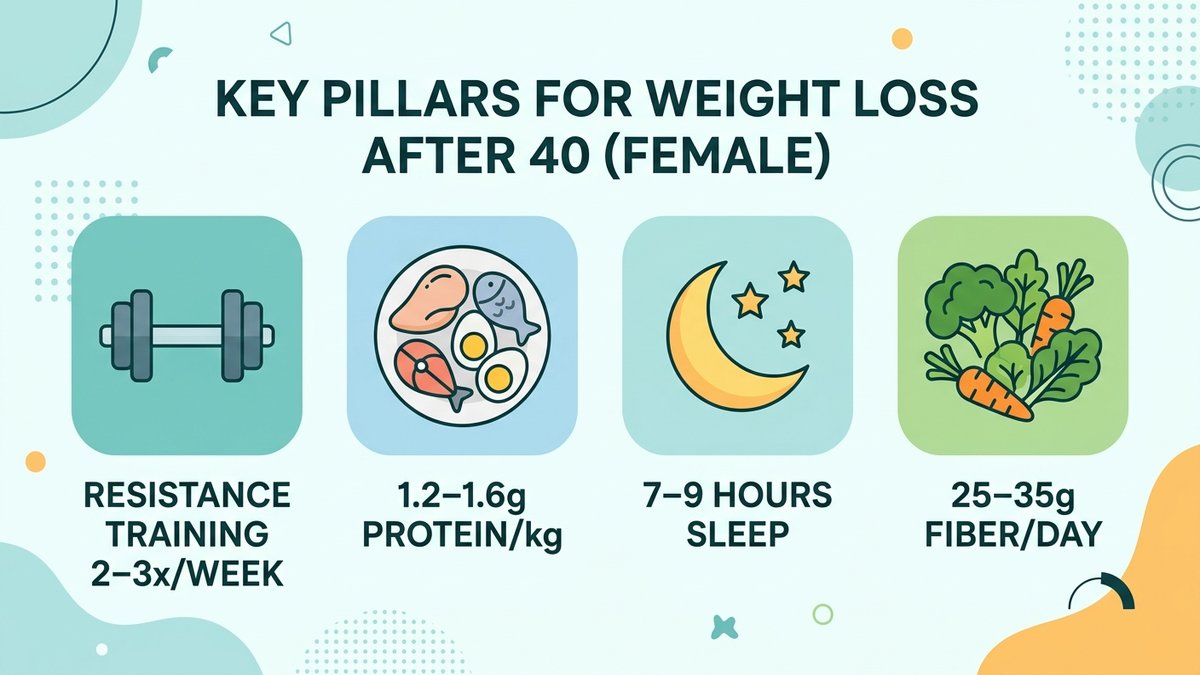
This is the single most impactful shift you can make for weight loss after 40 female. While cardio burns calories during the session, resistance training builds and preserves lean muscle, which elevates your resting metabolism around the clock. Aim for 2–3 sessions per week, focusing on compound movements like squats, deadlifts, rows, and overhead presses. You don't need a gym — bodyweight and resistance band workouts are equally effective for beginners. Research published in the *Journal of Strength and Conditioning Research* found that postmenopausal women who strength trained twice weekly for 12 weeks lost an average of 3.7% body fat without any dietary changes. Start with 20–30 minute sessions and build from there. The goal is progressive overload — gradually making the exercises harder over time so your muscles continue to adapt and grow.
Optimize Protein Intake at Every Meal
The best diet for women over 40 to lose weight is one built around adequate protein. The current RDA of 0.8g per kg of body weight is widely considered too low for active women over 40 who are trying to lose fat while preserving muscle. Most experts now recommend 1.2–1.6g of protein per kg of body weight daily. For a 150-pound (68 kg) woman, that's roughly 82–109 grams of protein per day. Spreading this across 3–4 meals — aiming for at least 25–35g of protein per meal — maximizes muscle protein synthesis. Excellent sources include Greek yogurt, eggs, chicken breast, salmon, cottage cheese, legumes, and high-quality protein powders. Protein also has the highest thermic effect of any macronutrient, meaning your body burns 20–30% of its calories just digesting it — a meaningful metabolic advantage over 40.
Address Sleep and Stress as Non-Negotiables
Most women seeking weight loss after 40 female underestimate how profoundly sleep deprivation and chronic stress derail their progress. Poor sleep raises ghrelin (the hunger hormone) by up to 28% and suppresses leptin (the satiety hormone), making you biologically hungrier the next day — regardless of what you ate. Simultaneously, chronically elevated cortisol from ongoing stress promotes visceral fat accumulation and triggers sugar cravings. The fix isn't simply 'sleep more' — it's building a consistent sleep ritual: same bedtime and wake time, no screens 60 minutes before bed, a cool and dark room, and limiting caffeine after noon. For stress, evidence-backed tools include 10 minutes of daily mindfulness meditation, which research shows can lower cortisol by up to 14% over 8 weeks, regular walks in nature, and boundary-setting practices. These aren't luxuries — they're metabolic medicine.
Reduce Refined Carbs and Prioritize Fiber
After 40, insulin sensitivity naturally declines, meaning your body is less efficient at processing refined carbohydrates and sugars. This doesn't mean going keto or eliminating carbs entirely — it means being strategic about carbohydrate quality. Swap white bread, pasta, and sugary snacks for complex carbohydrates rich in fiber: oats, quinoa, sweet potatoes, legumes, berries, and leafy greens. Aim for at least 25–35 grams of fiber daily — a target most American women fall short of, averaging only about 15 grams per day according to the USDA. Fiber slows digestion, stabilizes blood sugar, reduces insulin spikes, and feeds beneficial gut bacteria that are increasingly linked to healthy body weight. Pairing fiber-rich carbohydrates with protein and healthy fats at each meal creates a powerful blood sugar stabilization effect that curbs cravings and reduces the urge to overeat later in the day.
⚖️ Popular Weight Loss Approaches After 40: What Works vs. What Backfires
When exploring weight loss after 40 female, it can feel overwhelming to navigate the sheer number of diet plans, workout trends, and wellness programs competing for your attention. Not all approaches are created equal — and some strategies that worked brilliantly in your 20s and 30s can actually be counterproductive after 40. For example, severe calorie restriction (eating below 1,200 calories per day) can trigger muscle breakdown, slow thyroid function, and put your body into a stress-hormone-driven fat-storage mode — the exact opposite of what you want. Understanding the pros and cons of the most popular approaches helps you choose a path that aligns with your biology, lifestyle, and long-term sustainability.
What consistently works for how to lose belly fat after 40 woman is a combination approach: moderate, sustainable calorie reduction (a deficit of 250–500 calories per day rather than 1,000+), high-protein intake, consistent resistance training, and attention to sleep and stress. Programs like the Mediterranean diet have shown particularly strong evidence for women over 40 — a 2020 study found it reduced visceral fat and improved metabolic markers in perimenopausal women over a 12-month period. Intermittent fasting (specifically a 16:8 eating window) has also shown promise for reducing insulin resistance and supporting fat loss in middle-aged women, though it's not for everyone, particularly those with a history of disordered eating. The key is finding a flexible, evidence-based framework you can sustain, not a rigid plan you white-knuckle through for 30 days.
Pros
- ✅ Mediterranean Diet: Reduces visceral fat and supports heart health — backed by decades of research in women over 40
- ✅ Resistance Training: Preserves muscle mass, elevates resting metabolism, and improves insulin sensitivity simultaneously
- ✅ High-Protein Diet (1.2–1.6g/kg): Reduces hunger, protects lean muscle during fat loss, and has a higher thermic effect than carbs or fat
- ✅ 16:8 Intermittent Fasting: Can improve insulin sensitivity and reduce overall calorie intake without obsessive food tracking for many women
Cons
- ❌ Severe calorie restriction (<1,200 cal/day): Triggers muscle loss, slows metabolism, and is nearly impossible to sustain — often leads to rebound weight gain
- ❌ Excessive cardio without strength training: Burns calories short-term but accelerates muscle loss and increases cortisol, making belly fat worse over time
- ❌ Keto or very low-carb diets long-term: May disrupt thyroid function and gut microbiome health in some women; not sustainable for most lifestyles
⚠️ Important warning: Never consume fewer than 1,200 calories per day without medical supervision. Extreme restriction in women over 40 is associated with significant lean muscle loss, nutrient deficiencies, and metabolic adaptation — making long-term weight management even harder.
✅ A Realistic Weekly Plan for Weight Loss After 40 Female
Putting it all together, weight loss after 40 female becomes far more manageable when you have a concrete weekly structure rather than vague intentions. Here's a realistic, sustainable framework you can adapt to your schedule. For movement, aim for 3 days of resistance training (30–45 minutes each), 2–3 days of low-intensity steady-state cardio like walking, cycling, or swimming (30–45 minutes), and 1 day of intentional rest or yoga to support recovery and cortisol management. For nutrition, build each meal around a protein anchor (chicken, fish, eggs, Greek yogurt, legumes), add a generous portion of non-starchy vegetables, include a fist-sized serving of complex carbohydrates, and finish with a healthy fat source like avocado, olive oil, or a small handful of nuts. Track your hunger and energy levels — not just calories — to understand how your body responds. You can also explore our guide on [healthy eating habits for long-term weight management](https://infowellhub.com/healthy-eating-habits) for complementary nutrition strategies that work hand-in-hand with this plan.
Consistency over perfection is the non-negotiable rule of losing weight in your 40s as a woman. Research consistently shows that women who adhere to their plan 80% of the time over 12 weeks achieve significantly better long-term results than those who follow a 'perfect' plan for 3 weeks and then abandon it. Build in flexibility: if you miss a workout, don't skip the next two — just show up for the next one. If you have a high-calorie meal, don't punish yourself with restriction the next day — just return to your normal routine. Track your progress with metrics beyond the scale: waist circumference, energy levels, sleep quality, strength gains, and how your clothes fit. The scale can fluctuate by 2–5 pounds daily due to water retention, hormonal cycles, and digestive content — it is a poor daily indicator of fat loss progress. Focus on the trend over weeks and months, not day-to-day fluctuations. According to the Mayo Clinic, a healthy, sustainable rate of fat loss is 0.5–2 pounds per week — set your expectations accordingly and celebrate consistent progress.
❓ Frequently Asked Questions
✍️ Final Thoughts: Your Next Step Toward Weight Loss After 40
Weight loss after 40 female is genuinely harder than it was in your younger years — but it is absolutely achievable with the right approach. The most important shift you can make is moving away from the generic 'eat less, move more' mindset and toward a strategy that accounts for the specific hormonal and metabolic realities of your body at this stage. Resistance training is your most powerful tool — it rebuilds the metabolic engine that hormonal changes and time have begun to erode. Pairing it with adequate protein (1.2–1.6g per kg of body weight), reduced refined carbohydrates, and attention to fiber creates a nutritional foundation that works with your changing insulin sensitivity rather than against it. Treating sleep and stress management as non-negotiable pillars — not optional add-ons — removes two of the most significant hidden saboteurs of progress for women over 40. According to the NIH's research on women's health and menopause, these lifestyle interventions together are consistently more effective than any single dietary approach alone. You don't have to do everything perfectly or all at once — even implementing two or three of these strategies consistently will produce meaningful, visible change in your body composition over 8–16 weeks.
So what should you do right now — today? Pick one action from this guide and commit to it for the next seven days. If you haven't started resistance training, schedule your first 20-minute session this week. If your protein intake has been low, add one high-protein meal tomorrow. If sleep has been suffering, set a consistent bedtime tonight and put your phone in another room. The compounding effect of small, consistent actions is far more powerful than any 30-day crash program. Track your progress in ways that matter beyond the scale: energy levels, how your clothes fit, strength improvements, and quality of sleep. Share this article with a friend in her 40s who's been frustrated with her progress — sometimes knowing the science behind what's happening in your body is the most motivating thing of all. For more on building sustainable habits that support your health goals, explore [InfoWellHub's guide to healthy eating and lifestyle habits](https://infowellhub.com/healthy-eating-habits). You have more control over your body's response than you've been led to believe — and starting today puts you ahead of where you'd be if you waited for the 'perfect' moment.
Post a Comment