
📌 Table of Contents ⬆
7 foods that naturally lower blood pressure can help when they are used as part of a consistent eating pattern, not as a one-day “detox.” The goal is simple: more potassium, magnesium, fiber, nitrates, and unsaturated fats, while keeping sodium and ultra-processed foods under control.
Start here, then keep the heart-health loop going
Food is the first lever, but blood pressure improves faster when meals, walking, sleep, and gut health work together.
- Step 1: Build meals from the 7 foods on this page.
- Step 2: Add daily movement with the walking guide.
- Step 3: Improve recovery with the sleep-support guide.
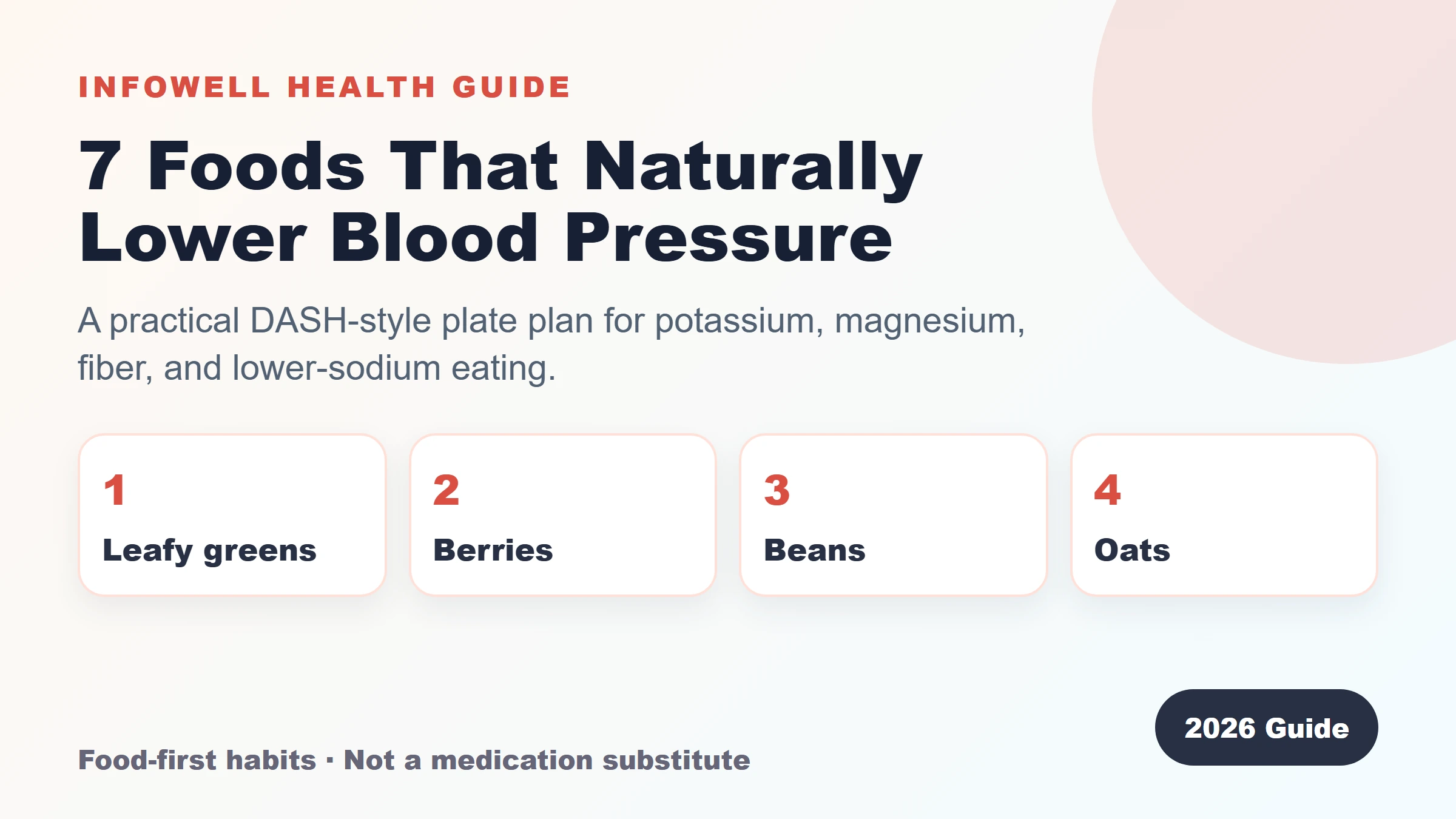
- Leafy greens
- Berries
- Beans and lentils
- Oats
- Fatty fish
- Greek yogurt
- Beets
Why food can affect blood pressure
Blood pressure is influenced by vascular tone, fluid balance, insulin sensitivity, body weight, sleep, stress, and sodium intake. Food helps because it changes several of those levers at once. Potassium supports sodium balance, fiber improves metabolic health, and unsaturated fats can support heart-health markers.
This article is educational and not a medication substitute. If you use blood pressure medication or have kidney disease, ask a clinician before making major potassium changes.
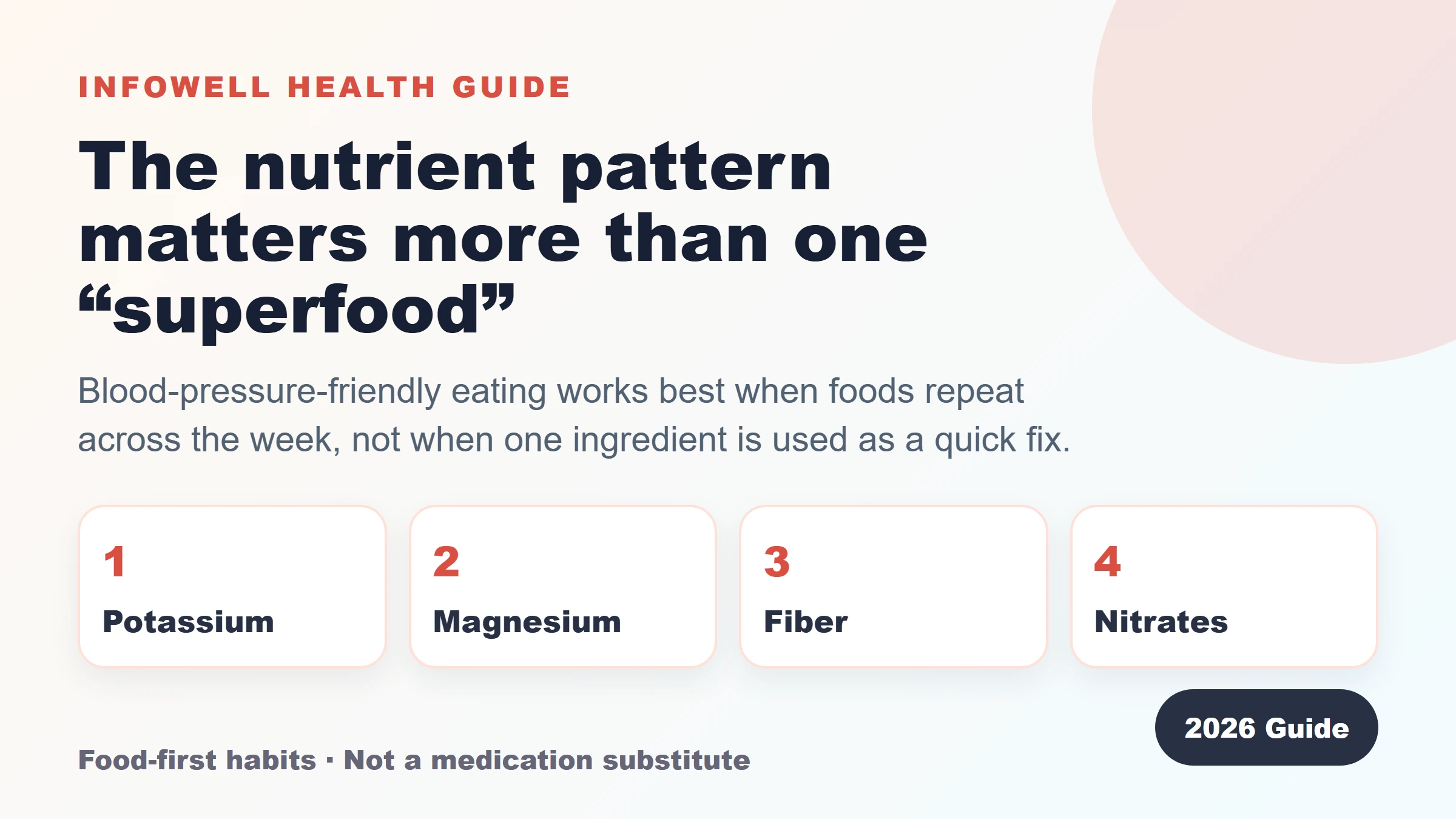
1. Leafy greens
Spinach, Swiss chard, kale, arugula, and romaine are rich in potassium, magnesium, and nitrate compounds. Add a handful to eggs, smoothies, soups, or grain bowls instead of relying only on salads.
2. Berries
Blueberries, strawberries, and raspberries provide fiber and polyphenols. They are also easy to repeat because they work with oatmeal, yogurt, or a simple snack bowl.
3. Beans and lentils
Beans and lentils bring fiber, potassium, magnesium, and plant protein together. They are one of the best foods for turning a blood-pressure plan into a filling meal instead of a restrictive diet.
4. Oats
Oats contain beta-glucan fiber and make a practical low-sodium breakfast. Pair oats with berries, Greek yogurt, nuts, or cinnamon instead of sugary toppings.
5. Fatty fish
Salmon, sardines, trout, and mackerel provide omega-3 fats. Use baked or grilled fish more often than fried fish so the benefit is not cancelled by excess sodium or refined oils.
6. Greek yogurt
Plain Greek yogurt adds protein, calcium, and a convenient base for berries or oats. Choose unsweetened versions when possible because flavored yogurts can quietly add a lot of sugar.
7. Beets
Beets are known for dietary nitrates, which can support nitric oxide production. Roasted beets, beet salads, or small servings of beet juice can fit the plan, but portions matter if you are watching sugar intake.
Do not stop at the food list
If you want a stronger blood-pressure routine, combine this plate plan with walking and sleep support. The next article gives you the easiest movement lever.
Read next: walking 10,000 steps dailyA one-day meal plan using the 7 foods
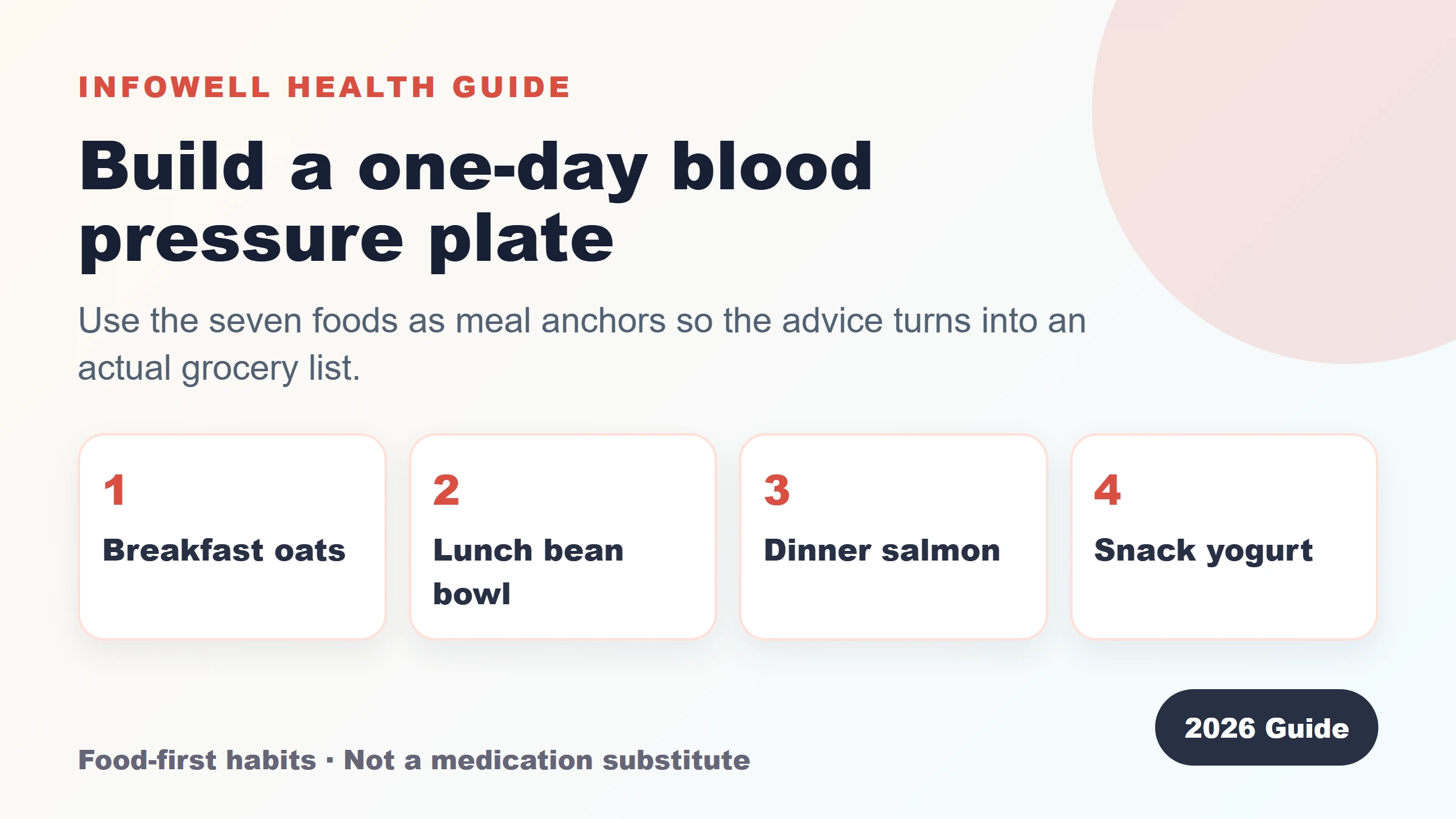
Breakfast: oats with Greek yogurt and berries. Lunch: lentil bowl with leafy greens. Dinner: salmon with roasted beets and vegetables. Snack: yogurt, berries, or a small bean-based dip with vegetables.
For broader nutrition support, pair this with how to improve gut health naturally and a daily movement plan such as walking 10,000 steps daily.
What to limit while adding these foods
Adding healthy foods works better when you also reduce the biggest blockers: highly processed salty meals, sugary drinks, frequent fast food, and alcohol-heavy routines. Sleep also matters; if poor recovery is part of the pattern, compare your habits with our magnesium and sleep guide.
Research and medical context
The DASH eating pattern is one of the best-known dietary approaches for blood pressure. You can review patient-friendly guidance from the NHLBI DASH Eating Plan and sodium guidance from the American Heart Association.
Blood-pressure grocery checklist
| Food group | Buy this | Why it helps | Easy use |
|---|---|---|---|
| Leafy greens | Spinach, kale, arugula | Potassium, magnesium, nitrates | Add to eggs or bowls |
| Berries | Blueberries, strawberries | Fiber and polyphenols | Use with oats/yogurt |
| Beans/lentils | No-salt-added cans | Fiber, minerals, protein | Rinse and add to salads |
| Oats | Plain rolled oats | Beta-glucan fiber | Low-sodium breakfast |
| Fish/yogurt/beets | Salmon, plain yogurt, beets | Omega-3, calcium, nitrates | Rotate through the week |
How to shop for blood-pressure-friendly foods
A useful grocery rule is to buy foods that make low-sodium meals easier before you are hungry. Frozen berries, canned beans with no salt added, plain oats, leafy greens, plain Greek yogurt, and frozen salmon portions reduce the need for last-minute takeout. If canned beans are the only realistic option, rinse them well and compare sodium labels.
Plate formula: fill half the plate with vegetables or fruit, one quarter with beans, fish, or yogurt-based protein, and one quarter with oats, potatoes, brown rice, or another minimally processed carbohydrate. This keeps the plan flexible without turning every meal into a strict diet.
When to be careful with potassium-rich foods
Potassium is helpful for many people, but it is not automatically safe for everyone. People with chronic kidney disease, those using potassium-sparing diuretics, or anyone told to monitor potassium should follow medical advice before dramatically increasing leafy greens, beans, potatoes, beet juice, or electrolyte products.
That caution does not make the food list less useful; it simply means the right version of “heart healthy” depends on your medical context. For most readers, the safer first step is reducing ultra-processed high-sodium meals while adding more fiber-rich whole foods.
FAQ
What is the best food to lower blood pressure naturally?
There is no single best food. Leafy greens, beans, oats, berries, and fatty fish work best as a repeated pattern.
How fast can food lower blood pressure?
Some people notice changes within weeks, but sustainable improvement usually depends on consistency, sodium reduction, sleep, activity, and medication adherence when prescribed.
Are bananas good for blood pressure?
Bananas provide potassium, but they are not the only option. Beans, leafy greens, potatoes, yogurt, and lentils can also contribute potassium.
Should I stop medication if I eat these foods?
No. Food can support blood pressure management, but medication changes should only be made with a clinician.
What foods make blood pressure worse?
High-sodium packaged meals, frequent fast food, processed meats, sugary drinks, and heavy alcohol intake are common problems.
Related guides to keep your heart-health plan going
Blood pressure improves faster when food, walking, sleep, and gut health move together. Read these next instead of stopping here.
Conclusion
The best way to use these 7 foods that naturally lower blood pressure is to build repeatable meals: oats and berries, greens and beans, fish dinners, plain yogurt snacks, and beet-based sides. That pattern is more useful than chasing one miracle ingredient.
Blood pressure food decision path for 2026
Before changing everything at once, match each food to the pressure pattern you are trying to improve. Blood-pressure readers usually need either more potassium-rich meals, fewer salty convenience foods, or a simple weekly routine they can repeat.
- For potassium: anchor the day with leafy greens, bananas, beans, or yogurt, then reduce hidden sodium.
- For circulation: pair beets or berries with a walk so food and movement support the same goal.
- For routine building: choose two meals you can repeat on weekdays instead of relying on motivation.
- For safety: keep medication and kidney-related potassium advice separate from general food tips.
Next, keep readers inside the heart-health routine with the 10,000 steps walking guide, gut health food habits, and omega-3 supplement comparison.
Post a Comment