
📌 Table of Contents ⬆
Anti-Inflammation Diet for Beginners: Foods to Eat and Avoid
Picture this: You wake up stiff, foggy, and exhausted — and your doctor casually drops the phrase 'chronic inflammation' like it explains everything. You nod, leave the office, and immediately Google 'inflammation diet for beginners' because nobody actually told you what to eat. Sound familiar? You're not alone — chronic inflammation is now linked to at least 7 of the top 10 leading causes of death in the United States, according to the National Institutes of Health. The good news? Food is one of the most powerful tools you have to fight back — and you don't need a nutrition degree to start.
For more information, see: NIH National Center for Complementary and Integrative Health, Harvard T.H. Chan School of Public Health — The Nutrition Source
📌 Quick Summary
- Chronic inflammation is silent: Unlike acute inflammation (a swollen ankle), chronic inflammation has no obvious symptoms — yet it quietly damages cells, arteries, and organs over years.
- Food is medicine here: Research shows an anti-inflammatory eating plan rich in omega-3s, polyphenols, and fiber can reduce key inflammatory markers like CRP by up to 40% within weeks.
- You don't need perfection: Studies from Harvard's School of Public Health confirm that even a partial shift toward anti-inflammatory foods meaningfully lowers disease risk — small swaps add up fast.
📊 What Is Inflammation, and Why Does Your Diet for Beginners Matter So Much?
Here's something most health articles skip right past: not all inflammation is bad. When you cut your finger or catch a cold, your immune system triggers acute inflammation — a brilliant, targeted response that heals you. The problem starts when that response never fully shuts off. That's chronic low-grade inflammation, and it's far sneakier. It can simmer in your body for years without obvious symptoms while quietly damaging blood vessels, brain tissue, and organs. The inflammation diet for beginners starts with understanding this distinction, because it changes *everything* about how you approach what's on your plate. You're not just eating for taste or weight — you're eating to regulate an immune system that may be stuck in overdrive. And according to the CDC, 6 in 10 American adults have at least one diet-related chronic disease tied to this very issue.
What most people don't realize is that your gut is the command center of your immune system. Roughly 70% of your immune cells live in your gut lining, which means every single meal sends a signal — either 'calm down' or 'fire it up.' Ultra-processed foods, refined sugars, and industrial seed oils send the 'fire' signal. Leafy greens, berries, olive oil, and wild-caught fish send the 'chill out' signal. The surprising part? The effects can be measurable in as little as two to four weeks. A 2019 study published in the journal *Nutrients* found that participants who followed an anti-inflammatory eating plan saw significant reductions in C-reactive protein (CRP) — your body's main inflammation blood marker — in just 28 days. This is why the inflammation diet for beginners isn't a fad. It's basic biology working in your favor.
Eat More Fatty Fish
Omega-3s cut inflammation markers by up to 30%
Ditch Processed Sugar
Sugar spikes CRP — the #1 inflammation blood marker
Add Colorful Veggies
Polyphenols neutralize free radicals that cause flares
| Inflammation Type | Trigger | Duration | Diet Impact | Danger Level |
|---|---|---|---|---|
| Acute Inflammation | Injury or infection | Days to weeks | Minimal | ⭐⭐ |
| Chronic Low-Grade | Poor diet, stress, toxins | Years to decades | Very High ✅ | ⭐⭐⭐⭐⭐ |
| Autoimmune Flare | Immune misfiring | Recurring episodes | Significant ✅ | ⭐⭐⭐⭐ |
| Gut-Driven Inflammation | Processed food, sugar | Ongoing | Extremely High ✅ | ⭐⭐⭐⭐⭐ |
| Exercise-Induced | Intense physical stress | 24–48 hours | Low (recovers fast) | ⭐ |
💡 Key takeaway: Chronic inflammation is largely diet-driven — and that means it's also largely diet-reversible. Starting an inflammation diet for beginners isn't about restriction; it's about replacement.
🎯 What Foods Reduce Inflammation in the Body? Your Beginner's Eat List
Let's get into the good stuff — literally. When people ask 'what foods reduce inflammation in the body,' they usually expect a boring list of sad salads and flavorless smoothies. But here's the truth most guides won't tell you: anti-inflammatory eating is some of the most delicious food on the planet. Think grilled salmon drizzled in extra virgin olive oil, a bowl of wild blueberries over creamy Greek yogurt, dark chocolate with almonds, and a warm turmeric-ginger latte. This is the Mediterranean Diet meets your inflammation fighting needs — and science backs it hard. In the landmark PREDIMED trial involving over 7,000 participants, those who followed a Mediterranean-style anti-inflammatory eating plan had a 30% lower risk of major cardiovascular events compared to a low-fat diet group. Flavor and function can absolutely coexist.
The real power of anti-inflammatory foods comes from a few key compounds: omega-3 fatty acids, polyphenols, antioxidants, and dietary fiber. Omega-3s (found in fatty fish, walnuts, and flaxseeds) directly suppress the production of inflammatory cytokines — the tiny chemical messengers that keep inflammation turned on. Polyphenols, found in richly colored fruits, vegetables, and green tea, act as molecular 'off switches' for inflammatory pathways. Fiber feeds your gut bacteria, which in turn produce short-chain fatty acids (SCFAs) that directly reduce intestinal inflammation. Think of it like sending a peace treaty to your immune system three times a day. The inflammation diet for beginners doesn't require exotic ingredients — just a strategic upgrade to what's probably already in your kitchen.
Load Up on Fatty Fish (Aim for 2–3 Servings a Week)
Salmon, mackerel, sardines, and anchovies are your top-tier inflammation fighters. They're loaded with EPA and DHA — the two forms of omega-3 fatty acids that directly inhibit the production of pro-inflammatory compounds called prostaglandins and leukotrienes. A meta-analysis of 68 randomized controlled trials found that omega-3 supplementation significantly reduced both CRP and interleukin-6 (IL-6) — two of the most important biomarkers of systemic inflammation. The wild-caught vs. farmed debate is real: wild-caught salmon has a better omega-3 to omega-6 ratio, making it the gold standard. If fish isn't your thing, algae-based omega-3 supplements are a fantastic plant-based alternative with the same EPA and DHA profile. Even just two servings per week makes a measurable difference.
Eat the Rainbow — Especially Dark Berries and Leafy Greens
Color in food is not just pretty — it's phytochemical code for anti-inflammatory power. Blueberries, blackberries, cherries, and pomegranate are exceptionally rich in anthocyanins, a class of polyphenols shown to reduce NF-kB — a master regulator of inflammatory gene expression. Leafy greens like spinach, kale, and arugula deliver vitamin K, magnesium, and folate, all of which are associated with lower inflammatory markers in large observational studies. One study from UCLA found that adults who ate 2+ cups of leafy greens daily had measurably lower CRP levels than those who didn't. The goal isn't to eat salad for every meal — it's to make colorful produce the backbone of most meals. A handful of berries on your morning oatmeal is a perfect, effortless start.
Make Olive Oil Your Primary Fat
Extra virgin olive oil (EVOO) deserves its own spotlight on any anti-inflammatory meal plan for beginners. It contains oleocanthal, a compound that inhibits the same enzymes targeted by ibuprofen — yes, your salad dressing has natural painkilling, anti-inflammatory properties. A landmark 2005 study in *Nature* estimated that 50ml of high-quality EVOO has an anti-inflammatory effect roughly equivalent to 10% of an adult ibuprofen dose. Regular consumption is associated with lower levels of IL-6, TNF-alpha, and CRP. Use it as your go-to cooking fat (it's stable up to around 375°F/190°C), drizzle it on roasted vegetables, and don't be shy with it on salads. Forget the idea that fat makes you inflamed — the *type* of fat is everything.
Embrace Spices Like Turmeric, Ginger, and Cinnamon
Your spice rack is basically a pharmacy in disguise. Turmeric's active compound, curcumin, has been studied in over 12,000 peer-reviewed papers and consistently shows the ability to block the NF-kB inflammatory pathway. The catch: curcumin is poorly absorbed on its own. Pair it with black pepper (which contains piperine — shown to boost curcumin absorption by 2,000%) and a healthy fat for maximum effect. Ginger contains gingerols and shogaols that reduce inflammatory prostaglandins, making it particularly effective for joint pain and gut inflammation. Cinnamon (Ceylon, not the cheap Cassia kind) helps regulate blood sugar spikes — and blood sugar instability is a major inflammation trigger. Add these to your morning smoothie, stir into oatmeal, or brew as tea. They cost almost nothing and deliver outsized results.
⚖️ Foods to Avoid to Reduce Chronic Inflammation — The Honest Breakdown
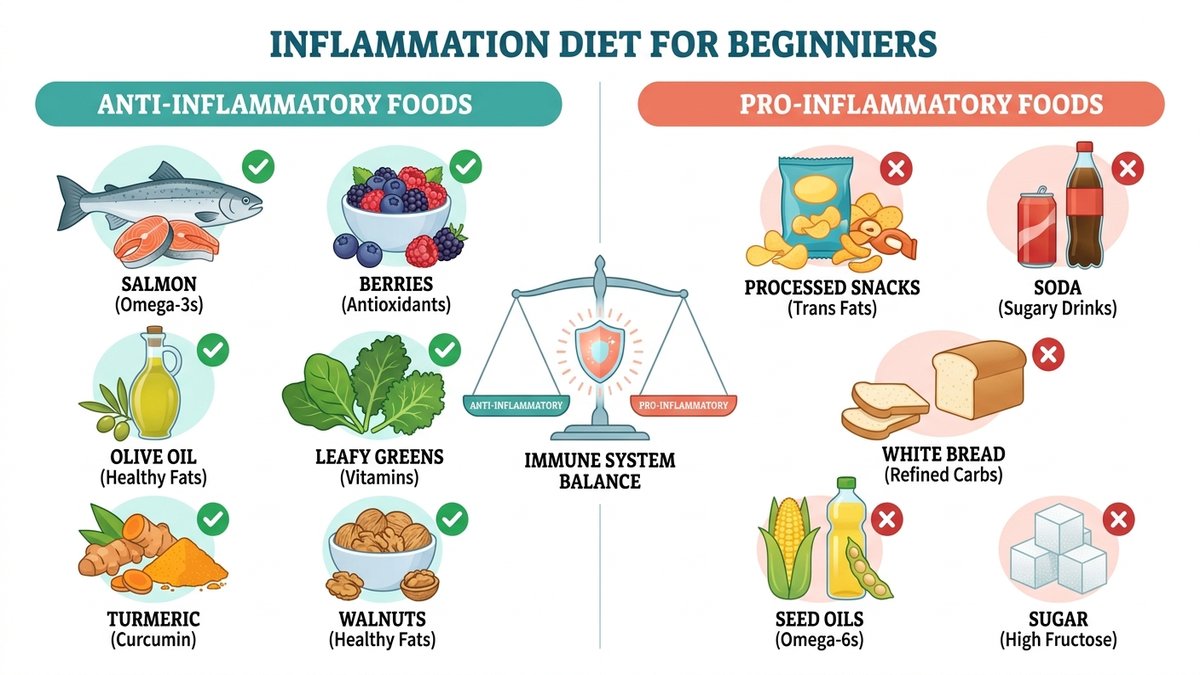
Forget the idea that avoiding inflammatory foods means giving up everything you love forever. This section is about awareness, not punishment. The truth is, a handful of specific food categories are responsible for the vast majority of diet-driven inflammation in the American diet. Once you know what they are and *why* they trigger inflammation, it becomes much easier to make smarter swaps without feeling deprived. The inflammation diet for beginners is as much about subtraction as addition — and the foods on this avoid list are things that actively suppress your immune regulation, spike blood sugar, disrupt gut bacteria, and flood your body with pro-inflammatory omega-6 fatty acids. You don't have to be perfect. But reducing these foods even by 50% can produce meaningful changes in how you feel within weeks.
The most surprising item on the avoid list? Vegetable and seed oils — canola, corn, soybean, sunflower, and safflower oils. These are marketed as 'heart-healthy' but are extraordinarily high in omega-6 linoleic acid. While omega-6 is essential in small amounts, the average American consumes an omega-6 to omega-3 ratio of roughly 20:1 (the ideal is closer to 4:1 or lower). This imbalance is a massive driver of systemic inflammation. Processed snack foods, fast food, and commercial baked goods are absolutely saturated in these oils. Swap them for EVOO, avocado oil, or coconut oil and you'll immediately begin shifting that critical ratio. It's one of the highest-leverage changes you can make as a beginner on an anti-inflammatory eating plan — and most people have never even heard this advice.
Pros
- ✅ Reducing added sugar: Lowers CRP and insulin resistance — two of the strongest inflammation drivers in the modern diet
- ✅ Cutting refined carbs: White bread, pasta, and pastries spike blood glucose rapidly, triggering glycation and inflammatory cytokine release
- ✅ Eliminating trans fats: Still found in some processed foods labeled 'partially hydrogenated oils' — directly shown to raise LDL and inflammatory markers
- ✅ Reducing alcohol: Even moderate drinking elevates liver inflammation markers; cutting back noticeably reduces gut permeability (leaky gut)
Cons
- ❌ Social friction: Avoiding sugar and processed foods at parties, restaurants, and family dinners requires planning and occasional awkward conversations
- ❌ Initial adjustment period: Cutting sugar and refined carbs can cause 1–2 weeks of cravings, fatigue, or mood dips as your gut bacteria adjust
- ❌ Cost perception: Whole foods, wild-caught fish, and quality olive oil can feel more expensive upfront (though less so when you stop buying processed snacks)
⚠️ Important: You don't need to eliminate every inflammatory food overnight. Research from Harvard's T.H. Chan School of Public Health shows that a progressive, sustainable approach produces better long-term outcomes than radical elimination diets. Start by removing your top 2–3 worst offenders this week.
✅ Anti-Inflammatory Meal Plan for Beginners: Your 7-Day Starter Framework
Here's where the rubber meets the road. An anti-inflammatory meal plan for beginners doesn't need to be elaborate, expensive, or time-consuming. It needs to be repeatable, satisfying, and built around the core foods we've already discussed. The goal for your first week is simple: crowd out the bad with the good. You don't track macros, count calories, or weigh your food. You just ask one question before each meal: 'Does this meal have at least one anti-inflammatory star?' That might be a piece of salmon, a handful of blueberries, a drizzle of olive oil, or a scoop of turmeric in your breakfast scramble. Over seven days, this habit-stacking approach rewires your default choices without creating the feeling of restriction that causes most diets to fail by week two. A great internal resource to complement this approach is the [InfoWellHub guide to gut health and diet](https://infowellhub.com) — because inflammation and gut health are deeply intertwined. For the science behind these recommendations, the NIH's National Center for Complementary and Integrative Health offers an excellent deep-dive on [dietary approaches to reducing inflammation](https://www.nccih.nih.gov/health/anti-inflammatory-diet).
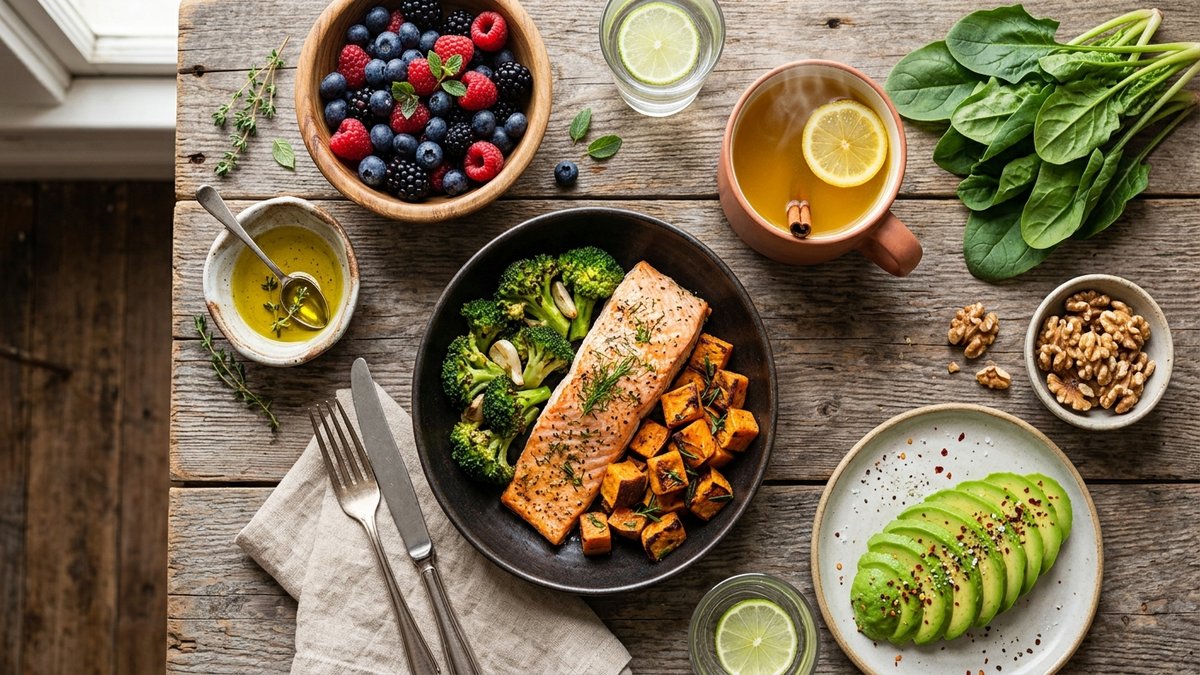
Here's a sample day that checks every box for someone just starting the inflammation diet for beginners — without spending hours in the kitchen. Breakfast: Greek yogurt topped with wild blueberries, walnuts, a drizzle of honey, and a pinch of cinnamon. Lunch: Large arugula salad with canned wild salmon, cherry tomatoes, cucumber, avocado, and a generous EVOO + lemon dressing. Snack: A small handful of dark chocolate chips (70%+) and almonds. Dinner: Sheet-pan roasted salmon with broccoli and sweet potato, seasoned with turmeric, garlic, and black pepper, finished with olive oil. Evening: A cup of ginger-turmeric tea. That's it. Under $15 per day for ingredients, prep time under 30 minutes, and every single component is actively working to lower inflammation. Repeat variations of this framework for 7 days and your gut bacteria — and your energy levels — will begin to shift noticeably. 💡 Pro Tip: Batch-cook a big pot of brown rice or quinoa on Sunday. It becomes the base for three different anti-inflammatory lunches throughout the week with zero extra effort.
❓ Frequently Asked Questions
✍️ Final Thoughts: Your Next Step Toward Less Inflammation, More Life
If you've read this far, you're already ahead of the vast majority of people who just Google symptoms and give up. You now understand that the inflammation diet for beginners isn't about deprivation, complicated meal prep, or buying $40 superfood powders. It's about understanding *why* certain foods calm your immune system and others keep it in a constant state of alarm — and then making smarter, more intentional choices, one meal at a time. The science is genuinely exciting here. Chronic inflammation is not your destiny. Research continues to confirm that dietary changes can produce measurable improvements in inflammatory biomarkers, energy levels, joint comfort, brain clarity, and long-term disease risk — often within weeks, not years. Your body wants to find balance. Give it the right raw materials, and it's remarkably good at doing the rest. The inflammation diet for beginners is not a temporary fix — it's a permanent upgrade to how you fuel your most important asset: your health.
Here's what I'd do if I were starting today, from scratch: Step 1 — This week, identify your two biggest inflammatory food habits (most people, it's soda/sugary drinks and refined snack foods) and replace them with one anti-inflammatory alternative each. Swap the afternoon soda for sparkling water with a squeeze of lemon. Swap the chips for a small handful of walnuts and dark chocolate. Step 2 — Add one anti-inflammatory 'hero food' to each meal. Salmon for dinner twice this week. A handful of blueberries on your breakfast. A generous drizzle of extra virgin olive oil over your lunch. Step 3 — Bookmark this guide and revisit the 7-day meal framework section in three days, when you're ready for more structure. Small, stacked wins beat overwhelming overhauls every single time. Your anti-inflammatory journey doesn't have to be perfect to be powerful — it just has to begin. And it just did. 🌿
Post a Comment