
📌 Table of Contents ⬆
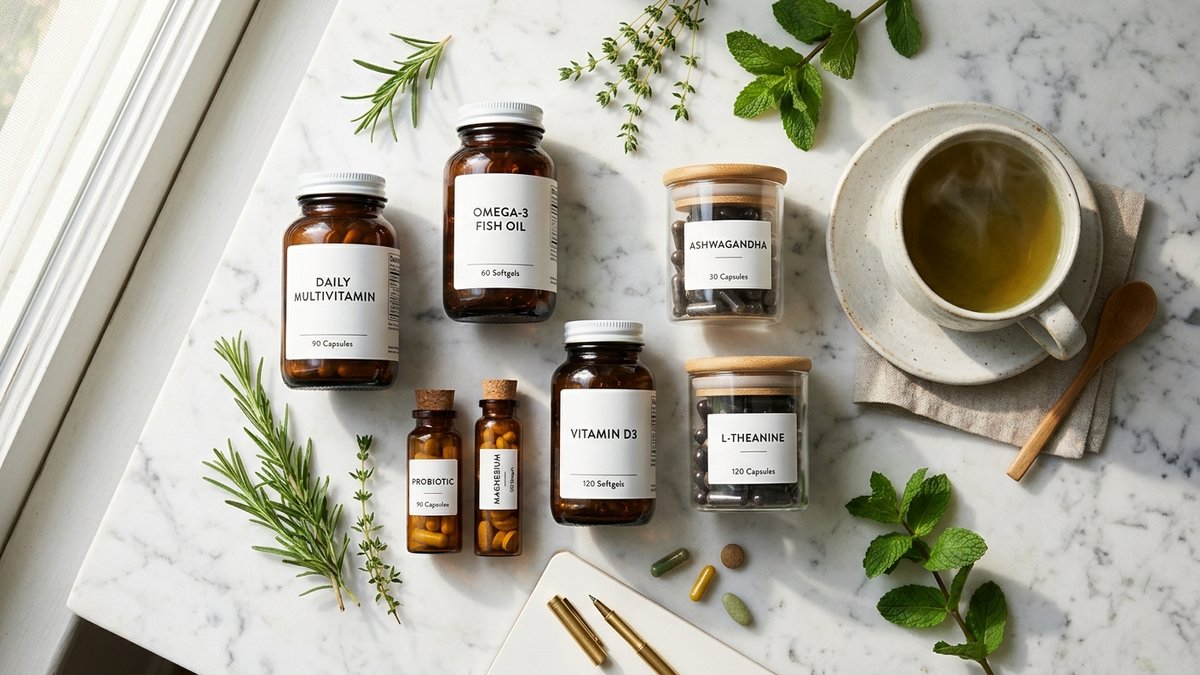
Best Anxiety Supplements According to Reddit: Evidence Review
Picture this: it's 2 a.m., you're buried in a Reddit thread titled 'What actually helped your anxiety?' and you're furiously bookmarking every supplement someone swears by — ashwagandha, magnesium, L-theanine, a dozen more — wondering which ones are real and which are just expensive placebos. If you've ever gone down that rabbit hole searching for the best anxiety supplements Reddit users recommend, you already know how overwhelming (and surprisingly passionate) those threads get. Here's the thing: Reddit's r/anxiety and r/supplements communities collectively have over 1.2 million members, and buried inside those upvoted comments is actually some genuinely useful signal — if you know how to separate the anecdote from the evidence. This post does exactly that: takes the most consistently praised supplements from Reddit's anxiety discussions and runs them through the research, so you get the community's real-world wisdom *plus* the science to back it up.
For more information, see: NIH National Center for Complementary and Integrative Health, Nutrients Journal – Magnesium & Anxiety Meta-Analysis
📌 Quick Summary
- Magnesium glycinate is the single most consistently recommended supplement across Reddit anxiety threads — and clinical research on magnesium deficiency's link to anxiety backs the community up.
- L-theanine earns near-universal praise for same-day calming effects with zero sedation, supported by multiple double-blind trials showing significant stress reduction at 200mg doses.
- Ashwagandha (KSM-66) shows the strongest clinical evidence for reducing cortisol and perceived stress scores, though Reddit users warn: results take 4–8 weeks and quality varies wildly by brand.
📊 What Reddit Actually Says: The Best Anxiety Supplements Reddit Users Recommend Most
Let's start where you probably started — the threads. When you dig into the most upvoted posts on r/anxiety, r/supplements, and r/nootropics asking about the best anxiety supplements Reddit users have personally tried, a handful of names appear over and over again with striking consistency. This isn't random noise. When thousands of people independently reach the same conclusion across years of posts, that's signal worth paying attention to. The top five supplements that dominate these conversations are: magnesium glycinate, L-theanine, ashwagandha, vitamin D3, and omega-3 fatty acids. Some runners-up — like GABA, valerian root, and CBD — show up frequently too, but with notably more mixed reviews. What's interesting is that the Reddit community has gotten surprisingly sophisticated about this stuff. You'll routinely see users distinguishing between magnesium glycinate and magnesium oxide (spoiler: they're not the same), debating ashwagandha extract ratios, and calling out brands that underdose. That kind of nuance is worth a lot.
Here's the truth most guides won't tell you: Reddit's collective wisdom on supplements tends to be most reliable when it aligns with the clinical literature — and for anxiety, the overlap is actually pretty strong. A 2017 systematic review published in *Nutrients* found that magnesium supplementation significantly reduced anxiety in populations with low magnesium status, which tracks perfectly with what Reddit users report. The community's enthusiasm for L-theanine mirrors multiple controlled trials showing reduced stress response. The surprising part? Where Reddit diverges from the science is often on dosing and timing — many users report 'it didn't work' at doses lower than what studies used. That's a crucial detail we'll unpack for every supplement below. Think of this section as your Reddit-to-research translation guide.
Magnesium Glycinate
Top Reddit pick — calms nerves & improves sleep
L-Theanine
Fast-acting focus + calm, no drowsiness reported
Ashwagandha KSM-66
Clinically proven cortisol reduction in 8 weeks
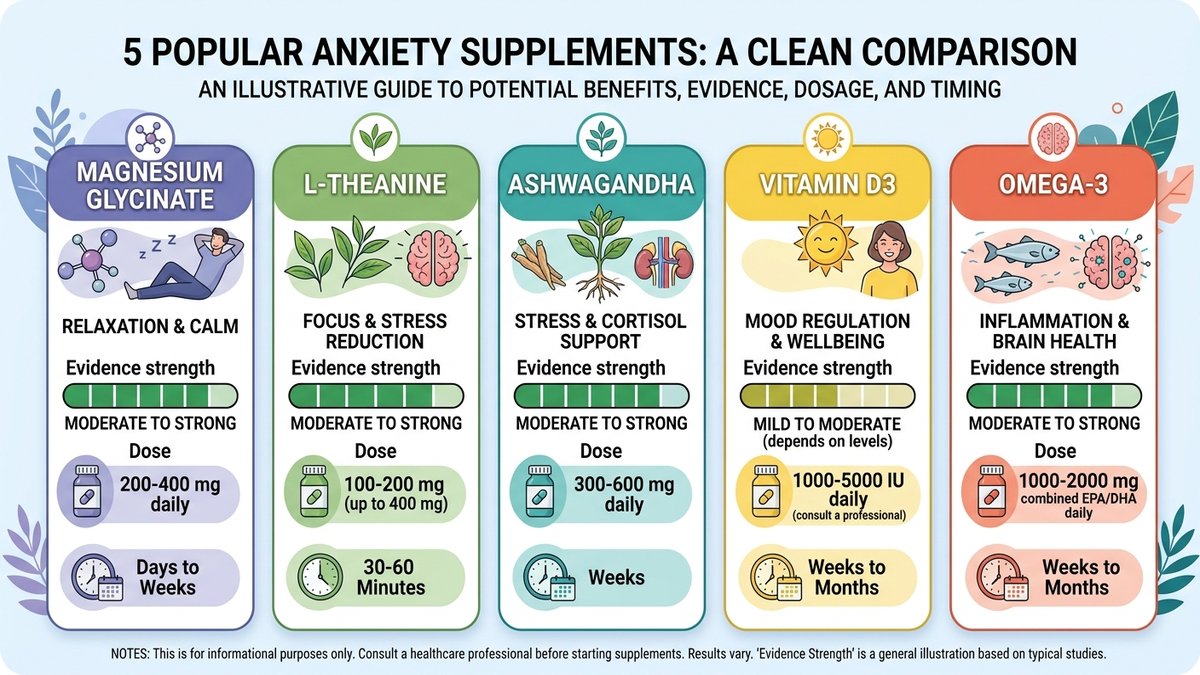
| Supplement | Reddit Hype Level | Clinical Evidence | Typical Dose | Time to Effect |
|---|---|---|---|---|
| Magnesium Glycinate | ⭐⭐⭐⭐⭐ Extremely High | ✅ Strong (multiple RCTs) | 300–400mg/day | 1–2 weeks |
| L-Theanine | ⭐⭐⭐⭐⭐ Extremely High | ✅ Strong (double-blind trials) | 100–200mg/dose | 30–60 minutes |
| Ashwagandha (KSM-66) | ⭐⭐⭐⭐½ Very High | ✅ Strong (cortisol reduction) | 300–600mg/day | 4–8 weeks |
| Vitamin D3 | ⭐⭐⭐⭐ High | ⚠️ Moderate (deficiency-linked) | 2000–5000 IU/day | 4–6 weeks |
| Omega-3 (EPA/DHA) | ⭐⭐⭐½ Moderate-High | ✅ Good (meta-analyses) | 1–2g EPA+DHA/day | 6–8 weeks |
💡 Key takeaway: The supplements with the highest Reddit consensus AND the strongest clinical backing are magnesium glycinate, L-theanine, and ashwagandha — making these the obvious starting point for anyone new to anxiety supplementation.
🎯 Deep Dive: What Supplements Actually Work for Anxiety Reddit Users Keep Coming Back To
Alright, let's get into the actual meat of this — because 'magnesium is good for anxiety' is advice you could find on a cereal box. What you really want to know is *why* these specific forms and doses work, what the research actually shows, and how to avoid the most common mistakes Reddit users have learned the hard way. When people ask 'what supplements actually work for anxiety reddit threads recommend,' the answers they trust most come from users who've tried multiple things, kept notes, and report back with specifics. We're going to do the same — supplement by supplement, with the evidence laid out honestly. No hype. No affiliate padding. Just what the data and the community together suggest is worth your money and your trust.
One thing that makes Reddit's anxiety supplement discussions uniquely valuable is the failure reports. Unlike supplement brand websites, Reddit users openly share when something *didn't* work for them — and often explain why. L-theanine didn't do anything for me at 100mg but changed my life at 200mg is a real comment you'll find. Ashwagandha made my anxiety worse before it got better for the first two weeks appears constantly. These real-world nuances don't show up in clinical trials, which often study healthy volunteers under controlled conditions. The intersection of clinical evidence and community experience is where the most useful guidance lives — and that's exactly what we're mapping out for you in the steps below.
Start with Magnesium Glycinate (The Reddit Unanimous Choice)
If there is one supplement that Reddit's anxiety communities have reached near-unanimous consensus on, it's magnesium glycinate. Not magnesium oxide (cheap, poorly absorbed, causes digestive issues), not magnesium citrate (better, but laxative effect at higher doses) — specifically the glycinate form, which pairs magnesium with the calming amino acid glycine for superior absorption and nervous system benefits. Why does this matter so much? Because an estimated 48% of Americans are magnesium deficient, according to data from the National Health and Nutrition Examination Survey — and magnesium is literally required for GABA receptor function, your brain's primary 'calm down' system. A 2017 meta-analysis in *Nutrients* found statistically significant anxiety reduction with magnesium supplementation. Reddit users consistently report starting at 300mg before bed, noticing improved sleep first (usually within days), then reduced baseline anxiety within 1–2 weeks. Start here. Seriously.
Add L-Theanine for Fast-Acting, On-Demand Calm
L-theanine is the compound naturally found in green tea that explains why tea has a calmer, more focused energy than coffee — even though both contain caffeine. As a standalone supplement, L-theanine at 200mg has been shown in multiple double-blind, placebo-controlled trials to reduce physiological stress responses, lower heart rate during acute stress tasks, and promote alpha brain wave activity (the state associated with relaxed alertness). For Reddit's anxiety community, this is the go-to 'situational' supplement — taken 30–45 minutes before a stressful meeting, social situation, or anxiety-provoking event. The massive advantage over something like valerian or melatonin: zero sedation. You stay sharp, just calmer. Many users pair it with caffeine in a 200mg L-theanine + 100mg caffeine stack to eliminate caffeine jitters entirely. Dosing note from the community: 100mg often underwhelms, and 200mg is where most people feel the effect. Start at 200mg.
Consider Ashwagandha KSM-66 for Long-Term Stress Resilience
Ashwagandha is where Reddit gets passionate — and divided. The enthusiasts have genuinely compelling points: a 2019 randomized controlled trial in *Medicine* found that 600mg of ashwagandha root extract daily reduced cortisol levels by 27.9% and significantly improved scores on standardized anxiety scales versus placebo. The critics on Reddit also have valid points: some people experience increased anxiety, brain fog, or mood changes, particularly in the first 1–2 weeks, and a small subset doesn't tolerate it well at all. The community's learned wisdom: always choose KSM-66 or Sensoril extracts (standardized, clinically studied forms), start at 300mg rather than jumping to 600mg, take it with food to minimize GI upset, and give it a full 6–8 weeks before judging results. This is not an 'in 30 minutes' supplement — it's a slow, foundational shift in how your HPA axis (stress response system) operates. Think of it as retraining your nervous system, not putting out a fire.
Address Vitamin D3 and Omega-3s If You Haven't Already
These two often get overlooked because they seem too basic — but Reddit's most experienced users consistently circle back to them as foundational. Here's why they matter for anxiety specifically: Vitamin D receptors are found throughout the brain, including in areas regulating mood and fear response. A 2020 meta-analysis in *Nutrients* found significant associations between vitamin D deficiency and anxiety disorders, and supplementation showed benefit — particularly in people who were actually deficient. Given that 41.6% of Americans are vitamin D deficient (per NHANES data), getting your levels tested and supplementing accordingly (typically 2,000–5,000 IU D3 daily with K2) is low-hanging fruit. Omega-3s, specifically high-EPA formulas, have a 2018 meta-analysis in *JAMA Network Open* showing a 20% reduction in anxiety symptoms with omega-3 supplementation across 19 clinical trials. Reddit's take: these won't transform your anxiety overnight, but deficiency in either actively worsens it — and that's worth fixing first.
⚖️ Magnesium Glycinate for Anxiety Reddit Reviews: Honest Pros, Real Cons, and Who It's For
Since magnesium glycinate is consistently cited as the single best starting point by Reddit's anxiety communities, it deserves a closer, more honest look than 'take this, feel better.' Real Reddit reviews — the ones with hundreds of upvotes and detailed follow-up comments — paint a nuanced picture that's more useful than any supplement brand's testimonial page. The consensus is overwhelmingly positive, but the *why* it works for some people and not others comes down to a few factors that most supplement guides quietly skip. The most important: magnesium supplementation works best when you're actually deficient — and deficiency is far more common than most people realize, especially in people who drink alcohol regularly, take certain medications (like PPIs or diuretics), eat a heavily processed diet, or experience chronic stress (which depletes magnesium directly). If you're hitting all those checkboxes, magnesium glycinate may feel almost miraculous. If you're already replete, results will be subtler.
The other major conversation that runs through magnesium glycinate Reddit reviews is timing and form. Users who take it in the morning often report less dramatic results than those who take it 30–60 minutes before bed, where the combination of magnesium's muscle-relaxing properties and glycine's sleep-promoting effects creates a noticeably calmer pre-sleep state. Several threads specifically discuss the 'magnesium dreams' phenomenon — vivid, emotionally rich dreams in the first week of supplementation — which is widely interpreted as a sign of the nervous system recalibrating. On the downside, a small percentage of users report loose stools even with the glycinate form (more common at doses above 400mg), and a few note that it initially increased fatigue before improving it. These aren't dealbreakers, but they're worth knowing going in so you don't quit too early.
Pros
- ✅ Excellent safety profile: Magnesium glycinate is well-tolerated by most people, with far fewer GI side effects than cheaper forms like oxide or sulfate at equivalent doses.
- ✅ Dual benefit — anxiety AND sleep: Reddit users consistently report improvements in both baseline anxiety and sleep quality, making it unusually efficient for the cost (typically $15–25/month).
- ✅ Fast initial signal: Many users notice reduced muscle tension and improved sleep within the first 3–5 days, giving you early feedback that it's working before full anxiety benefits emerge.
- ✅ Addresses a genuine deficiency: With nearly half of Americans magnesium-deficient, there's a high probability this supplement is filling a real nutritional gap rather than just adding something arbitrary.
Cons
- ❌ Deficiency-dependent results: If your magnesium levels are already adequate, benefits will be significantly more subtle — you won't know without a blood test (though RBC magnesium is more accurate than standard serum tests).
- ❌ Dose-finding required: The 'sweet spot' varies — some people do well at 200mg, others need 400mg+ for noticeable effect, and going too high causes loose stools, which frustrates users who quit before finding their dose.
- ❌ Not a standalone solution: Reddit's most honest reviews make clear that magnesium glycinate reduces the *intensity* of anxiety but rarely eliminates it — it works best as part of a broader approach including sleep, exercise, and therapy.
⚠️ 💡 Pro Tip from Reddit: Get your RBC (red blood cell) magnesium tested, not just serum magnesium — serum tests miss deficiency in up to 50% of cases because your body pulls magnesium from cells to keep blood levels stable. Many users who were told their magnesium was 'fine' discovered RBC deficiency and saw dramatic improvements after supplementing.
✅ Natural Anxiety Supplements Backed by Science: How to Build Your Stack Safely
Here's where a lot of people go wrong: they read a Reddit thread, get excited, and order six supplements at once. Then they have no idea which one is helping (or causing side effects), they're spending $150/month on things they may not need, and they've created a chaotic variable soup that tells them nothing. The smartest Reddit users — the ones whose posts get saved and referenced for years — consistently recommend a sequential, systematic approach. Start with one supplement at the correct dose. Give it two to four weeks (or 30–60 minutes for acute supplements like L-theanine). Track your baseline and your changes. Then add the next one. This isn't just good advice — it's the same logic that makes clinical trials meaningful. When you're testing something on your own biology, controlling variables is how you actually learn what works for *you*. The natural anxiety supplements backed by science we've covered here — magnesium glycinate, L-theanine, ashwagandha, vitamin D3, omega-3s — are all safe to combine, but starting them all at once defeats the purpose.
A few practical guardrails worth emphasizing before you head to your supplement shelf or Amazon cart: always talk to your doctor before starting any supplement if you're on prescription medications — ashwagandha and St. John's Wort (a popular Reddit mention for mild anxiety/depression) have real drug interactions, particularly with SSRIs, blood thinners, and immunosuppressants. Supplement quality matters enormously — Reddit's r/supplements community maintains updated lists of third-party tested brands (look for NSF Certified, USP Verified, or Informed Sport labels), because the supplement industry is famously under-regulated and label accuracy varies wildly. And finally: supplements work best as *support*, not replacement. The most successful Reddit users combine them with regular exercise (which has anxiety-reduction effects comparable to medication in multiple studies), quality sleep, reduced alcohol intake, and professional support when needed. The stack that works isn't just in your medicine cabinet — it's your whole lifestyle.
❓ Frequently Asked Questions
✍️ Final Thoughts: Your Next Step Toward Calmer Days
If you've read this far, you're already doing something most anxious people don't — you're being thoughtful and evidence-driven instead of just panic-buying whatever supplement has the prettiest label. That matters. The best anxiety supplements Reddit communities recommend aren't magic bullets, and neither of us is going to pretend they are. But for millions of people, magnesium glycinate, L-theanine, and ashwagandha represent genuinely effective, well-tolerated tools that make anxiety more manageable — and the convergence of community experience and clinical research on these three is about as strong as it gets in the supplement world. The most important takeaway from years of Reddit anxiety threads isn't any single supplement — it's the pattern of people who got better. They addressed deficiencies first (magnesium, vitamin D), added fast-acting situational support (L-theanine), built in long-term adaptogens (ashwagandha), and treated supplements as one part of a broader approach that included sleep, movement, reduced alcohol, and professional support when needed. That's not a hack. That's a strategy. And strategies, unlike hacks, actually work.
Here's what I'd do if I were starting today, based on everything the evidence and Reddit's collective wisdom suggest: First, order a quality magnesium glycinate (300–400mg) and start taking it before bed tonight. Give it two weeks before judging. Second, pick up L-theanine (200mg) and use it the next time you have a stressful situation coming up — a job interview, a difficult conversation, a packed social event. See how it feels. Third, get your vitamin D levels checked at your next doctor's visit and discuss whether supplementation makes sense for you. Fourth, if after a month you want to add ashwagandha, choose KSM-66 or Sensoril, start at 300mg with food, and commit to 8 weeks. And throughout all of this — keep tracking. Your journal is more useful than any Reddit thread because it's about *your* biology. The goal isn't to find the supplement that Reddit loves most. It's to find what makes *you* feel calmer, clearer, and more like yourself. You deserve that. And now you have the roadmap to actually find it. For more on building a mental wellness routine that works, check out our related guides here on InfoWellHub — because supplements are just one piece of a much richer picture.
Post a Comment