
📌 Table of Contents ⬆

Best Magnesium for Women Over 50: Types, Dosage & Expert Picks
Picture this: You're 54 years old, you've eaten well your whole life, you exercise regularly, and yet you're waking up at 3 a.m. with leg cramps that could make a grown woman cry — plus your doctor just mentioned your bone density is 'worth watching.' Sound familiar? You're not falling apart. You might just be one of the 48% of Americans who are deficient in magnesium, and that percentage climbs even higher after menopause. Finding the best magnesium for women over 50 isn't just about popping a supplement — it's about choosing the *right form* for your specific body and symptoms. Because here's the thing most one-size-fits-all guides won't tell you: magnesium comes in over a dozen forms, and picking the wrong one is like buying the wrong key for your lock.
For more information, see: National Institutes of Health — Magnesium Fact Sheet, Nutrients Journal — Magnesium and Postmenopausal Women
📌 Quick Summary
- Magnesium glycinate wins for sleep & anxiety: Its high bioavailability and gentle profile make it the #1 pick for postmenopausal women struggling with sleep disruption and mood swings.
- Your RDA is 320mg/day: Most women over 50 fall short of this — often by 100mg or more — which directly impacts bone density, heart rhythm, and muscle recovery.
- Form matters MORE than brand: Studies show magnesium oxide (the cheapest and most common form in drugstores) has only about 4% absorption rate, making it nearly useless compared to glycinate or malate.
📊 Why Women Over 50 Need Magnesium More Than Ever (The Science Most Doctors Skip)
Here's the truth most guides won't tell you: menopause doesn't just change your hormones — it fundamentally changes how your body absorbs and retains magnesium. Estrogen plays a quiet but critical role in magnesium regulation, and when estrogen levels drop during menopause, your kidneys actually start excreting more magnesium than before. This means you could be eating a magnesium-rich diet and *still* come up short. Research published in the journal *Nutrients* found that postmenopausal women have significantly lower serum magnesium levels than premenopausal women of the same age and dietary intake. That's not a lifestyle choice — that's biology working against you. And the downstream effects touch almost everything: bone density, sleep quality, cardiovascular health, blood sugar regulation, and even mood. If you've ever wondered why your 50s feel so different from your 40s despite doing 'all the right things,' this mineral gap might be a major piece of the puzzle. The best magnesium for women over 50 directly addresses these compounding deficits in a way that diet alone rarely can.
What most people don't realize is just how broad magnesium's job description actually is inside your body. This single mineral is involved in over 300 enzymatic reactions — from synthesizing protein and DNA to regulating nerve signals and maintaining muscle contractions. For women in their 50s and beyond, three of those functions become especially critical. First, magnesium works *alongside* calcium and vitamin D to maintain bone mineral density — making it a quiet co-star of your bone health story. Second, it regulates the production of melatonin and serotonin, which explains why low magnesium is so closely linked to poor sleep and increased anxiety after menopause. Third, magnesium helps control insulin sensitivity and blood sugar levels, which become more precarious as estrogen declines. The surprising part? A 2021 meta-analysis in *Diabetes & Metabolic Syndrome* found that magnesium supplementation significantly improved fasting glucose and insulin resistance markers in postmenopausal women. So when you're shopping for the best magnesium for women over 50, you're not just buying a sleep aid — you're investing in whole-body resilience.
Magnesium Glycinate
Best for sleep, anxiety & muscle cramps post-menopause
Magnesium Citrate
Great absorption; ideal for constipation & energy
Magnesium Malate
Top pick for fatigue, fibromyalgia & daily energy
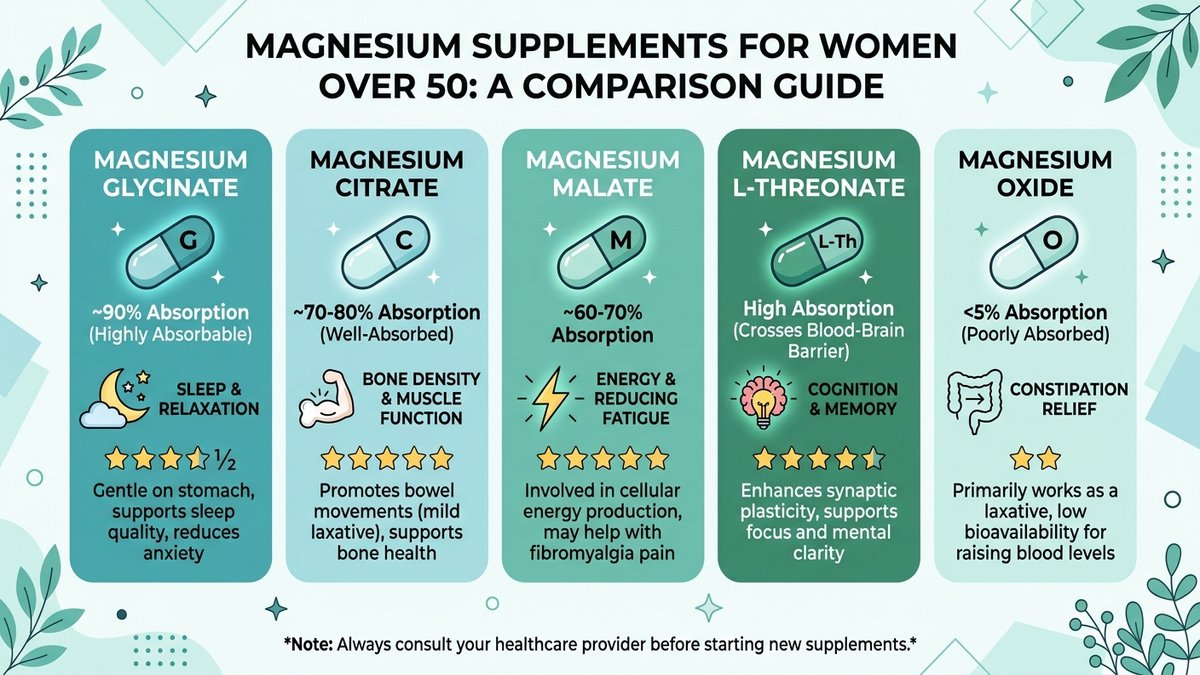
| Magnesium Type | Best For | Absorption Rate | Recommended For Women 50+ | Rating |
|---|---|---|---|---|
| Magnesium Glycinate | Sleep, anxiety, muscle cramps | High (~80%) | ✅ Yes — #1 Pick | ⭐⭐⭐⭐⭐ |
| Magnesium Citrate | Constipation, energy, general use | High (~70%) | ✅ Yes — Great all-rounder | ⭐⭐⭐⭐⭐ |
| Magnesium Malate | Fatigue, fibromyalgia, muscle pain | High (~67%) | ✅ Yes — Especially for energy | ⭐⭐⭐⭐⭐ |
| Magnesium L-Threonate | Brain health, cognitive function | High (crosses blood-brain barrier) | ✅ Yes — For memory & focus | ⭐⭐⭐⭐ |
| Magnesium Oxide | Occasional constipation only | Very Low (~4%) | ❌ Not ideal — poor absorption | ⭐⭐ |
💡 Key takeaway: Magnesium glycinate consistently ranks as the best magnesium for women over 50 because of its superior absorption, minimal side effects, and direct impact on sleep and anxiety — two of the most common postmenopausal complaints.
🎯 Magnesium Glycinate vs Citrate for Women Over 50: How to Choose Your Perfect Match
Okay, so you're sold on magnesium. Now comes the question that sends most women down a 45-minute Google rabbit hole: *Which type do I actually take?* Let's cut through the noise. The debate of magnesium glycinate vs citrate for women over 50 is genuinely the most important decision you'll make when supplementing this mineral — because each form has a different superpower. Glycinate is bound to the amino acid glycine, which has its own calming, sleep-promoting properties. Citrate is bound to citric acid, which makes it highly soluble and excellent for improving energy metabolism and relieving constipation (a common complaint after menopause). Neither one is universally 'better' — it comes down to your top symptom. Are you most bothered by poor sleep and anxiety? Glycinate is your girl. Is low energy and sluggish digestion your biggest frustration? Citrate may be the smarter starting point. The good news: both have significantly better absorption than the cheap oxide forms sitting on drugstore shelves.
Here's why this matters beyond just marketing language: the form of magnesium determines how much actually makes it into your bloodstream and — critically — into the tissues that need it most. A 2019 study comparing multiple magnesium forms found that magnesium glycinate had the highest rate of cellular uptake in muscle and brain tissue compared to oxide and sulfate forms. For postmenopausal women dealing with the triple threat of disrupted sleep, muscle tension, and heightened anxiety, that cellular uptake difference is enormous. Magnesium L-Threonate is another form worth mentioning — it's the only form proven to cross the blood-brain barrier effectively, making it a fascinating option if cognitive sharpness and memory support are top priorities for you. It's pricier, but for women in their 50s who want to stay mentally sharp as well as physically resilient, it earns its place in the conversation. The bottom line on magnesium glycinate vs citrate for women over 50: most experts recommend starting with glycinate, then adding citrate if digestive or energy concerns are still present.
Identify Your #1 Symptom First
Before you buy anything, get clear on your most disruptive daily symptom. Is it insomnia or frequent nighttime waking? Go with magnesium glycinate — the glycine component has a sedative-like calming effect on the nervous system that promotes deeper, more restful sleep. Is it fatigue and low energy that hits you by noon? Magnesium malate supports ATP (energy) production at the cellular level. Is it constipation — extremely common after menopause due to hormonal and gut motility changes? Magnesium citrate is your best bet since it draws water into the intestines and supports regularity without harsh stimulant laxative effects. Choosing based on your symptom stack rather than brand name or price is the single smartest move you can make here.
Check Your Current Diet for Magnesium Gaps
Most women getting the best magnesium for women over 50 still underestimate how much their food is falling short. The richest dietary sources of magnesium include dark leafy greens (spinach has ~157mg per cooked cup), pumpkin seeds (~150mg per oz), dark chocolate, legumes, and whole grains. But here's the catch: soil depletion means modern food has significantly less magnesium than it did 50 years ago — some estimates suggest up to 40% less. Gut absorption also declines with age, particularly after 50, meaning even if you eat well, you're likely absorbing less than the numbers suggest. Use a free app like Cronometer for 3 days to track your dietary magnesium. If you're consistently below 200mg daily from food, supplementing 200–320mg is well-justified.
Start Low, Go Slow With Dosage
When it comes to knowing how much magnesium a woman over 50 should take daily, the NIH recommends 320mg/day as the official RDA — but that includes dietary sources. For supplementation specifically, most integrative practitioners suggest starting at 100–150mg elemental magnesium per day and increasing gradually over 2–4 weeks. This 'start low, go slow' approach matters because too much magnesium too quickly causes the one side effect everyone dreads: loose stools. By gradually titrating up, you find your personal tolerance threshold. Some women do beautifully on 200mg; others need closer to 400mg total (diet + supplement combined). Never exceed 350mg from supplements alone unless under a doctor's supervision, as this is the NIH's established Upper Tolerable Limit for supplemental magnesium.
Time Your Dose Strategically for Maximum Benefit
Timing isn't just a nice-to-have — it's a genuine performance enhancer for your supplement. If you're taking magnesium glycinate for sleep, take it 30–60 minutes before bed to let the glycine component prime your nervous system for wind-down. If you're using magnesium citrate or malate for energy, morning or early afternoon works better since the malate form supports daytime ATP production and taking it at night might feel slightly stimulating for sensitive individuals. For bone health purposes, splitting your dose (morning and evening) may improve absorption efficiency since the body can only absorb a limited amount at once. Always take magnesium with food to reduce the chance of an upset stomach, and avoid taking it within 2 hours of medications like antibiotics or thyroid medication, as magnesium can impair their absorption.
⚖️ Expert Picks: The Best Magnesium Supplements for Women Over 50 (Honest Pros & Cons)
Let's talk brands — because the supplement industry is a $177 billion Wild West where quality varies wildly. When evaluating the best magnesium for women over 50, four things matter above all else: the form of magnesium used (we've covered this), the elemental magnesium content per dose (not total compound weight), third-party testing certifications (look for USP, NSF, or Informed Sport), and the absence of unnecessary fillers like magnesium stearate in excess or artificial dyes. Here are the expert-backed picks that consistently rise to the top across registered dietitian recommendations and consumer lab testing. Thorne Magnesium Bisglycinate is widely regarded as the gold standard — it's NSF certified, uses a highly bioavailable chelated form, and delivers clean, no-filler ingredients. Pure Encapsulations Magnesium Glycinate is another RD favorite, particularly popular among women with sensitive stomachs. For budget-conscious shoppers, Doctor's Best High Absorption Magnesium (glycinate-malate blend) consistently outperforms its price point in third-party lab tests.
The honest truth about magnesium supplements for sleep and bone health after menopause is that no single product does everything perfectly — and that's okay. Each top pick has genuine trade-offs. Thorne's product is exceptional but sits at the premium price range (~$35–$45 for a 60-day supply). Pure Encapsulations is hypoallergenic and free of common additives, making it ideal for women with food sensitivities, but it's similarly priced. Doctor's Best offers remarkable value at roughly $15–$20 for a 120-day supply and has passed ConsumerLab independent testing — but the capsules are larger and some women find them harder to swallow. For women specifically focused on cognitive health alongside bone and muscle support, Magtein (Magnesium L-Threonate by Life Extension) is the premium brain-health choice backed by MIT research. The practical advice from integrative nutritionists: pick the cleanest version of glycinate or citrate you can reasonably afford, take it consistently for 8–12 weeks, and *then* reassess whether you need to fine-tune your form or dose.
Pros
- ✅ Superior sleep quality: Magnesium glycinate supplementation has been shown in clinical studies to reduce nighttime awakenings and improve sleep efficiency within 4–6 weeks in postmenopausal women.
- ✅ Bone density support: Magnesium works synergistically with calcium and vitamin D — studies show women with higher magnesium intake have 2–3% greater bone mineral density, which translates to meaningfully lower fracture risk over time.
- ✅ Cardiovascular protection: Adequate magnesium levels are associated with lower blood pressure and reduced risk of atrial fibrillation — a concern that increases significantly after menopause.
- ✅ Blood sugar regulation: Supplementation has been shown to improve insulin sensitivity and reduce fasting glucose in postmenopausal women, supporting metabolic health during a time when diabetes risk rises.
Cons
- ❌ Digestive sensitivity: Taking too much too fast — or choosing poorly absorbed forms like oxide — can cause diarrhea, cramping, or nausea; always start at a low dose and titrate up.
- ❌ Drug interactions: Magnesium can interfere with certain antibiotics (fluoroquinolones, tetracyclines), bisphosphonates (like Fosamax), and some diuretics — always check with your doctor or pharmacist if you're on prescription medications.
- ❌ Not all forms are equal: The supplement aisle is flooded with low-cost magnesium oxide products that provide virtually no therapeutic benefit — misleading labels make it easy to waste money on something that won't move the needle.
⚠️ ⚡ Important: If you have kidney disease or are on dialysis, magnesium supplementation requires direct medical supervision. Impaired kidneys cannot regulate magnesium excretion properly, and excess magnesium can reach dangerous blood levels. Always disclose all supplements to your healthcare provider.
✅ How Much Magnesium Should a Woman Over 50 Take Daily — Your Practical Action Plan
Let's make this actionable, because information without direction is just noise. The official NIH recommendation for how much magnesium a woman over 50 should take daily is 320mg total (from all sources combined — food and supplements). In practice, since most women over 50 get roughly 180–220mg from diet, a supplement dose of 100–200mg elemental magnesium is a smart, safe starting target for most healthy women without kidney issues. Here's the crucial distinction that trips people up at the store: the label might say '500mg Magnesium Glycinate' — but that refers to the *total compound* weight, not the elemental magnesium. The elemental amount (what your body actually uses) is listed separately, often in a smaller font. For magnesium glycinate, elemental magnesium is typically about 14% of the compound weight — so 500mg of magnesium glycinate delivers roughly 70mg of elemental magnesium. Always read the 'Amount Per Serving' line for elemental magnesium specifically before calculating your dose. 💡 Pro Tip: Start at 100mg elemental magnesium for the first week, increase to 200mg in week 2, and reassess your symptoms at the 4-week mark before going higher.
Beyond dose, there are a few overlooked factors that determine whether your supplement actually works. Vitamin D3 and magnesium have a two-way dependency that most supplement guides ignore entirely: magnesium is required to activate vitamin D, and vitamin D improves magnesium absorption in the gut. If you're taking vitamin D3 (which most women over 50 should be for bone health) without magnesium, you may be getting less benefit from both. Similarly, excessive calcium supplementation can actually compete with magnesium for absorption in the gut — another reason why the long-standing advice to mega-dose calcium for bone health is being reconsidered by most integrative practitioners. For magnesium supplements specifically targeting sleep and bone health after menopause, look for formulations that pair magnesium glycinate with vitamin D3 and vitamin K2 — this trio works synergistically to direct calcium into bones rather than soft tissues. Finally, remember that magnesium works best as part of a consistent, daily habit — not an occasional add-on. Give it at least 8 full weeks before deciding it's not working. Nutrient replenishment takes time, especially if you've been running low for years.
❓ Frequently Asked Questions
✍️ Final Thoughts: Your Next Step Toward Feeling Like Yourself Again
If you've read this far, you're already ahead of 90% of women who just grab the cheapest magnesium on the drugstore shelf and wonder why they're not feeling any different three months later. Here's what we know for certain: magnesium deficiency is real, it's common, and it hits harder after 50 for biological reasons that have nothing to do with your effort or discipline. The drop in estrogen changes how your kidneys handle this mineral, your gut absorbs less with age, and the soil our food grows in contains less magnesium than it did a generation ago. This is a stacked deck — but it's one you can correct. The best magnesium for women over 50 isn't a luxury or a trend. It's a foundational nutritional strategy backed by decades of research across sleep science, bone biology, cardiovascular medicine, and metabolic health. Whether your biggest struggle is 3 a.m. leg cramps, a bone density report that made your stomach drop, persistent fatigue, or an anxiety that seems to have appeared out of nowhere in your 50s — there's a specific magnesium form and protocol that speaks directly to your situation. Glycinate for sleep and calm. Citrate for energy and digestion. Malate for muscle and fatigue. L-Threonate for your brilliant, sharp mind. You deserve to know which one is yours.
Here's what I'd do if I were starting today: Step 1 — spend one week tracking your dietary magnesium using a free app like Cronometer to understand your actual baseline gap. Step 2 — identify your top one or two symptoms (sleep, anxiety, energy, bone health, constipation) and match them to the magnesium form guide in this article. For most women, that means magnesium glycinate, 200mg elemental, taken 30–60 minutes before bed. Step 3 — choose a third-party tested brand (Thorne, Pure Encapsulations, or Doctor's Best are all solid starting points) and commit to 8 full weeks of consistent daily use before evaluating results. Magnesium is not an overnight fix — it's a long-game investment in how you feel, move, sleep, and think. And Step 4 — loop in your healthcare provider, especially if you're on medications or have kidney concerns. This isn't fear-mongering; it's just smart partnering. You can also explore our guide to [the best supplements for women over 50](https://infowellhub.com) for a broader picture of what your body may need at this stage of life. Your 50s, 60s, and beyond can feel strong, clear-headed, and genuinely good — one mineral at a time.
Post a Comment