
📌 Table of Contents ⬆
Roughly 40% of American adults have tried intermittent fasting at some point — and a big share quit during the first two weeks because the setup was wrong, not because the method failed.
📌 Quick Start Summary
- ⏰ Start with 14:10 for 14 days, then move to 16:8 only if energy and sleep stay stable
- 💧 Headaches in week one are usually an electrolyte problem, not proof that fasting is “bad for you”
- 🥗 Break your fast with protein + fiber + healthy fat or the next fasting window gets much harder
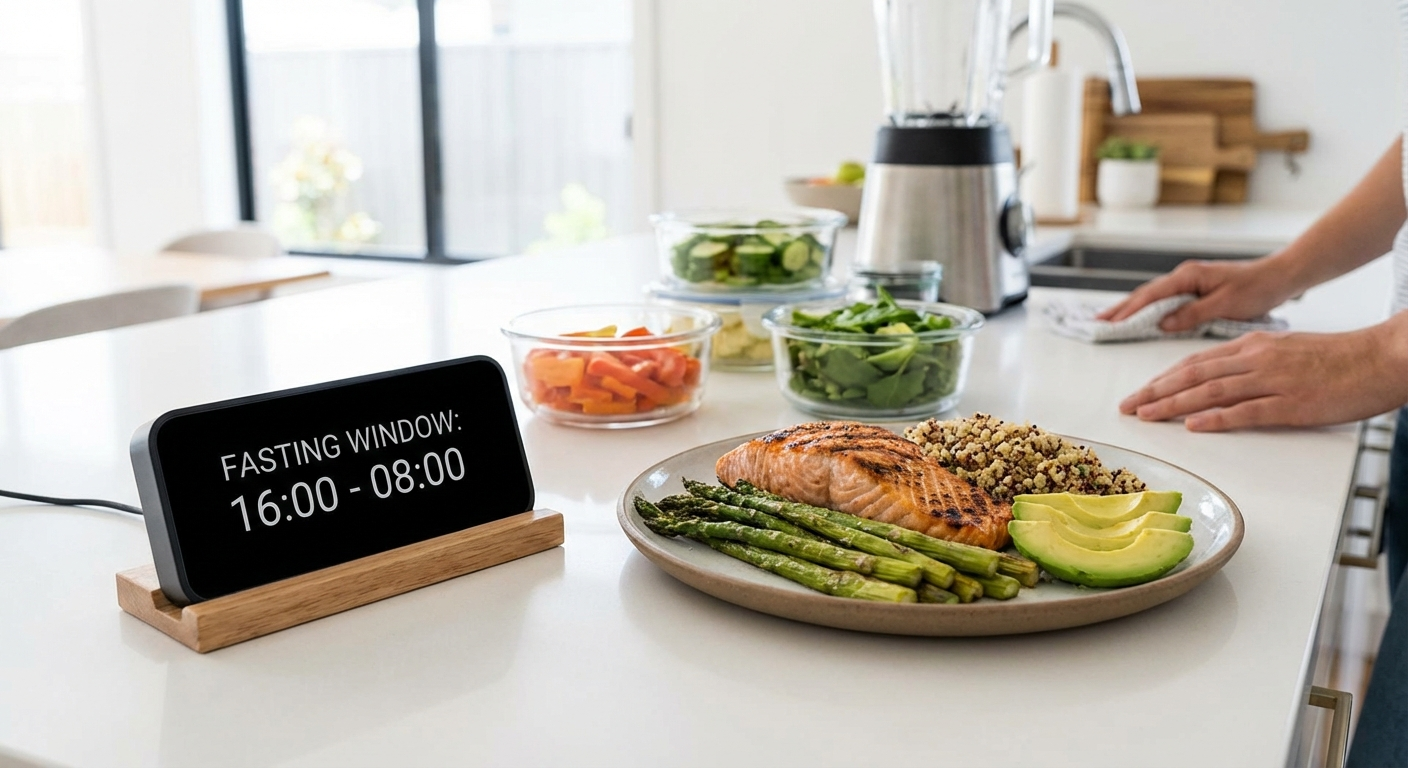
Most beginner intermittent fasting guides stop after saying “just skip breakfast.” That is exactly why many first-time fasters run into cravings, low energy, and rebound overeating. This version is built to help a beginner finish the first 14 days without guessing.
🔍 What Intermittent Fasting Actually Is
Intermittent fasting (IF) is an eating schedule, not a food ideology. You rotate between an eating window and a fasting window so your body gets longer stretches without incoming calories. During that fasting window, insulin drops, stored energy becomes more available, and appetite cues often become easier to manage after the first adjustment period.
That does not mean food quality stops mattering. IF works best when your eating window contains enough protein, fiber, micronutrients, and total calories to support recovery and muscle retention.
📊 The Best Beginner Protocols Ranked by Sustainability
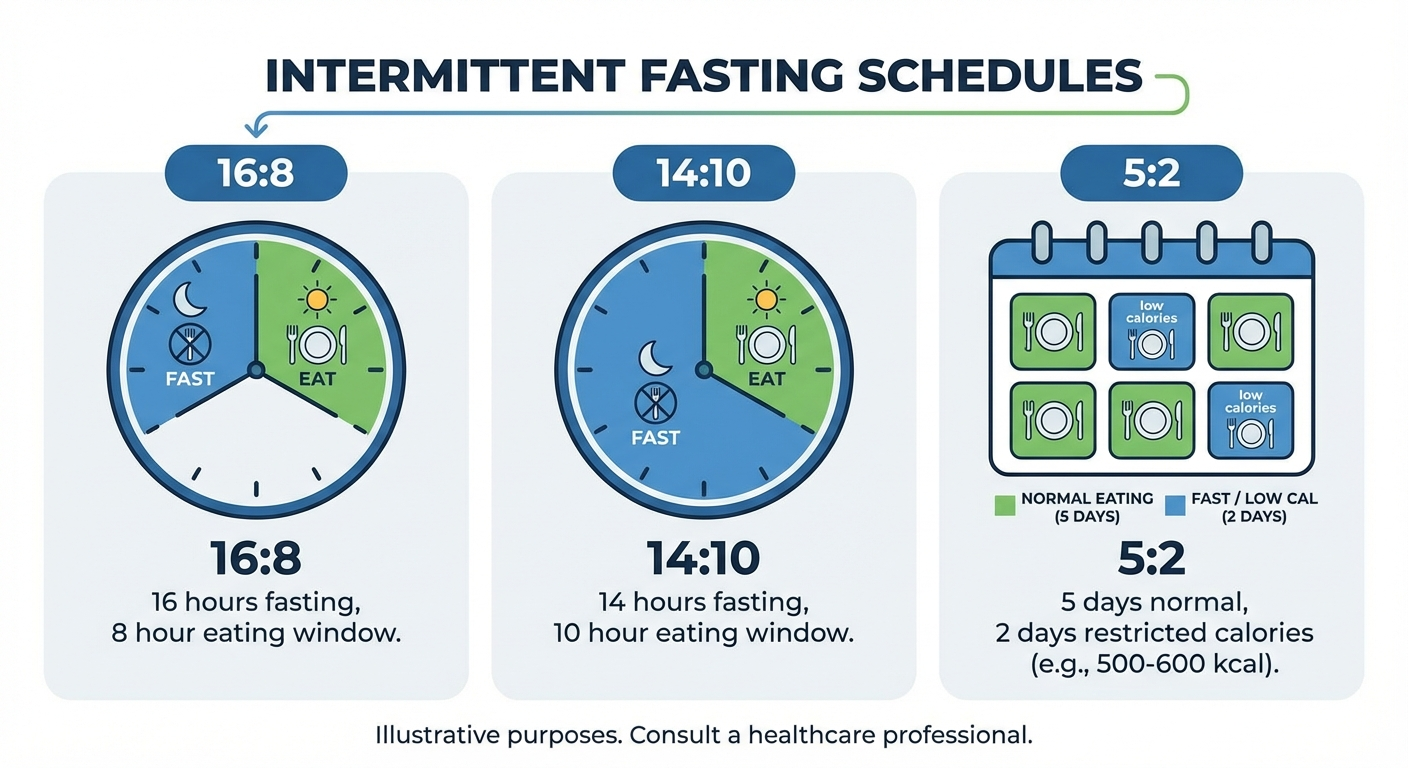
- 14:10 — best entry point for most beginners
- 16:8 — good next step after 1 to 2 adaptation weeks
- 5:2 — flexible but mentally harder on low-calorie days
- OMAD — not a beginner protocol; too aggressive for most people
- Alternate-day fasting — better reserved for supervised use or experienced fasters
If your sleep is inconsistent, your stress is high, or you have a history of yo-yo dieting, 14:10 usually beats jumping straight to 16:8.
🗓️ A 14-Day Beginner Adaptation Plan
Days 1–3: Finish dinner by 8pm and eat breakfast at 10am. Expect hunger waves rather than constant hunger. Those waves usually pass in 10–20 minutes.
Days 4–7: Keep the same window, but tighten your first meal quality. Aim for protein, vegetables, fruit, and enough sodium and fluids.
Days 8–10: If mornings feel easier, test a 30- to 60-minute delay for the first meal on two days only.
Days 11–14: Move to 16:8 only if energy, mood, workout quality, and sleep all stay acceptable. If not, staying at 14:10 is still a successful start.
💧 What You Can Have During the Fast
- Water, sparkling water, mineral water
- Black coffee
- Plain tea
- Sugar-free electrolytes
What usually breaks the fast: cream or milk in coffee, juice, caloric pre-workout drinks, sugar, honey, and “healthy” snacks that still add calories.
🥗 How to Break a Fast Without Triggering a Crash
Your first meal matters more than most beginners realize. A high-sugar first meal can spike blood sugar, crash energy, and make the next fasting window feel impossible.
- Protein: eggs, Greek yogurt, chicken, tofu, fish
- Fiber: vegetables, berries, beans, oats
- Healthy fat: avocado, nuts, olive oil
- Smart carbs: rice, potatoes, fruit, oats depending on activity level
For digestion support during your eating window, pair IF with the practical gut-health habits in how to improve gut health naturally.
🔬 What the Research Actually Supports
Intermittent fasting is not magic, but it is well-supported for several outcomes when the plan is sustainable:
- Comparable weight-loss results to standard calorie restriction for many adults
- Improved insulin sensitivity in people with metabolic risk
- Potential improvements in triglycerides, blood pressure, and appetite control
- Better structure for people who struggle with all-day grazing
Useful clinical overviews include the New England Journal of Medicine review on intermittent fasting and Mayo Clinic’s patient guide.
⚠️ The 5 Mistakes That Make Beginners Quit
1. Starting too aggressively. OMAD looks simple on social media, but it creates unnecessary friction for a beginner.
2. Undereating protein. That raises cravings later and can make workouts feel terrible.
3. Ignoring electrolytes. Low sodium and low fluid intake are common reasons for headaches.
4. Breaking the fast with junk food. Fast food or pastries can turn appetite regulation into chaos.
5. Treating every bad day as failure. A sustainable weekly average matters more than one imperfect morning.
If sleep quality drops, the magnesium guide at best magnesium supplement for sleep and the broader comparison at best magnesium supplements for sleep can help you adjust recovery support while fasting.

🏃 How to Handle Workouts While Fasting
Walking, easy cardio, and light strength work are usually fine during a beginner fasting window. High-intensity sessions are better placed near the end of the fast or inside the eating window until your adaptation improves.
If daily movement is part of your plan, combine this article with why walking 10,000 steps daily changes health outcomes so fasting does not become your only lever.
❓ Frequently Asked Questions
Will intermittent fasting slow my metabolism?
Not in the way most people fear when the fasting window is moderate and calorie intake is still adequate. Short fasting windows do not automatically create metabolic damage.
Can women do intermittent fasting safely?
Often yes, but many women do better with a gentler starting point such as 12:12 or 14:10 rather than jumping to a very long fast immediately.
How long does it take for hunger to calm down?
Usually several days to two weeks. Ghrelin adapts to routine, so consistency matters more than willpower alone.
Can I build muscle while using intermittent fasting?
Yes, if total calories and protein are high enough and resistance training stays consistent. The schedule matters less than the weekly nutrition pattern.
Who should avoid intermittent fasting?
People who are pregnant, underweight, managing eating-disorder recovery, or using medications that require food should get medical guidance before trying it.
📌 Conclusion
Intermittent fasting for beginners works best when the goal is not “eat less at all costs,” but “build a repeatable eating rhythm that lowers food noise.” Start smaller than internet culture tells you to, protect electrolytes, and make the first meal count. That combination is usually what turns a 3-day experiment into a habit that actually lasts.
Intermittent fasting starter checklist for 2026
Before choosing a fasting window, make the plan easy enough to repeat for two weeks. Beginners usually do better with a stable eating window, enough protein, and a realistic morning routine than with an aggressive fast.
- Window: start with 12:12 or 14:10 before trying 16:8.
- First meal: include protein, fiber, and fluids so the fast does not trigger rebound snacking.
- Movement: pair fasting with walking or light stretching instead of adding a hard workout immediately.
- Safety: avoid fasting without medical guidance if you are pregnant, have diabetes, use glucose-lowering medicine, or have a history of disordered eating.
Next, build the routine with walking 10,000 steps daily, protein powder for weight loss, and magnesium for sleep. These related guides help readers continue through the health cluster instead of leaving after one article.
Post a Comment