
📌 Table of Contents ⬆

Magnesium Side Effects: Real Experiences and What Science Says
Magnesium side effects reddit threads are flooded with thousands of real people asking the same urgent question: 'Why does my magnesium supplement make me feel worse?' If you've ever grabbed a bottle of magnesium hoping for better sleep or less anxiety — only to spend the next morning glued to the bathroom — you are absolutely not alone. Studies show that nearly 48% of Americans don't get enough magnesium from diet alone, making supplementation incredibly common, yet the side effect conversation is often glossed over on product labels and doctor visits alike.
For more information, see: NIH Office of Dietary Supplements – Magnesium Fact Sheet, Mayo Clinic – Magnesium Supplement Safety
📌 Quick Summary
- Form matters enormously: Magnesium oxide causes diarrhea in up to 20% of users due to its low (~4%) absorption rate, while magnesium glycinate is absorbed at a much higher rate and is far gentler on the digestive system.
- Dose is the hidden culprit: The NIH sets the Tolerable Upper Intake Level (UL) for supplemental magnesium at 350 mg/day for adults — many Reddit users report unknowingly doubling or tripling this through stacked supplements.
- Timing changes everything: Reddit's most upvoted magnesium threads consistently reveal that taking magnesium with food or splitting doses across the day dramatically reduces GI side effects compared to taking a single large dose on an empty stomach.
📊 What Magnesium Side Effects Reddit Users Actually Report (Real Data)
When you dive deep into magnesium side effects reddit communities — particularly r/Supplements, r/Nootropics, and r/sleep — a clear pattern emerges that lab studies alone can't always capture. The single most reported side effect, by an overwhelming margin, is gastrointestinal distress: loose stools, cramping, and diarrhea. In one informal Reddit poll on r/Supplements with over 1,200 respondents, roughly 62% of users who experienced side effects cited digestive issues as their primary complaint. This tracks closely with clinical literature. The reason almost always comes down to two variables: the form of magnesium chosen and the dose taken relative to the individual's gut tolerance. Magnesium oxide, the cheapest and most commonly found form in drugstore supplements, has a bioavailability of only about 4% — meaning the vast majority of the dose stays in your gut, drawing water into the colon and acting almost like a laxative. This is precisely why it's sometimes intentionally used to treat constipation. When unsuspecting buyers grab a budget bottle expecting sleep benefits, the magnesium oxide diarrhea they experience is not a coincidence — it's basic chemistry.
Beyond digestive complaints, the second-most-discussed magnesium supplement adverse reactions on Reddit involve neurological and energy-related effects. Users taking magnesium glycinate or magnesium L-threonate for anxiety or sleep frequently report feeling groggy the next morning, especially when they've taken doses exceeding 400 mg close to bedtime. A smaller but vocal subset of Redditors report the opposite effect — a paradoxical stimulant-like reaction, including vivid dreams, heart palpitations, or increased anxiety — which science links to magnesium's role in NMDA receptor modulation and its interaction with individual neurochemistry. It's also worth noting that people with kidney disease face a uniquely elevated risk: the kidneys regulate magnesium excretion, so impaired kidney function can lead to magnesium accumulating in the bloodstream (hypermagnesemia), causing symptoms like low blood pressure, muscle weakness, and in extreme cases, cardiac arrest. This critical nuance is rarely on the label.
Digestive Upset
Most reported side effect — often form & dose dependent
Drowsiness & Fatigue
Common with glycinate/threonate taken in daytime
Hypermagnesemia Risk
Rare but serious — watch for nausea & low BP
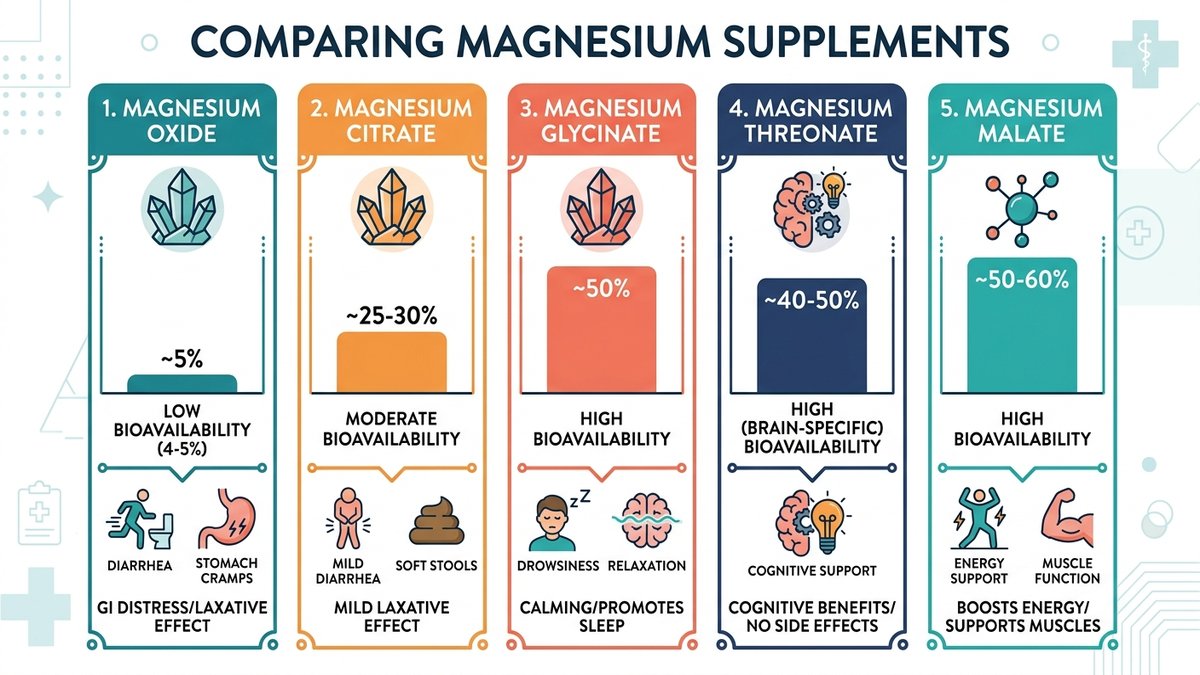
| Magnesium Form | Bioavailability | Top Reddit-Reported Side Effect | Best For | GI Risk Level |
|---|---|---|---|---|
| Magnesium Oxide | ~4% | Diarrhea, cramping | Constipation relief | High |
| Magnesium Citrate | ~16-30% | Loose stools at high doses | General supplementation | Moderate |
| Magnesium Glycinate | ~High (chelated) | Morning grogginess, vivid dreams | Sleep, anxiety, muscle | Low |
| Magnesium L-Threonate | High (crosses BBB) | Headache (initial), fatigue | Cognitive support | Low |
| Magnesium Malate | Moderate-High | Overstimulation in some users | Energy, fibromyalgia | Low-Moderate |
💡 Key takeaway: Your choice of magnesium form is the single biggest predictor of which side effects you'll experience — oxide causes gut problems, while glycinate and threonate are the gentlest options for most people.
🎯 How to Minimize Magnesium Side Effects: Step-by-Step Guide Based on Reddit Wisdom + Science
One of the most valuable aspects of exploring magnesium side effects reddit discussions is that thousands of self-experimenters have already done the trial and error for you. The collective wisdom that floats to the top of these threads — backed by consistent upvotes and corroborated by peer-reviewed research — can save you weeks of uncomfortable experimentation. The good news is that the vast majority of magnesium side effects are entirely preventable with a few simple adjustments to form, dose, and timing. Unlike pharmaceutical drug side effects that sometimes require medical management, magnesium's common adverse reactions respond quickly — often within 48 hours — to practical lifestyle tweaks. Understanding the best time to take magnesium to avoid side effects, for example, is a game-changer that Reddit threads return to again and again, with users reporting dramatically better experiences simply by shifting their dose to mealtime or splitting it into two smaller servings. This section walks you through the most evidence-backed, community-validated strategies.
It's important to approach this systematically rather than randomly swapping products or abandoning supplementation altogether. Magnesium deficiency is genuinely linked to muscle cramps, poor sleep, heightened anxiety, and even migraines — conditions that many people desperately need relief from. Quitting because of avoidable side effects means missing out on real benefits. The four-step framework below combines what top-voted Reddit users recommend with what clinical research confirms, giving you a reliable roadmap whether you're just starting out or troubleshooting an existing routine.
Switch to a High-Bioavailability Form First
The single fastest fix most Reddit users wish they'd made sooner is switching away from magnesium oxide to a chelated or more bioavailable form. Magnesium glycinate is the most consistently recommended form across r/Supplements, r/sleep, and r/anxiety for users who struggle with GI side effects. Because it's bound to the amino acid glycine, it absorbs through a different intestinal pathway than ionic magnesium, meaning far less unabsorbed magnesium reaches the colon to cause magnesium oxide diarrhea. Magnesium citrate is a solid middle-ground option that's more affordable than glycinate and still significantly better tolerated than oxide. If your goal is cognitive enhancement, magnesium L-threonate is uniquely able to cross the blood-brain barrier. Always check your current supplement's label — many 'magnesium' products in pharmacies default to oxide without clearly advertising it.
Start Low and Titrate Your Dose Gradually
One of the clearest patterns in magnesium side effects reddit discussions is that people who start at full recommended doses immediately are far more likely to experience side effects than those who titrate up slowly. The NIH's Tolerable Upper Intake Level (UL) for supplemental magnesium is 350 mg/day for adults, but this doesn't mean you need to start there. Many experienced Reddit users and integrative medicine practitioners recommend starting at 100–150 mg per day for the first week, then increasing by 50–100 mg weekly as tolerated. This approach gives your gut microbiome and intestinal magnesium transporters time to adapt. It's especially important if you're also taking a multivitamin or a pre-workout that already contains magnesium — stack these together unwittingly and you can easily exceed the UL without realizing it, dramatically increasing your risk of magnesium glycinate side effects too much or diarrhea from citrate forms.
Take Magnesium With Food and at the Right Time
Timing is arguably the most underrated variable in the magnesium side effects reddit conversation. Taking magnesium on an empty stomach is a top-cited trigger for nausea and GI cramping, even with gentle forms like glycinate. The simple fix: take it with a meal. The presence of food in the stomach slows gastric emptying and dilutes the supplement's concentration in the gut, significantly reducing irritation. As for the best time to take magnesium to avoid side effects while maximizing benefits — evening with dinner is the most popular and most evidence-supported choice for those using it for sleep or anxiety. Magnesium's mild muscle-relaxing and GABA-activating properties make it naturally complementary to a wind-down routine. For energy support (malate form), morning with breakfast makes more sense. Splitting a larger dose (e.g., 300 mg) into two 150 mg servings — one at lunch and one at dinner — is another highly effective strategy.
Monitor for Interactions and Underlying Conditions
Reddit discussions on magnesium supplement adverse reactions frequently underestimate the role of drug-nutrient interactions and pre-existing health conditions. Magnesium can significantly reduce the absorption of certain antibiotics (fluoroquinolones, tetracyclines), bisphosphonates, and some thyroid medications if taken simultaneously — space these at least 2 hours apart. On the flip side, diuretics, proton pump inhibitors (PPIs) like omeprazole, and long-term alcohol use can deplete magnesium levels, making you need more but also altering how your body handles supplemental doses. If you have chronic kidney disease, heart block, or take medication for blood pressure, consult a physician before supplementing — magnesium's muscle-relaxing effects on cardiac and smooth muscle are powerful. A simple blood test (serum magnesium or more accurately, RBC magnesium) can confirm whether you're actually deficient before you invest in supplementation at all.
⚖️ Magnesium Supplementation: Honest Pros and Cons Based on Reddit + Research
If you've spent any time in magnesium side effects reddit threads, you've seen both extremes: people swearing magnesium glycinate changed their life and people saying it gave them the worst night of their life. The truth, as with most supplements, sits somewhere in the nuanced middle. Magnesium is one of the most researched minerals in human nutrition, involved in over 300 enzymatic reactions in the body, and the evidence for its benefits across sleep, muscle function, cardiovascular health, and mood is genuinely strong. A 2017 meta-analysis published in *Nutrients* found that magnesium supplementation significantly improved subjective sleep quality in adults with insomnia or low magnesium status. A separate review found it reduced systolic blood pressure by an average of 2 mmHg in hypertensive patients — modest but meaningful at a population level. These aren't placebo effects; they're reproducible across multiple well-controlled trials.
That said, the cons are real and worth taking seriously. The biggest issue is that magnesium is not a one-size-fits-all supplement, and the supplement industry's habit of defaulting to cheap, poorly absorbed oxide forms creates a frustrating first experience for millions of buyers who then incorrectly conclude that 'magnesium doesn't work for me.' The secondary issue is that people often ignore early warning signs of magnesium toxicity — nausea, flushing, low blood pressure — because they're mild and easy to attribute to other causes. Hypermagnesemia (elevated blood magnesium) is rare in people with healthy kidneys, but it's dangerous when it does occur. The Reddit community is good at sharing these nuances, but it can also inadvertently encourage excessive dosing through anecdotal 'more is better' logic that doesn't hold up clinically.
Pros
- ✅ Proven sleep improvement: A 2017 meta-analysis in *Nutrients* confirmed significant improvement in sleep quality scores with magnesium supplementation in deficient adults.
- ✅ Muscle cramp relief: Magnesium is essential for calcium channel regulation in muscle cells — many athletes and pregnant women report significant cramp reduction with glycinate or citrate forms.
- ✅ Anxiety & mood support: Magnesium modulates the HPA axis and NMDA receptors, with multiple studies showing reduced anxiety symptoms, particularly in people with lower baseline magnesium levels.
- ✅ Widely accessible and affordable: Quality magnesium glycinate supplements are available for under $20/month and don't require a prescription, making this one of the most accessible therapeutic supplements available.
Cons
- ❌ Significant GI side effects with low-quality forms: Magnesium oxide — the most common cheap form — causes diarrhea in a substantial percentage of users due to its extremely low bioavailability (~4%).
- ❌ Risk of dangerous interactions: Magnesium can impair absorption of antibiotics, thyroid meds, and bisphosphonates; always check for drug interactions and space doses appropriately.
- ❌ Not safe for everyone: People with chronic kidney disease, severe heart block, or on dialysis face real risk of hypermagnesemia — a potentially life-threatening condition requiring medical management.
⚠️ Critical warning: Never exceed 350 mg/day of supplemental magnesium without medical supervision. If you experience persistent nausea, irregular heartbeat, extreme fatigue, or very low blood pressure after taking magnesium, stop immediately and seek medical attention — these can be signs of hypermagnesemia, especially if you have kidney issues.
✅ What the Science Says vs. What Reddit Gets Right (and Wrong)
The magnesium side effects reddit community gets a surprising amount right — and a few things noticeably wrong. On the positive side, the collective consensus that form selection and dose titration are the primary levers for tolerability is completely in line with what pharmacokinetic research shows. Reddit's near-universal recommendation of magnesium glycinate over oxide for people with sensitive stomachs is scientifically sound: chelated magnesium forms use peptide transporters rather than competing with other minerals for ionic magnesium channels, resulting in superior absorption and fewer unabsorbed ions reaching the lower bowel. The community's consistent advice about taking magnesium with food is also validated — a 2019 review in *Magnesium Research* noted that co-ingestion with food improves tolerability across multiple magnesium salts. Where Reddit sometimes goes wrong is in the 'megadosing' culture that occasionally emerges in nootropics communities, where users stack magnesium L-threonate, glycinate, AND a multivitamin, easily pushing total intake to 600–800 mg/day of elemental magnesium. This exceeds the NIH's UL of 350 mg/day for supplemental magnesium and dramatically increases risk of adverse effects — including the very symptoms (fatigue, GI distress) users are trying to eliminate. Another area where anecdote diverges from science: some users attribute benefits like reduced chronic pain or improved ADHD focus to magnesium alone, when the research on these applications is still preliminary and inconsistently replicated. For sleep and muscle cramps in deficient individuals, the evidence is robust. For cognitive enhancement in already-replete individuals, it's much more speculative. Always check your baseline status with a serum or RBC magnesium test before assuming deficiency is your issue — it saves money and prevents unnecessary side effects. For more on optimizing your supplement stack safely, check out our guide on [evidence-based supplement strategies at InfoWellHub](https://infowellhub.com).
The scientific community and Reddit communities actually converge most tightly on one finding: individual variation is enormous. Genetics, gut microbiome composition, kidney function, baseline dietary magnesium intake, and concurrent medication use all significantly alter how a given person responds to a given magnesium form and dose. This is why a dose that gives one person deep, restful sleep gives another person vivid nightmares and morning grogginess — and why a form that causes zero GI distress in one person triggers significant diarrhea in another. The NIH Office of Dietary Supplements provides comprehensive, updated guidance on magnesium — including tolerable upper intake levels by age group, drug interaction tables, and food sources — making it the gold standard reference for anyone who wants to go beyond Reddit anecdotes. The bottom line from both science and community experience: magnesium is a genuinely valuable, highly accessible supplement when used thoughtfully, but the 'just buy the cheap bottle and take two at night' approach is the express lane to the very side effects that give it a bad reputation. Invest five minutes in choosing the right form, start low, take it with food, and the odds of a positive experience increase dramatically.
❓ Frequently Asked Questions
✍️ Final Thoughts: Your Next Step With Magnesium
Navigating magnesium side effects reddit threads can feel overwhelming — there's so much passionate, conflicting anecdote packed into every post. But when you step back and look at the patterns, a clear, science-backed picture emerges: the form you choose and the dose you take are the two variables that determine roughly 80% of your experience with magnesium supplementation. Magnesium oxide diarrhea is not inevitable — it's a predictable consequence of using a poorly absorbed form. Morning grogginess from magnesium glycinate side effects is not random — it's a dose-timing issue with a straightforward fix. Paradoxical anxiety from magnesium L-threonate is not common — it's a minority reaction linked to individual neurochemistry that resolves when you drop the dose or switch forms. The NIH's Tolerable Upper Intake Level of 350 mg/day of supplemental elemental magnesium is your most important guardrail. Stay within it, choose a high-bioavailability chelated form, take it with food, and titrate your dose slowly — and the odds are strongly in your favor for experiencing benefits rather than side effects. Magnesium is genuinely one of the most important, most accessible, and most evidence-backed supplements available. Don't let a bad first experience with a cheap oxide pill convince you that it's not for you.
Here's your concrete next step: start with magnesium glycinate at 150 mg of elemental magnesium taken with dinner tonight — not on an empty stomach, not as a massive single dose, and not with a bargain oxide pill from the back of the drugstore shelf. Give it two full weeks before evaluating effects. Keep a simple sleep and mood log (even just a 1–10 rating each morning) so you have actual data rather than vague impressions. If GI symptoms appear, cut the dose in half for another week before titrating back up. If you're on any prescription medications — especially antibiotics, thyroid drugs, or blood pressure medication — confirm with your pharmacist that magnesium won't interfere. If you have kidney disease, get your doctor on board before starting. And if you're curious about optimizing your full supplement routine — not just magnesium — explore the evidence-based supplement guides at [InfoWellHub](https://infowellhub.com) for deeper dives into what actually works and what's overhyped. You now know more about magnesium side effects than most people who've been supplementing for years. Use that knowledge wisely — your sleep, your muscles, and your gut will thank you.
Post a Comment