
📌 Table of Contents ⬆
Sleep Quality vs Quantity: Which Matters More for Your Health?
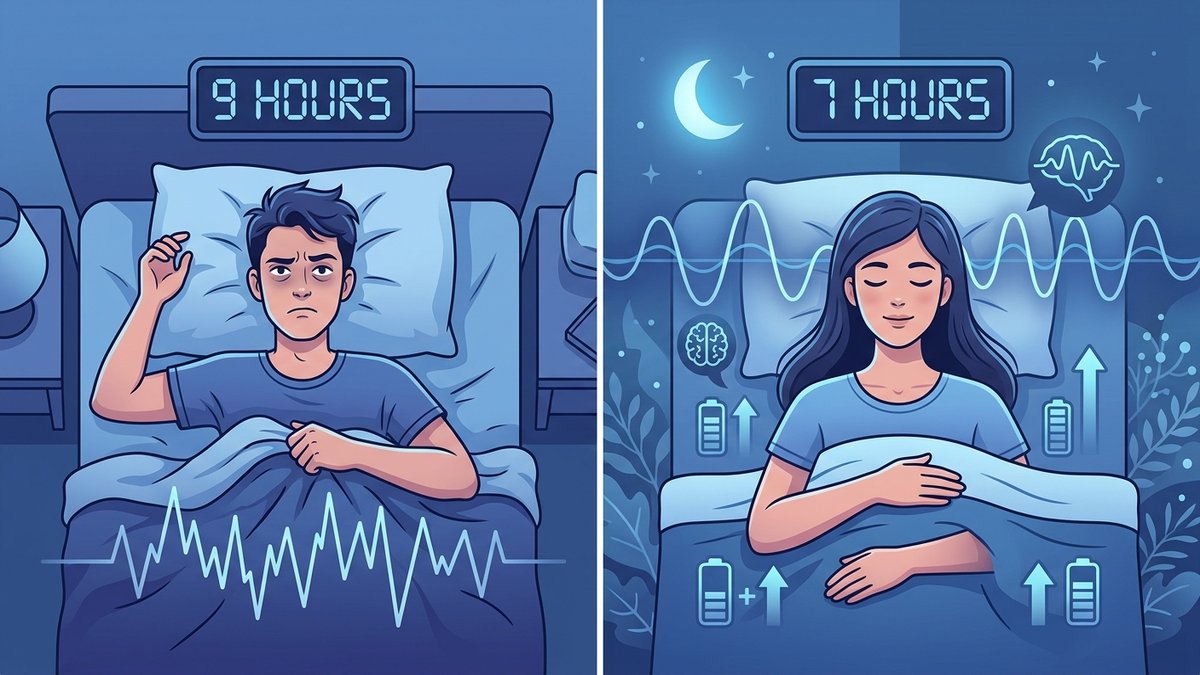
Picture this: You crawled into bed at 9 PM, slept a full 9 hours, and woke up feeling like you'd been hit by a truck. Sound familiar? The debate around sleep quality vs quantity is one of the most misunderstood conversations in health — and most of us are on the losing side of it. Here's the kicker: a 2023 study published in the journal Sleep Medicine Reviews found that over 45% of American adults report waking up unrefreshed despite logging what they consider 'enough' hours. That means nearly half of us are playing the wrong game entirely — chasing a number on the clock while the real prize, restorative sleep, slips right through our fingers.
For more information, see: NIH National Heart, Lung, and Blood Institute — Sleep Deprivation and Deficiency, American Academy of Sleep Medicine — Sleep Duration Recommendations
📌 Quick Summary
- Sleep quality often trumps quantity: Waking after 6 hours of deep, uninterrupted sleep can leave you more restored than 9 fragmented hours.
- Deep sleep stages are non-negotiable: Slow-wave (N3) and REM sleep drive memory consolidation, immune repair, and hormone regulation — and can't be 'made up' with extra time in bed.
- The sweet spot is both: Adults need 7–9 hours AND high sleep efficiency (≥85%) for optimal cognitive and physical health, according to the American Academy of Sleep Medicine.
📊 Sleep Quality vs Quantity: What Science Actually Says
Let's cut straight to it — when people argue about sleep quality vs quantity, they're often talking past each other because both sides are partially right. Sleep quantity refers to the total number of hours you're asleep, and the consensus from the American Academy of Sleep Medicine is clear: adults need 7 to 9 hours per night. Go below 6 hours consistently and your cognitive performance tanks in ways that mirror being legally drunk — reaction time slows, emotional regulation crumbles, and your immune system quietly waves a white flag. Research from the University of Pennsylvania found that subjects restricted to 6 hours of sleep per night for two weeks showed the same cognitive deficits as those who were kept awake for 48 hours straight. And the terrifying part? They didn't even realize how impaired they were. So yes, hours matter — a lot. Don't let anyone tell you sleep quantity is irrelevant. But here's where the story gets genuinely interesting, and why simply 'logging more hours' isn't a complete strategy.
Sleep quality, on the other hand, is about what happens during those hours — specifically, how efficiently your brain cycles through the four critical stages of sleep: N1 (light), N2 (light-to-moderate), N3 (deep/slow-wave), and REM. Your body does its most important repair work — tissue regeneration, memory consolidation, hormone regulation, and emotional processing — almost exclusively during N3 and REM sleep. Here's the truth most guides won't tell you: you can lie in bed for 10 hours and barely touch N3 or REM if your sleep architecture is disrupted by stress, alcohol, blue light, or an inconsistent schedule. A landmark 2019 study in Nature and Science of Sleep confirmed that individuals with high sleep efficiency (the percentage of time in bed actually spent asleep, ideally ≥85%) reported dramatically better daytime functioning than those who merely slept longer. So the question isn't really 'how long did you sleep?' — it's 'how well did your brain actually rest?'
Deep Sleep Drives Recovery
N3 stage repairs muscles and boosts immunity nightly
Fragmented Sleep = Hidden Deficit
Waking 4x/night cuts restorative time by up to 50%
Quality Fixes Are Faster Than You Think
Simple habit shifts improve sleep depth in 2–3 weeks
| Factor | Sleep Quantity | Sleep Quality | Winner 🏆 |
|---|---|---|---|
| Definition | Total hours in bed/asleep | Depth, continuity & sleep stage distribution | ⭐⭐⭐⭐⭐ Both |
| Primary Benefit | Prevents cognitive impairment | Drives cellular repair & memory consolidation | ⭐⭐⭐⭐⭐ Quality |
| Measurable Metric | Clock time (7–9 hrs recommended) | Sleep efficiency ≥85% + HRV & deep sleep % | ⭐⭐⭐⭐ Quality |
| Biggest Disruptors | Late nights, work schedules, caregiving | Alcohol, stress, blue light, sleep apnea | ⭐⭐⭐ Tie |
| Fixability | Schedule adjustments needed | Often improved with targeted lifestyle changes | ⭐⭐⭐⭐⭐ Quality |
💡 Key takeaway: Sleep quantity sets the floor, but sleep quality determines whether you actually reach the ceiling of what rest can do for your body and brain.
🎯 How to Improve Deep Sleep Without Sleeping Longer
This is where things get really practical — because most people don't have the luxury of adding 2 hours to their night. The good news? You don't have to. If you're wondering how to improve deep sleep without sleeping longer, the answer lives almost entirely in behavioral and environmental changes that shift your sleep architecture without requiring a single extra minute in bed. Think of it like upgrading from economy to first class on the exact same flight. The journey takes the same time — but the experience (and how you feel when you land) is completely different. Research consistently shows that sleep hygiene interventions can increase slow-wave sleep percentage by 10–20% within just a few weeks of consistent practice. That's a massive improvement in recovery without a single extra hour on your pillow.
The surprising part? Many of the most effective levers for improving sleep quality are things you do *before* you ever hit the sheets. Your pre-sleep window — roughly the 90 minutes before bed — has an outsized influence on what happens during the night. Core body temperature, cortisol rhythms, and adenosine buildup (your natural sleep pressure chemical) are all influenced heavily by evening habits. What most people don't realize is that caffeine's half-life is 5–7 hours, meaning that 3 PM latte is still 50% active in your bloodstream at 8–10 PM, quietly suppressing adenosine and shaving time off your deep sleep. Small changes, compounded nightly, create dramatically better sleep quality over time. Here's your game plan:
Anchor Your Wake Time First
This is counterintuitive but powerfully effective: fixing your wake time is more important than your bedtime for improving sleep architecture. When you wake at the same time every day — yes, including weekends — your circadian rhythm sharpens like a blade. Your body starts building sleep pressure (adenosine) and cooling core temperature at predictable times, which makes falling into deep N3 sleep faster and more reliable. A consistent wake time also regulates cortisol's natural morning spike, which in turn helps melatonin release on schedule at night. Research from Harvard's Division of Sleep Medicine shows that circadian consistency is one of the strongest predictors of sleep quality across age groups. Start there. Pick a wake time and hold it for 14 days straight — even if you slept terribly the night before. You're training your biology, not just managing your schedule.
Drop Your Core Temperature Before Bed
Your body needs to drop 1–3°F in core temperature to initiate and maintain deep sleep — this isn't optional biology, it's a hard requirement. One of the most underrated strategies for improving sleep quality is engineering a cool sleep environment (ideally 65–68°F / 18–20°C) and taking a warm shower or bath 60–90 minutes before bed. Wait — a warm shower to cool down? Yes. The warm water draws blood to the skin's surface, and when you step out, that heat dissipates rapidly, accelerating your body's natural temperature drop. A 2019 meta-analysis in Sleep Medicine Reviews found this technique improved sleep onset by up to 10 minutes and increased slow-wave sleep depth. Cooling mattress pads, breathable bedding, and even keeping socks off (feet radiate heat) are small but meaningful upgrades to your sleep environment.
Cut the Evening Alcohol Trap
Here's a myth-buster that most people resist: alcohol is not a sleep aid. Yes, it helps you fall asleep faster — that part's real. But it's devastating to sleep quality in ways you can't feel in the moment. Alcohol suppresses REM sleep in the first half of the night and causes 'REM rebound' in the second half, creating lighter, more fragmented sleep overall. A 2018 study in JMIR Mental Health found that even moderate drinking (2 drinks) reduced sleep quality by 24% as measured by sleep trackers. The result? You might sleep 8 hours but spend almost none of it in deep, restorative N3 or quality REM. If you're asking yourself 'why do I wake up tired after a full night's sleep?', alcohol — even a couple glasses of wine — is one of the first suspects to investigate. Try a 2-week alcohol-free experiment and watch your sleep scores transform.
Time Your Exercise and Light Exposure Strategically
Morning light and daytime exercise are two of the most powerful free tools for improving sleep quality — and they work synergistically. Exposing your eyes to bright natural light within 30–60 minutes of waking triggers a cortisol pulse that sets your circadian clock for the day, telling your body exactly when to start winding down 14–16 hours later. As for exercise: aerobic exercise increases slow-wave (deep) sleep significantly, according to a meta-analysis in the Journal of Sleep Research covering 29 studies. The catch is timing — vigorous exercise within 2 hours of bedtime can raise adrenaline and core temperature, delaying sleep onset. Morning or afternoon workouts are ideal. Even 30 minutes of brisk walking has been shown to improve sleep efficiency by measurable amounts within a single week. These aren't fringe biohacks — they're foundational sleep medicine recommendations.
⚖️ Signs of Poor Sleep Quality Even With 8 Hours — And What's Causing It
Here's where the rubber meets the road for millions of people. You're doing 'everything right' — 8 hours in bed, no phone after 10 PM, comfortable mattress — and yet you're dragging through every single day. If you're recognizing the signs of poor sleep quality even with 8 hours, you're not imagining it, and you're definitely not alone. Approximately 50–70 million Americans have a chronic sleep disorder, according to the American Sleep Association, and a significant portion of those go undiagnosed because they assume getting enough hours means they're sleeping well. The most common culprit hiding in plain sight? Obstructive sleep apnea (OSA) — a condition where breathing repeatedly stops during sleep, pulling you out of deep stages without ever fully waking you. Many people with OSA have no idea they have it. They just know they feel exhausted no matter how long they sleep.
Beyond sleep apnea, there are several under-discussed drivers of poor sleep quality that deserve serious attention. Restless Leg Syndrome (RLS) affects roughly 10% of Americans and causes uncomfortable sensations that disrupt sleep continuity throughout the night. High stress and elevated cortisol from unmanaged anxiety can compress slow-wave sleep and keep the brain in lighter stages. Blue light exposure from screens suppresses melatonin production — even 2 hours of screen exposure before bed can delay melatonin onset by 1.5 hours, fundamentally disrupting your sleep timing. And one sneaky culprit that doesn't get enough attention: inconsistent sleep schedules. Research shows that social jetlag — the misalignment between your biological clock and your social/work schedule — can reduce sleep quality just as effectively as actual jet lag, even when total hours look fine on paper.
Pros
- ✅ Prioritizing sleep quality: Improves cognitive performance faster than simply adding more hours — measurable within 1–2 weeks
- ✅ Tracking sleep stages: Wearables like Oura Ring and WHOOP can identify poor sleep architecture early, before daytime symptoms become severe
- ✅ Addressing root causes: Treating sleep apnea with CPAP can improve sleep quality scores by 40–60% and dramatically reduce cardiovascular risk
- ✅ Behavioral sleep interventions: Cognitive Behavioral Therapy for Insomnia (CBT-I) has a 70–80% success rate — higher than sleeping medications — for improving sleep quality long-term
Cons
- ❌ Ignoring quantity entirely: Chasing quality alone without ensuring 7+ hours creates a sleep debt that impairs performance regardless of sleep architecture
- ❌ Over-relying on supplements: Melatonin doesn't improve sleep quality for most healthy adults — it only shifts sleep timing, and high doses (5–10mg) may actually disrupt natural production
- ❌ Self-diagnosing sleep disorders: Assuming your fatigue is just 'poor sleep hygiene' when it could be apnea, RLS, or thyroid issues delays proper medical treatment
⚠️ ⚡ Quick Fact: If you snore loudly, gasp during sleep, wake with headaches, or feel exhausted after 8+ hours consistently, talk to your doctor about a sleep study. Undiagnosed sleep apnea affects an estimated 80% of moderate-to-severe cases — and it's one of the most treatable causes of chronically poor sleep quality.
✅ The Sleep Quality vs Quantity Checklist: Your Practical Daily Blueprint
Alright — you've got the science, you understand the stakes, and now it's time to turn all of this into something you can actually use starting tonight. The beauty of the sleep quality vs quantity conversation is that it gives you two levers to pull, not one. Most people only think about one (usually the hours), and leave the other completely untouched. When you optimize both simultaneously — protecting your hours AND improving what happens during those hours — the compounding effect on your energy, mood, metabolism, immune function, and even longevity is genuinely remarkable. A 2021 study in Nature Communications tracked over 500,000 participants and found that consistently poor sleep quality was independently associated with a 13% increased risk of all-cause mortality, even when sleep duration was adequate. That's not a stat to scroll past. Your sleep is a health intervention — treat it like one. 💡 Pro Tip: Use a free app like Sleep Cycle or invest in a wearable tracker for 2 weeks to baseline your current sleep efficiency score before making changes. You can't improve what you don't measure — and seeing your own data is one of the most motivating things you can do. ✅ Your Daily Sleep Quality + Quantity Checklist: - ☀️ Get bright light exposure within 60 min of waking - ⏰ Keep your wake time consistent 7 days/week (±30 min max) - 🏃 Exercise for 30+ min, ideally before 6 PM - ☕ No caffeine after 1–2 PM (remember the 5–7 hour half-life) - 🌡️ Set bedroom to 65–68°F before bed - 📵 No screens 60–90 min before sleep (or use blue-light blocking glasses) - 🛁 Take a warm shower 60–90 min before bed - 🍷 Limit or eliminate alcohol, especially within 3 hours of sleep - 😴 Aim for 7–9 hours of sleep window — not just time in bed - 📓 If you wake unrefreshed consistently, discuss a sleep study with your doctor
Now, a word about the long game — because sleep transformation isn't overnight (pun fully intended). Most people see meaningful improvements in sleep quality within 2–4 weeks of consistent behavioral changes, according to CBT-I research. But the real magic happens over 60–90 days when your circadian rhythm is fully recalibrated and your body trusts the schedule you've built. Think of your sleep system like a garden: you can't force a flower to bloom faster by staring at it. You prepare the soil, water consistently, remove the weeds (alcohol, late screens, inconsistent timing), and let biology do its thing. What I love about this topic is that the interventions that improve sleep quality the most — exercise, light exposure, consistent scheduling, stress reduction — are also the ones that improve every other dimension of your health simultaneously. You're not just fixing your sleep. You're rebuilding the foundation of your entire physical and mental wellbeing. For more on how sleep intersects with mental health and energy levels, check out our guide on [building a morning routine that actually works](https://infowellhub.com) for science-backed strategies that pair beautifully with better sleep habits.
❓ Frequently Asked Questions
✍️ Final Thoughts: Sleep Quality vs Quantity — And Your Next Step
If you've read this far, you're already operating differently than the overwhelming majority of people who treat sleep as a passive, automatic process that either 'works' or 'doesn't.' The truth — and the genuinely exciting part of the sleep quality vs quantity conversation — is that sleep is one of the most *modifiable* health behaviors you have. You have more control over your sleep than you've probably been led to believe. Both quality and quantity matter, and optimizing one almost always improves the other when you approach it systematically. Think of quantity as the container and quality as what fills it. You need a big enough container (7–9 hours), but you also need it filled with the right stuff — deep, restorative, stage-rich sleep that lets your brain and body do the extraordinary repair work they're designed to do every single night. Neglect the hours, and you don't give quality a chance to show up. Neglect the quality, and extra hours become a frustrating illusion of rest. The sweet spot is both — and the science has never been clearer on what gets you there. According to the NIH National Heart, Lung, and Blood Institute, sleep is as critical to long-term health as nutrition and physical activity. It's time we started treating it that way.
Here's what I'd do if I were starting today — and I mean literally tonight: Step 1: Pick your non-negotiable wake time and set it for tomorrow (and every day for the next 14 days). That's your anchor. Everything else builds from there. Step 2: Identify your single biggest sleep quality disruptor — for most people, it's late screens, alcohol, or an inconsistent schedule — and eliminate just that one thing for two weeks. Measure how you feel. Step 3: Track your sleep for 7–14 days using a free app or wearable so you have actual data, not just feelings, to work with. You'll be amazed what the numbers reveal. The conversation about sleep quality vs quantity isn't really about picking a winner — it's about understanding that your sleep is a complete, engineered system that responds to inputs. Give it the right inputs and it rewards you with energy, clarity, emotional resilience, and long-term health that no supplement or biohack can replicate. You deserve to wake up feeling genuinely rested. And now you know exactly how to get there.
Post a Comment