
📌 Table of Contents ⬆
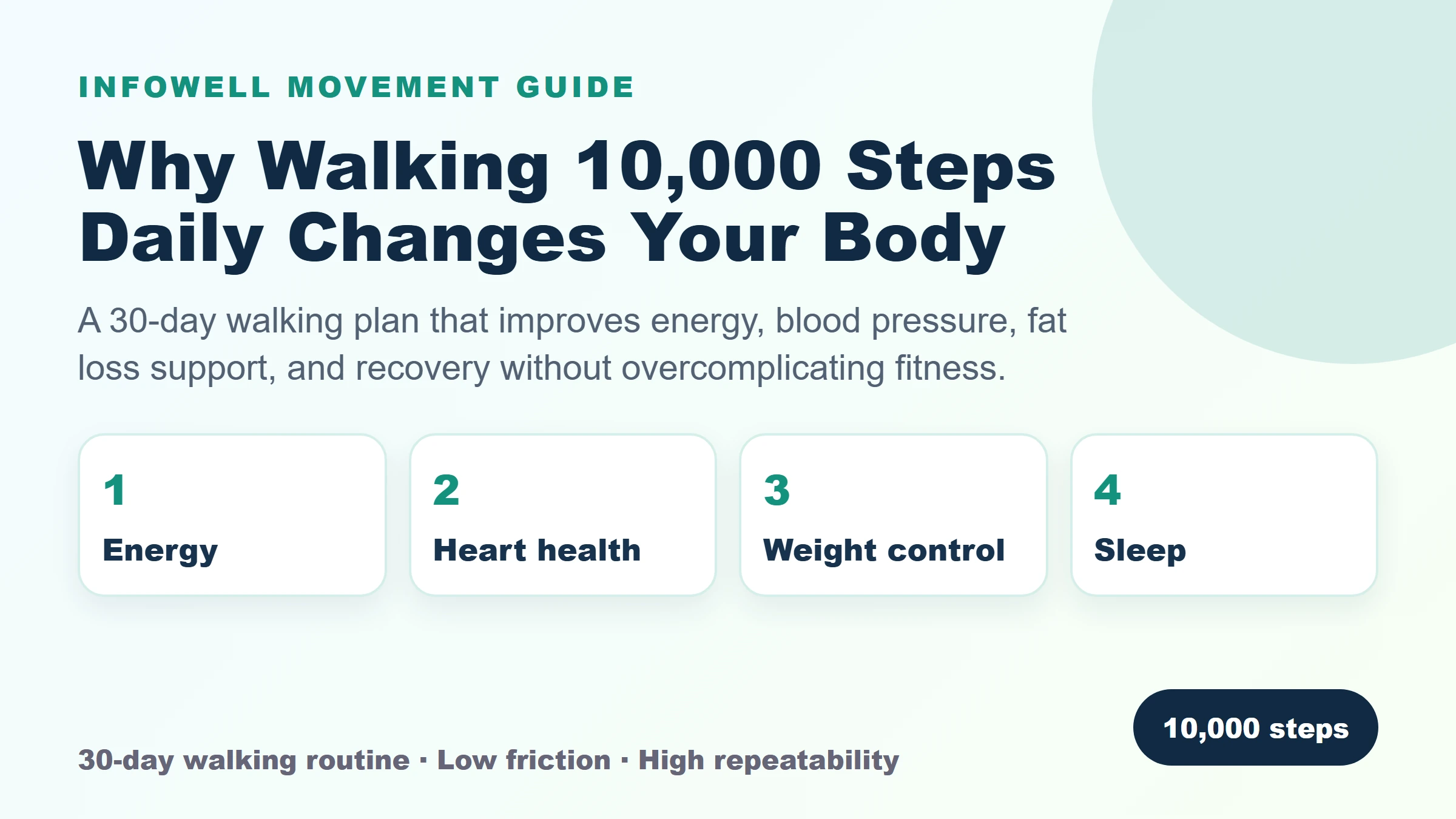
Walking 10,000 steps daily changes your body because it turns movement into a baseline, not a once-in-a-while workout. The number is not magic, but the habit is powerful: more daily steps usually mean better circulation, steadier energy, easier weight control, and more chances to break up sitting time.
Use this as your movement hub
Read this page first, then keep moving through the health loop instead of stopping after one article.
- Step 1: Build your 30-day walking plan here.
- Step 2: Pair it with 5 morning stretches that boost energy.
- Step 3: Improve recovery with the magnesium sleep guide.
What 10,000 steps really means
For most adults, 10,000 steps is roughly 4 to 5 miles depending on stride length. That sounds like a lot until you split it into smaller pieces: a 10-minute morning walk, a lunch walk, a few walking breaks, and an evening loop can get you surprisingly close.
The real benefit is behavioral. A step target gives you a simple scoreboard. Instead of asking whether you “worked out enough,” you can see whether your day included enough low-intensity movement to support health.
Why walking changes your body in 30 days
Walking uses large muscles, raises energy expenditure, improves blood flow, and gives your nervous system frequent breaks from sitting. The changes are not dramatic overnight, but they become noticeable when the routine repeats.
Readers who already use morning mobility should connect this with the 7-minute stretch routine. Stretching wakes the body up; walking keeps the energy curve from collapsing later.
Week 1: better rhythm and less stiffness
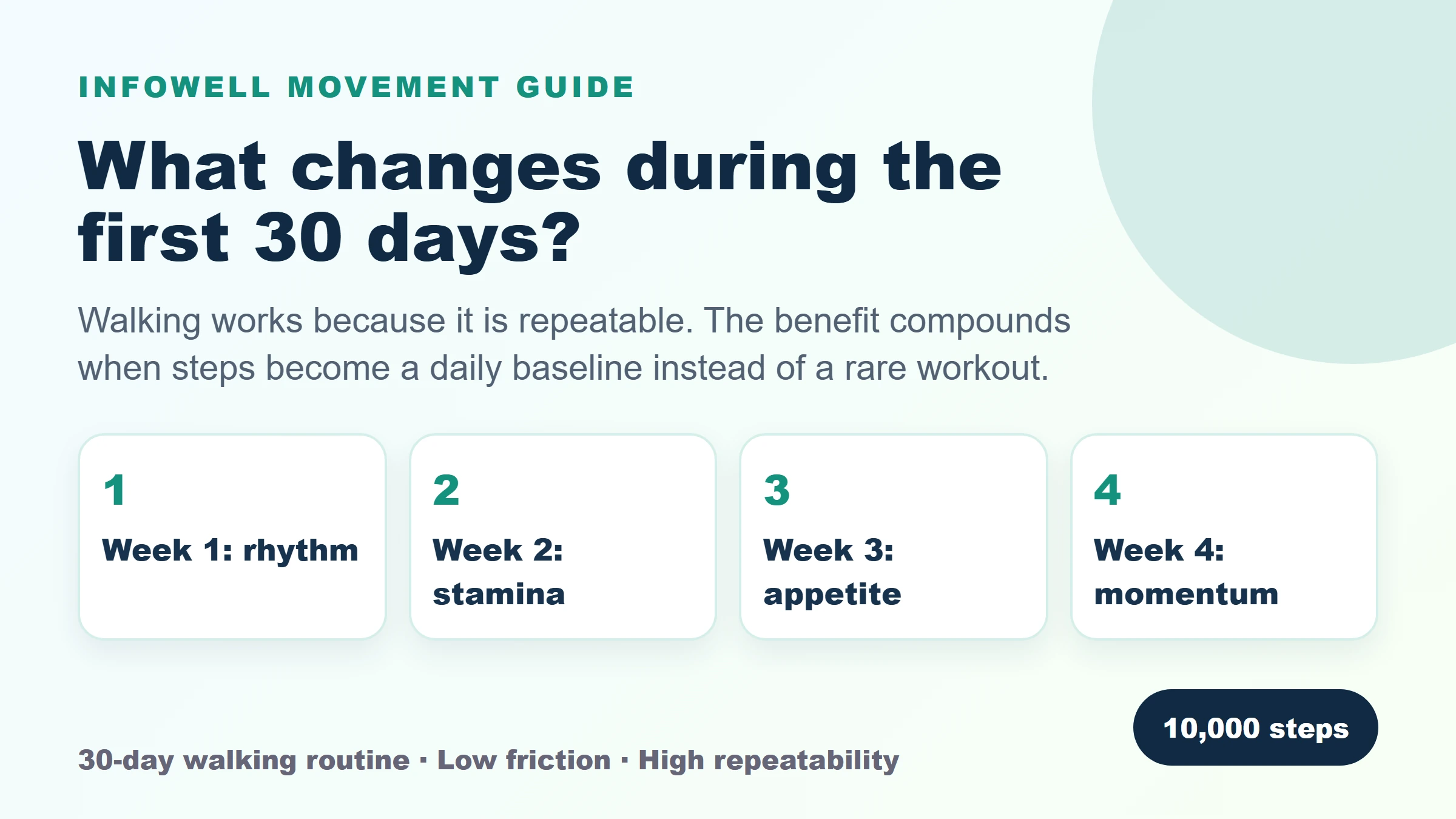
The first week is about reducing friction. You may notice looser hips, better mood, and less afternoon restlessness simply because you are standing and moving more often.
Week 2: stamina starts to feel easier
By week two, the same route often feels less tiring. Your body becomes more efficient at low-intensity movement, and walking breaks may start to feel like a mental reset instead of a chore.
Week 3: appetite and weight-control support
Walking is not a miracle fat-loss tool, but it supports a calorie deficit without the recovery cost of aggressive workouts. Pair it with high-protein meals and fiber-rich foods rather than using steps as an excuse to snack mindlessly.
If weight management is the goal, compare this routine with intermittent fasting for beginners, protein powder for weight loss, and natural Ozempic alternatives.
Want faster results from walking?
Do not only count steps. Pair walking with food quality and recovery so the habit turns into measurable health change.
Read next: 7 foods that naturally lower blood pressureWeek 4: blood pressure, sleep, and consistency
Daily walking can support cardiovascular health because it improves circulation, helps manage body weight, and reduces sedentary time. If blood pressure is part of your goal, connect this article with 7 foods that naturally lower blood pressure.
Sleep can improve too, especially when walking happens in daylight. Morning or early afternoon walks help reinforce circadian rhythm. For recovery bottlenecks, use the magnesium sleep guide and the gut health guide.
30-day walking checklist
| Time | Goal | Why it works | Next action |
|---|---|---|---|
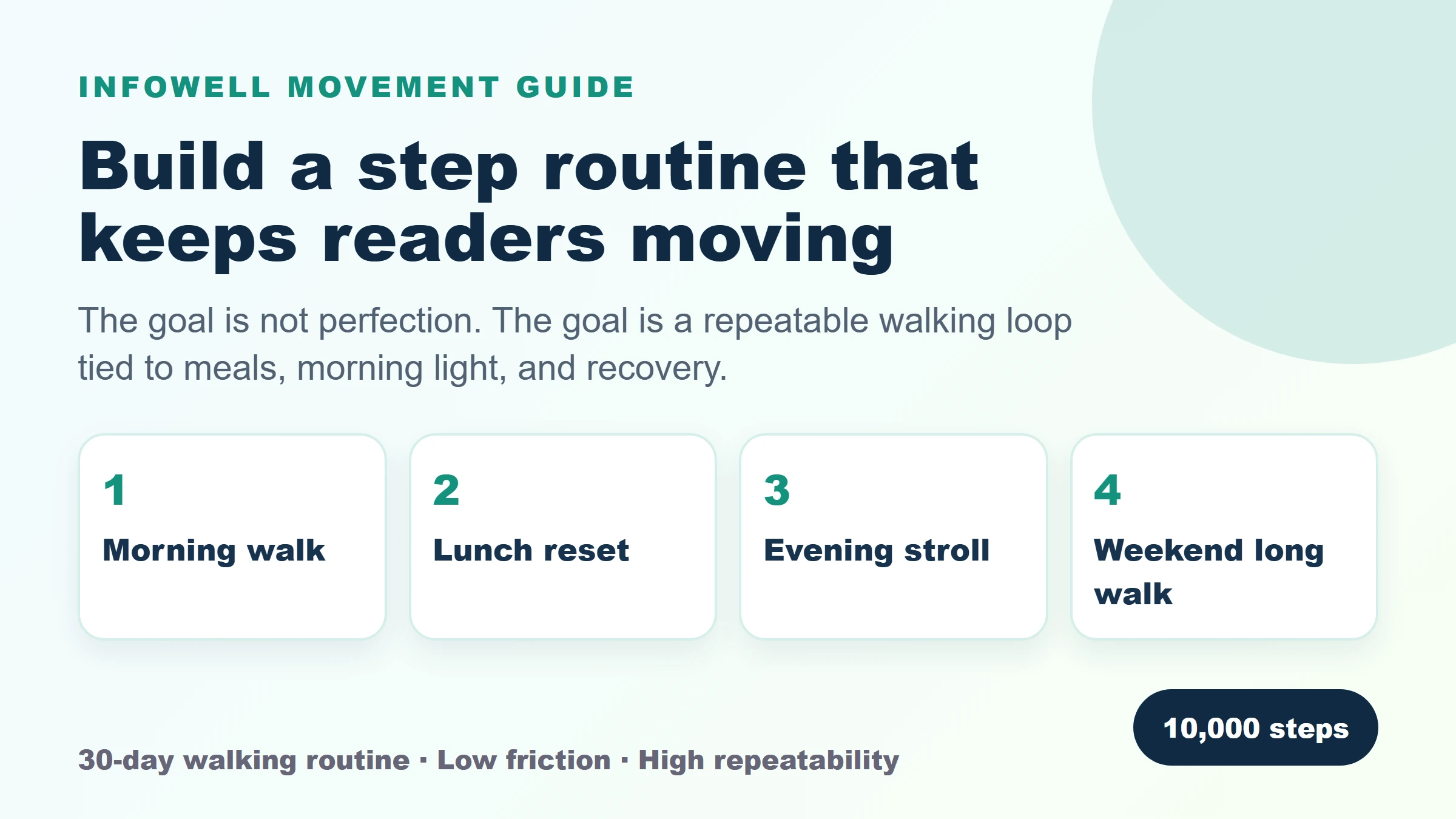
| Morning | 8–12 minutes | Light, circulation, energy | Pair with stretches |
| After meals | 5–10 minutes | Blood sugar support | Use a short loop |
| Work breaks | 2–5 minutes | Breaks up sitting | Walk during calls |
| Evening | 10–20 minutes | Stress downshift | Keep pace easy |
| Weekend | Longer relaxed walk | Builds weekly volume | Pick a scenic route |
How to reach 10,000 steps without forcing it
Start with your current baseline. If you average 3,000 steps, jumping to 10,000 immediately may create soreness and frustration. Add 1,000 to 2,000 steps per day for a week, then increase again.
- Park farther away or get off transit one stop earlier.
- Walk for 10 minutes after one meal.
- Use a standing reminder every hour.
- Choose stairs for short climbs.
- Keep walking shoes near the door.
Common mistakes that make people quit
1. Treating 10,000 as all-or-nothing. Seven thousand consistent steps can beat one perfect day followed by three inactive days.
2. Walking too hard every day. Most walks should feel easy enough to repeat tomorrow.
3. Ignoring shoes and surfaces. Foot pain is one of the fastest ways to kill consistency.
4. Not connecting walking to a cue. Tie walks to meals, sunlight, phone calls, or errands.
What the research says
Large observational studies link higher daily step counts with lower mortality risk, but the benefit curve does not require exactly 10,000 steps. Public-health guidance also supports regular moderate activity and less sitting. Useful references include the CDC adult physical activity guidance and the American Heart Association walking resources.
Who should start more carefully?
If you have chest pain, severe shortness of breath, uncontrolled blood pressure, foot ulcers, balance problems, or a recent injury, get medical guidance before rapidly increasing walking volume. Most people can start gently, but symptoms matter.
FAQ
Do I really need exactly 10,000 steps?
No. It is a useful target, not a magic threshold. The best step count is the highest amount you can repeat safely and consistently.
Can walking help with weight loss?
Yes, by increasing daily energy expenditure and reducing sedentary time. It works best with enough protein, fiber, and total calorie awareness.
Is it better to walk fast or just walk more?
Both help. Beginners should first build consistency, then add brisk intervals if joints and recovery feel good.
When is the best time to walk?
The best time is the one you repeat. Morning light, post-meal walks, and evening stress-relief walks all have different advantages.
What if I miss a day?
Do not compensate with an extreme walk. Resume the next day and focus on weekly average steps.
Conclusion
Walking 10,000 steps daily changes your body because it changes your default day. You sit less, move more, recover better, and create a simple health habit that stacks with food, sleep, and stress management. Start from your current baseline, build gradually, and use the 30-day checklist until walking becomes automatic.
10,000 steps habit builder for 2026
If 10,000 steps feels unrealistic, make the goal progressive instead of all-or-nothing. A repeatable walking routine usually starts with two or three short walks, then adds distance after sleep, joints, and schedule feel stable.
- Week 1: add one 10-minute walk after a meal and keep the pace conversational.
- Week 2: add a second walk or extend the easiest route by 1,000 to 1,500 steps.
- Recovery: use light mobility work on busy days so the streak does not break completely.
- Nutrition support: pair walking with enough protein and hydration instead of relying on steps alone.
Continue the routine with intermittent fasting for beginners, protein powder for weight loss, and morning stretches for back pain. These related guides help readers move through the health cluster instead of leaving after one article.
Post a Comment